Resting on your Laurels, Or the importance of Shabbat

In exploring for myself and working with others to help foster spiritual growth and change, I stress time and again the notion of seeing every step as a positive gain even in the midst of one’s pain and suffering. Too often we get caught up in not being in our ideal states instead of embracing the road we are travelling and how far we might have already come.

In this week’s Torah portion, Bereishit, Gd provides perhaps the ultimate example of the importance of taking stock along the way. In the creation story, after Gd establishes something, whether it be light, land, animals and yes, even people, the section includes “And Gd saw that it was good (or very good in the case of day 6).” Gd, if you will, pauses after each major moment and sees that it is good even while still needing to do more. At the same time, Gd doesn’t just stop and say, OK, ‘I’ve created enough.’ The moment is good and then Gd continues until nothing is seemingly left to create.

At the end of this creation process, Gd offers us a second clue as the importance of reflection in the designation of a Sabbath day, the day Gd rested (Genesis 2:1-3). In a comment on verse 2:2, Rashi expresses an interesting read of the phrase וַיְכַ֤ל אֱלֹהִים֙ בַּיּ֣וֹם הַשְּׁבִיעִ֔י, On the seventh day God finished the work. He suggests:

דָּ”אַ מֶה הָיָה הָעוֹלָם חָסֵר? מְנוּחָה, בָּאת שַׁבָּת בָּאת מְנוּחָה, כָּלְתָה וְנִגְמְרָה הַמְּלָאכָה:

Another explanation: What did the world lack? Rest! Sabbath came — Rest came; and the work was thus finished and completed (Genesis Rabbah 10:9)!

Rashi highlights the importance that rest plays in our creative nature. Without rest, the world is incomplete!

It is not enough to be creative beings, to be action oriented beings. If all we are doing is doing, then the tasks will never end. If we don’t rest, we don’t see the places we have reached. If we don’t take stock along the way, seeing that it was “good,” then what are we really accomplishing.

I believe this notion of rest as the culmination of creation is extremely important to our spiritual work as well. On the one hand, of course it is important to always strive towards greater heights, never “Resting on your laurels.” At the same time, how can any of us know how far we have come without taking stock of our journeys, our processes. If we don’t stop, pause and rest along the way, we miss out on the solidifying of all we have done.

May each of us be blessed to find the opportunities to truly rest along the path, see where we have come, and have the time to plan what the next step will be.

Looking for support as you take a pause, giving yourself the opportunity to “rest” and reflect: Contact New Beginnings Spiritual Coaching and Consulting LLC at 732-314-6758 ext. 100 or via email at newbeginningsspiritualcoach@gmail.com.

Humility is recognizing we don’t have to do it alone

It can be quite a challenge to be willing to work together with others. For many of us, it can seem less cumbersome and less stressful to just take on another task instead of seeking help from others. I believe this is particularly true when it comes to fostering our spiritual and emotional growth. Yet, if we allow ourselves to find the person or persons who can hold our hand and lift us up in the process, we will find greater success in all of what we venture out to do.

With the fall Jewish holidays over, the Torah reading cycle starts afresh with Bereishit, Genesis. Chapter one tells the story of creation, in which Gd, and Gd alone, for the most part, brings the world into existence. Yet, there is a single exception, for a mere 26 verses into the Torah, we come across a moment of collaboration in the midst of the story. Verse 1:26 states, in describing the creation of humanity:

וַיֹּ֣אמֶר אֱלֹהִ֔ים נַֽעֲשֶׂ֥ה אָדָ֛ם בְּצַלְמֵ֖נוּ כִּדְמוּתֵ֑נוּ וְיִרְדּוּ֩ בִדְגַ֨ת הַיָּ֜ם וּבְע֣וֹף הַשָּׁמַ֗יִם וּבַבְּהֵמָה֙ וּבְכׇל־הָאָ֔רֶץ וּבְכׇל־הָרֶ֖מֶשׂ הָֽרֹמֵ֥שׂ עַל־הָאָֽרֶץ׃

And God said, “Let us make humankind in our image, after our likeness. They shall rule the fish of the sea, the birds of the sky, the cattle, the whole earth, and all the creeping things that creep on earth.”

In a departure from the majority of the verses in chapter one, this verse states that Gd seemingly has consulted with other “beings” in the decision to create the human being. In response to this anomaly, Rashi, the great medieval Jewish biblical commentator, suggests a non-literal, ethical read of the text. He states:

נעשה אדם WE WILL MAKE MAN — Although they did not assist Him in forming him (the man) and although this use of the plural may give the heretics an occasion to rebel (i. e. to argue in favour of their own views), yet the verse does not refrain from teaching proper conduct and the virtue of humbleness, namely, that the greater should consult, and take permission from the smaller; for had it been written, “I shall make man”, we could not, then, have learned that He spoke to His judicial council but to Himself. And as a refutation of the heretics it is written immediately after this verse “And God created the man”, and it is not written “and they created” (Genesis Rabbah 8:9)

Quoting midrashic literature, Rashi suggests that the verse is written in plural form to teach that true humility includes not believing one has to do things by oneself. In looking at this comment, it is a reminder of the adage from Ethics of our Fathers,

יְהוֹשֻׁעַ בֶּן פְּרַחְיָה וְנִתַּאי הָאַרְבֵּלִי קִבְּלוּ מֵהֶם. יְהוֹשֻׁעַ בֶּן פְּרַחְיָה אוֹמֵר, עֲשֵׂה לְךָ רַב, וּקְנֵה לְךָ חָבֵר, וֶהֱוֵי דָן אֶת כָּל הָאָדָם לְכַף זְכוּת:

Joshua ben Perahiah and Nittai the Arbelite received [the oral tradition] from them. Joshua ben Perahiah used to say: appoint for yourself a teacher, and acquire for yourself a companion and judge all favorably.

Pirkei Avot 1:6

Life is about making connections and looking to one another for support and help. If Gd could be presumed to have asked for advice, then for sure each of us needs to find people in our lives who will help lift us up. In fact, like the above picture, one of the underlying premises of New Beginnings Spiritual Coaching and Consulting is to give someone a hand to help lift them up. Being willing to reach out a hand for another to help them up, an act of humility, an act of accepting one’s need for help, is the first step in spiritual growth.

I believe Rashi makes the choice of offering a non-literal read of the use of the plural instead of suggesting the more literal suggestion that the verse is merely using the “royal we” in this particular circumstance. Rashi is tasking the reader to see early on how the Torah can be a moral guide if we pay attention to the subtle nuances and gaps in the text. In this case, we learn this valuable lesson about humility. Of course, western religious literature is full of texts and commentaries that offer us multiple readings of the text to teach us lessons about life. If we pay attention, study the words carefully, and expand our reading to include different and varied approaches to these sacred texts, we are metaphorically putting out our hand to be lifted up spiritually.

As we begin the new Torah reading cycle, may each of us find a true sense of humility in realizing that there are always new opportunities to reach out our hands to be raised higher.

If you are ready to reach out your hand, I am here to help lift you along your journey of spiritual growth: Contact New Beginnings Spiritual Coaching and Consulting LLC at 732-314-6758 ext. 100 or via email at newbeginningsspiritualcoach@gmail.com.

The Gates are Closed/ The Gates are Open

Yom Kippur has come and gone. We have prayed, fasted and spent the day in the most spiritual way possible. The gates are closed. We emerge with the hope that this year will continue to be a year of good and of life.

And yet, with one gate closed, another is open:

Today begins a New Beginning. We have achieved our yearly moment of closure, the books of the past are sealed and now we have the chance to write the book of the present.

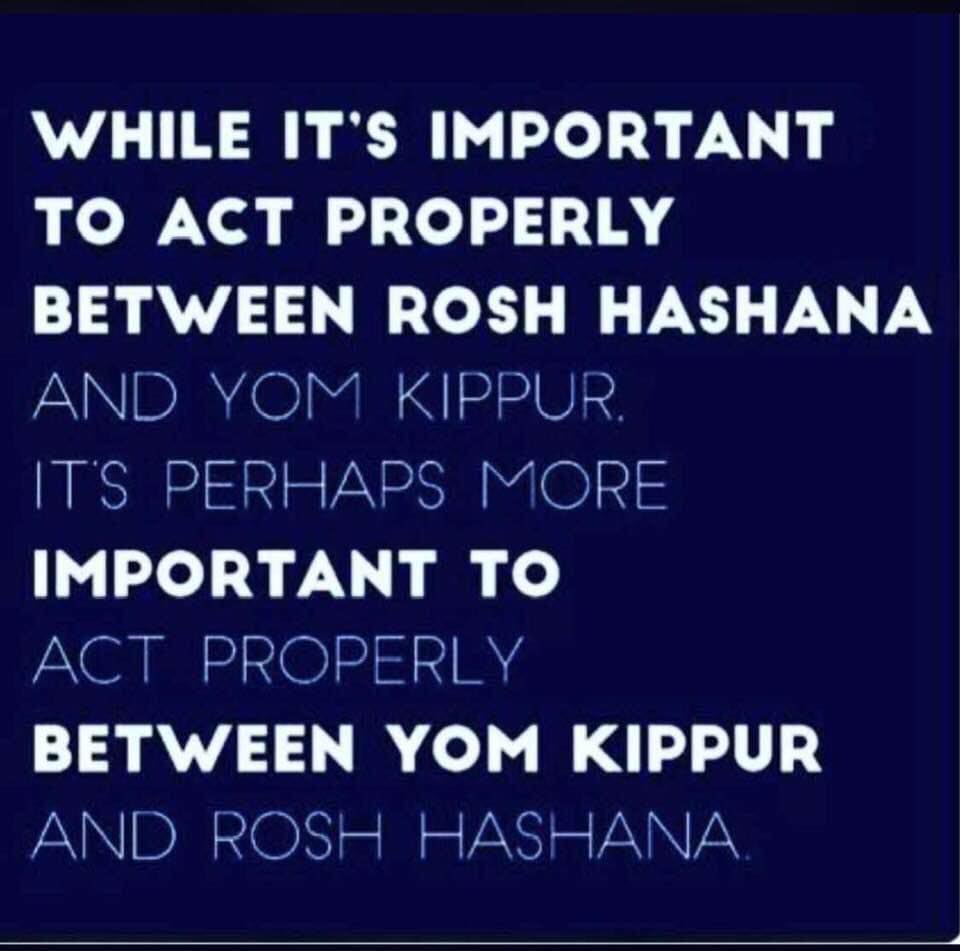
How do we take the spiritual high from yesterday forward? Perhaps the answer is best expressed in this popular meme:

As I have been reflecting on the prayers from the high holidays, specifically the viddui prayers we recited yesterday, it is clear that the confessionary nature of these words is a combination of raising for us a sense of what we have done wrong in the past and a road map of how to better ourselves. The areas of confession range from how we speak, how we interact with others and our need for mindfulness in all of our actions. If we have truly taken the day to heart, we will have hopefully walked away taking the first steps towards how we approach the next 12 months until the next Yom Kippur.

We are now in the 4 days leading up to Sukkot, Zman Simchateinu, the time of Joy. As we prepare for the celebratory days of Sukkot, may each of us take the power of Yom Kippur forward and celebrate the new opportunity placed before us.

Are you looking to take the next steps in the process of establishing your new journey: Contact New Beginnings Spiritual Coaching and Consulting LLC at 732-314-6758 ext. 100 or via email at newbeginningsspiritualcoach@gmail.com.

We can still Light the Candle

The hour is late. In mere hours we will be entering Yom Kippur. We have had ample opportunity for reflection and introspection. And while we might think it is too late, we would do well to remember it is never too late. We can still open our hearts to the desire to change and offer that deep desire as our first step to real, true teshuvah, true returning to the person we strive to be. I came across the following idea from Rav Moshe Weinberger that illustrates this concept (found here [p.19]):

One year on Yom Kippur, the Sar Shalom of Belz quoted the mishna in Shabbos (34a),


”ג’ דברים צריך אדם לומר בתוך ביתו ערב שבת עם חשכה עשרתם ערבתם הדליקו את הנר,““a person must say three things erev Shabbos as it gets dark, ‘Have you tithed?’, ‘Have you prepared the eruvim?’, and ‘Light the candle!’”

He explained that because Yom Kippur is called the ultimate Shabbos (Vayikra 16:31), this mishna also alludes to our feelings as we enter into Yom Kippur. “עשרתם “means “Have you tithed,” but because the root word is “עשר “,meaning ten, it alludes to the ten days of teshuva, as if to ask, “Have you used the ten days of teshuva properly?” Indeed, the ten days of teshuva have passed and what did we accomplish?! “ערבתם “ means “have you prepared the eruvim?”, like the eruv techumim and the eruv chatzeiros. But “ערב “also means “eve,” as if to ask “Have you used the eve of Yom Kippur properly to prepare? Erev Yom Kippur has passed and how did we use it?!

And the last question relates to kindling the Yom Kippur candles. The Sar Shalom continued “The candles are already lit and look what a state we are in!” He was quiet for a moment and then he concluded, “But ‘הדליקו את הנר ‘,does not mean ‘the candle
is already lit.’ It means ‘Light the candles!’ Therefore it is not too late! Each and everyone of us still has time to light the candle, which refers to (Mishlei 20:27) ‘ נר אדם נשמת’ ה’ ‘,the soul of man is G-d’s candle.’”

Much of my suggested work in coaching others begins by showing them that the first step is to take the first step. If we just light the candle, do this one small task, we are already along the way to change. Once we recognize that the hardest thing is such a simple thing, we will then be able to begin along a new path towards growth.

Yom Kippur is both a culmination and a beginning. If we have been working on how to change this whole time, Yom Kippur allows us to have a sense of the slate wiped clean so we can make the fresh start we desire. And if we haven’t used this time as well as we could, don’t despair. Yom Kippur is a roadmap towards areas we can and always should be working to better ourselves in.

May each of us find this Day of Atonement to be the guide forward we are in need of as we all continue to foster the desire for New Beginnings in our lives.

If you are exploring ways to deepen your ability to recognize within yourself areas of desired spiritual growth: Contact New Beginnings Spiritual Coaching and Consulting LLC at 732-314-6758 ext. 100 or via email at newbeginningsspiritualcoach@gmail.com.
Listening to the whole story

How many of us only pay superficial attention when someone talks to us? Are we only conscious of hearing just what is being said? Maybe we are among the fortunate who pay just enough attention to get the gist of the message? Or perhaps, when someone is commenting about a situation or offering constructive criticism, even with the best of intentions, all we hear is the criticism without listening to the underlying suggestions of ways to improve? Are we too stuck in who we are, too stubborn to receive feedback, to recognize how the criticism is hopefully coming from a good place? (And yes, I am and have been guilty of this way too many times to count).

Sometimes the rebuke is really a blessing in disguise!

I came across a thought from the end of last week’s Torah portion that I found to be spot on as a reflection of hearing/not hearing as it pertains to growth and change. Deuteronomy 31:30 states:

וַיְדַבֵּ֣ר מֹשֶׁ֗ה בְּאזְנֵי֙ כל־קְהַ֣ל יִשְׂרָאֵ֔ל אֶת־דִּבְרֵ֥י הַשִּׁירָ֖ה הַזֹּ֑את עַ֖ד תֻּמָּֽם׃ {פ}
Then Moses recited the words of this poem to the very end, in the hearing of the whole congregation of Israel:

When the Torah uses the word אזני (in the hearing (related to the word for ear)) or any of its derivative words, it implies a different kind of listening, perhaps as in emphasizing paying attention. The people were to be paying attention to some form of poetic rendering of Moses’ final speech. This is either a reference to Deuteronomy 32 or it is a reference to the series of verses that precede 31:30 starting from 31:22, which also uses the word שירה as a reference to the words of Moses. Regardless, the word שירה has a positive connotation, the words preceding or upcoming are more of a rebuke. As such, what did they hear?

The Israelites, while hearing the harsh words from Moses, also heard hope in his words. They didn’t just hear the rebuke and the consequences of their fall. They also heard that even when falling so far, there is a point of being able to rise back up, that the relationship promised would remain. They heard the song because they were listening with their ear, listening intently to the entire speech, not just sitting with the negativity of rebuke.

Every year, I am amazed at the extent of the formal confessionary forms of prayer we engage in throughout the period between Rosh Hashanah and Yom Kippur, culminating in the Viddui/confessions of our various “sins,” which are recited time and again on Yom Kippur. It is easy to get overwhelmed by the categories of our errors and how far we must come. Yet, I am also amazed that within this hard reality check, we can emerge with a renewed feeling of “success” and belief that we will be sealed for a good year. In many synagogues, it has become the practice to sing and dance immediately post Yom Kippur as a show of our seeing beyond the words. Through our confronting our humanity in a serious fashion, we come out the otherside having taken the heaviness and made it into something to celebrate, not dread.

May each of us “hear” the prayers of Yom Kippur as the road map forward for us to grow each day. May our “ears” be open to both the voice inside ourselves looking to improve and to the feedback we hear from others.

If you are exploring ways to deepen your ability to recognize within yourself areas of desired spiritual growth: Contact New Beginnings Spiritual Coaching and Consulting LLC at 732-314-6758 ext. 100 or via email at newbeginningsspiritualcoach@gmail.com.

Planting seeds for the New Year – Rosh Hashanah 5783

We are standing on the precipice of another year in the Jewish calendar. As always, it is a time of introspection (it’s never too late to think back over the year). What do we want different? What are our hopes for the upcoming year? Where do we even begin?

One of the customs many have on Rosh Hashanah is to eat certain foods that symbolize our prayers and hopes for the new year. The source for this custom is mentioned in a couple of places in the Babylonian Talmud:

Horayot 12a and Keritut 6a

אמר אביי השתא דאמרת סימנא מילתא היא [לעולם] יהא רגיל למיחזי בריש שתא קרא ורוביא כרתי וסילקא ותמרי

Abaye said: Now that you said that an omen is a significant matter, a person should always be accustomed to seeing these on Rosh HaShana: Squash, and fenugreek, leeks, and chard, and dates, as each of these grows quickly and serves as a positive omen for one’s actions during the coming year.

In addition to the above mentioned foods, see the chart below for what many do today, which adds to the Talmudic list.

In my pre-Rosh Hashanah reading yesterday, I came across a discussion of this custom. At first glance, many of us would think this is a bit like magic, that somehow my consumption of one food or another has the power to invoke change in our lives. How can it be that by eating an apple dipped in honey I should be able to ask Gd to grant us a sweet new year? Is it merely magical thinking? Is it really that simple?

In response, perhaps we are looking at the custom all wrong. According to the essay I was reading, we need to rethink the word siman(symbol). If we see the notion of symbol in the sense of planting a seed, as in a famous idea about how to read the stories of Genesis as “The actions of our forefathers are symbols for the children,” we can begin to appreciate the practice of these symbolic foods. If our actions become lessons for our children, then in a way, what we do is the equivalent of our planting the seeds for our children to learn from the good and bad in our lives. Hence, we can say symbols are seeds being planted.

On Rosh Hashanah, when we eat these symbolic foods, we are also planting seeds. We are praying, we want the upcoming year to be better, sweeter, with our successes at the forefront and our enemies vanquished. We want a year of positivity, a year in which the naysaying voice in our head is quieted down so we can see and feel the growth we are all experiencing, even when we don’t realize it. Through these foods, we aren’t performing magic tricks. We are taking the first step to real growth, naming what we want and hoping that this first step is a seed that germinates and sprouts for us along our journey of this upcoming year.

Many of my posts have been about the planting of seeds and taking first steps. This is the essential philosophy of New Beginnings. We are always presented an opportunity for a new beginning and while things might seem to be on a continuum, they are also a series of beginnings if we choose for them to be. I truly believe that each day we are doing is a day of growth and change even when we ourselves don’t see it as such. Each pitfall along the way, for there will be setbacks and challenges, are also growth points if and when we are ready to see them as such.

May this year, 5783, be a year in which we see the growth we are all doing, a year of peace in our lives and in the world, a year of less worry over the things we can’t control and most of all, a sweet, good and healthy year to all.

Want to take your hopes and wishes for a new year and really concretize them? Looking to solidify and continue your spiritual growth: Contact New Beginnings Spiritual Coaching and Consulting LLC at 732-314-6758 ext. 100 or via email at newbeginningsspiritualcoach@gmail.com.

Perspective: Working to see the good

Let’s be real. It is much easier to see the negative, the difficult, the “bad” in life. And if you read most self help books, one of the themes that jumps out is the importance of working on seeing the positive, which should help us be more positive. For example, how often do we hear about the importance of smiling even when not happy because it has the physiological effect of eventually helping one to feel more positive (see The Health Benefits of Smiling as an example).

In relating this topic, I am reminded of the opening of this week’s Torah portion, Parashat Re’eh, presents the following choice:

רְאֵ֗ה אָנֹכִ֛י נֹתֵ֥ן לִפְנֵיכֶ֖ם הַיּ֑וֹם בְּרָכָ֖ה וּקְלָלָֽה׃

See, this day I set before you blessing and curse:

אֶֽת־הַבְּרָכָ֑ה אֲשֶׁ֣ר תִּשְׁמְע֗וּ אֶל־מִצְוֹת֙ יְהֹוָ֣ה אֱלֹֽהֵיכֶ֔ם אֲשֶׁ֧ר אָנֹכִ֛י מְצַוֶּ֥ה אֶתְכֶ֖ם הַיּֽוֹם׃

blessing, if you obey the commandments of your God יהוה that I enjoin upon you this day;

וְהַקְּלָלָ֗ה אִם־לֹ֤א תִשְׁמְעוּ֙ אֶל־מִצְוֹת֙ יְהֹוָ֣ה אֱלֹֽהֵיכֶ֔ם וְסַרְתֶּ֣ם מִן־הַדֶּ֔רֶךְ אֲשֶׁ֧ר אָנֹכִ֛י מְצַוֶּ֥ה אֶתְכֶ֖ם הַיּ֑וֹם לָלֶ֗כֶת אַחֲרֵ֛י אֱלֹהִ֥ים אֲחֵרִ֖ים אֲשֶׁ֥ר לֹֽא־יְדַעְתֶּֽם׃ {ס}        

and curse, if you do not obey the commandments of your God יהוה, but turn away from the path that I enjoin upon you this day and follow other gods, whom you have not experienced.

Deuteronomy 11:26-28

Notice that the language of choosing between blessing and curse is the language of sight, “See.” Moses’ exhortation is not just choose but see that the choice is placed before you. And with that choice, via the actions we take, following the commandments or not, will be the driver towards seeing the blessings or the curses of life.

In relation to this verse is an idea I came across from Kedushat Levi, R. Levi of Berditchev, one of the great early Chasidic thinkers. He presents in a variety of locations the following argument. There is an outlier belief quoted in the Babylonian Talmud (Kiddushin 39b) – רַבִּי יַעֲקֹב הִיא דְּאָמַר שְׂכַר מִצְוָה בְּהַאי עָלְמָא לֵיכָּא – It is in accordance with the opinion of Rabbi Ya’akov, who says: There is no reward for performance of a mitzva in this world, as one is rewarded for mitzvot only World-to-Come (often the Talmud quotes singular opinions in relation to the more presumed normative view as a means of recording an opinion that might be a polemical response to other beliefs of the time). R. Levi raised the following question. Does this view work in relation to another adage from Ethics of the Fathers (Pirkei Avot) – שֶׁשְּׂכַר מִצְוָה, מִצְוָה, the reward for performing a commandment is another commandment (4:2)? He suggests that reconciling this contradiction is that more opportunities to do mitzvot is the reward for doing mitzvot.

As I have been ruminating on this particular idea in relation to perspective making, I realize that this message about the reward for mitzvah is another mitzvah is similar to the idea of “smile and it will make you feel happy.” Every incremental action, positive or negative, has a corresponding positive or negative effect. To create blessing, it comes from positive incremental opportunities to do good, to perpetuate the positive.

This is not an easy or simple task. It is a task we have to constantly be working at, to constantly be seeing in front of us. Every opportunity is a choice, the choice to move forward, to take the next step building on the previous step. And if we do fall into a time of curse, a time of negativity, we have to guard ourselves from allowing that path to become the new road. The safeguard is to work to remind ourselves that we can always SEE the choice before us, the choice of turning back to the place of positivity, the place of blessing. Or, as I recently read in the book Now Is the Way: An Unconventional Approach to Modern Mindfulness by Cory Allen:

When we are dedicated to choosing the good, our view of the world changes. It grows into the shape of peace. And so do our lives.

P. 71

May you find the sight to see the positive, and may that sight be the first step along a more blessed path.

Reflecting on how to foster incremental positive change: Contact New Beginnings Spiritual Coaching and Consulting LLC at 732-314-6758 ext. 100 or via email at newbeginningsspiritualcoach@gmail.com.

Aiming for the Center of the Dartboard.

Lately, I have been writing and reflecting a lot on focusing on the process, on imperfection and on the need to take growth as single steps along the path to the place we hope to reach. I find myself working daily to take this more positive approach, learning to appreciate how in a way it is all progress, both my successes and my failures. In light of these thoughts I have previously shared, I want to share a short message based on a discussion I’m involved in on Whatsapp.

Life can often seem like a game of darts. The bullseye is the goal we set before us. The dart is the tasks and tools are our disposal as we aim to reach the goal. When we aim and throw, we are ultimately hoping that the effort will lead us directly to the end goal, to the bullseye. And of course, we always want to hit the bullseye but sometimes we miss. Sometimes we miss by a little and sometimes completely. Yet, missing the target shouldn’t stop us from throwing the next dart. The challenge is, do we find the way to come back to the focus, the concentration of previous throws or do we allow the frustration to get in the way, increasing the odds of further misses?

It is difficult to fail, to miss, to be imperfect. I believe that many of the barriers we place before ourselves stems from this one fear, the fear of failure. If we fail, people will believe we are frauds. In truth, if we fail, it is not because we are frauds, rather, it is because there is no perfection and there will be times when we miss the target. And this goes for everyone around us as well.

As I sit here writing these words, I am reminded of the following read regarding the beginning of this week’s Torah portion, Vaetchanan.

וָאֶתְחַנַּ֖ן אֶל־יְהֹוָ֑ה בָּעֵ֥ת הַהִ֖וא לֵאמֹֽר׃

I pleaded with Gd at that time, saying,

אֲדֹנָ֣י יֱהֹוִ֗ה אַתָּ֤ה הַֽחִלּ֙וֹתָ֙ לְהַרְא֣וֹת אֶֽת־עַבְדְּךָ֔ אֶ֨ת־גדְלְךָ֔ וְאֶת־יָדְךָ֖ הַחֲזָקָ֑ה אֲשֶׁ֤ר מִי־אֵל֙ בַּשָּׁמַ֣יִם וּבָאָ֔רֶץ אֲשֶׁר־יַעֲשֶׂ֥ה כְמַעֲשֶׂ֖יךָ וְכִגְבוּרֹתֶֽךָ׃

“O lord Gd, You who let Your servant see the first works of Your greatness and Your mighty hand, You whose powerful deeds no god in heaven or on earth can equal!

אֶעְבְּרָה־נָּ֗א וְאֶרְאֶה֙ אֶת־הָאָ֣רֶץ הַטּוֹבָ֔ה אֲשֶׁ֖ר בְּעֵ֣בֶר הַיַּרְדֵּ֑ן הָהָ֥ר הַטּ֛וֹב הַזֶּ֖ה וְהַלְּבָנֹֽן׃

Let me, I pray, cross over and see the good land on the other side of the Jordan, that good hill country, and the Lebanon.”

וַיִּתְעַבֵּ֨ר יְהֹוָ֥ה בִּי֙ לְמַ֣עַנְכֶ֔ם וְלֹ֥א שָׁמַ֖ע אֵלָ֑י וַיֹּ֨אמֶר יְהֹוָ֤ה אֵלַי֙ רַב־לָ֔ךְ אַל־תּ֗וֹסֶף דַּבֵּ֥ר אֵלַ֛י ע֖וֹד בַּדָּבָ֥ר הַזֶּֽה׃

But Gd was wrathful with me on your account and would not listen to me. Gd said to me, “Enough! Never speak to Me of this matter again!

Deuteronomy 3:23-26

Moses tells the people he prayed to Gd to overturn the punishment of not being able to enter Israel and that Gd said “no.” There is even a suggested idea that Moses didn’t just pray once or twice but 515 times (based on the numerical value of וָאֶתְחַנַּ֖ן), always receiving “no” for an answer (see Midrash Aggadah, Deuteronomy 3:23:13). Moses admits he failed (yes, he also does also cast blame on the people for Gd’s anger and decision to keep the “punishment” that resulted from the Israelites second complaint about not having water and Moses responded inappropriately with anger (see Numbers 20:1-13)). Nevertheless, for Moses to admit that Gd said no, when so often his prayers ended up with Gd heeding the request, is itself a valuable lesson along the lines of .

There is no perfect person. We are all imperfect in some way. The imperfections, the failures are not excuses to not try, or try and try again. Yes, there are times when we must exit the one path and walk along another. But even this is not a failure, it is a transition to the next opportunity, to a new goal, A New Beginning.

May we each learn how to aim for the center, hit the target or miss the target, aim again or aim differently to hit the next target.

Looking for the tools to aim for the bullseye of your life: Contact New Beginnings Spiritual Coaching and Consulting LLC at 732-314-6758 ext. 100 or via email at newbeginningsspiritualcoach@gmail.com.

Putting on the wrong Tallit

I came across a great line in the Kedushat Levi, of R. Levi of Berditchev (second to last piece on Parashat Shelach in standard printings), that helps to shed light on this week’s Torah portion as well as provides us with a powerful perspective on keeping in our lane as we journey through life.

In reflecting on the character of Korach, R. Levi offered an interesting perspective. He suggests that Korach’s intention was not ego but it was the desire to serve Gd in the best way he perceived, which as a member of the Levite tribe meant the desire to serve in a priestly role like his cousin Aaron and sons. While noble, this was not the role Gd had in mind for Korach or for the other Levites for that matter. As such, Korach was punished with living in the state of limbo of being swallowed alive by the earth, “to live in Sheol (which biblically is like a netherworld). In the midst of analyzing Korach’s motivation and why it was problematic, R. Levi offers the analogy that Korach’s desire was like wearing a Tallit that didn’t belong to him (Reminds me of Harry Potter and the using of a wand which isn’t yours, as the wand chooses the wizard. The wand will work but not in the way that the person’s destined wand would work).

I would suggest that Kedushat Levi offers this analogy to connect the story of Korach to the end of last week’s Torah portion, which commands the Israelites in wearing a four cornered garment with tzitzit, strings. The tzitzit are worn as a constant reminder to follow after the laws Gd commanded. Part of the commandments is an underlying idea of the rules helping one stay in one’s lane, not starting after the desires of the heart and the eyes. Presumably, if you are find yourself straying from your “path,” you find yourself in limbo, or you find yourself along a path that isn’t yours. (I would also venture to suggest this analogy of the tallit is based on one of the rabbinic reads of Korach’s challenges to Moses. Karachi is said to have argued with Moses about whether a garment of all techeilet (blueish color) would qualify for the additional command to have one of the strings being of the techeilet color).

I found this metaphor resonated with me on a deeper level as regards to how we can grow in life. Most of us, with good intentions, will often go down a path we think we should go because others have found success or because it is the presumed best way to act. Yet, as we know, each of our paths is different and we shouldn’t try to walk along the path that we aren’t destined to go. We should work to properly wear our own “tallit” and not try to fit into someone else’s Tallit.

How would we know? R. Levi offers the answer. Going down a path that is “good” but not one’s path, like Korach, leaves a person in limbo. If we find ourselves living life yet feeling this sense of being neither here nor there, perhaps it is a deeper message inside our hearts to examine if we left the path we were destined for and veered onto a path we chose because it seemed for various reasons like the right one.

Need support in walking along your destined path. Contact New Beginnings Spiritual Coaching and Consulting LLC at 732-314-6758 ext. 100 or via email at newbeginningsspiritualcoach@gmail.com.

Judging favorably

As I continue to reflect and re-engage with some of my older posts from my previous blogs (here and here), I came across a powerful story and message I originally wrote about in 2010 (see here).

Too often we may observe a situation and think we understand what is going on. Yet, we also know that it is a value to judge someone favorably, a lesson taught in Ethics of our Fathers, Pirkei Avot:

יְהוֹשֻׁעַ בֶּן פְּרַחְיָה וְנִתַּאי הָאַרְבֵּלִי קִבְּלוּ מֵהֶם. יְהוֹשֻׁעַ בֶּן פְּרַחְיָה אוֹמֵר, עֲשֵׂה לְךָ רַב, וּקְנֵה לְךָ חָבֵר, וֶהֱוֵי דָן אֶת כָּל הָאָדָם לְכַף זְכוּת:

Joshua ben Perahiah and Nittai the Arbelite received [the oral tradition] from them. Joshua ben Perahiah used to say: appoint for thyself a teacher, and acquire for thyself a companion and judge all people with the scale weighted in their favor.

Pirkei Avot 1:6

Considering the words above, we can recognize the continuum of values, through establishing a teacher for oneself and maintaining true friendships, we can set ourselves up to see the world in such a way as to recognize that we don’t always understand everything that is happening. Too often, we want to make a go at it alone and through this mode of isolation we are more vulnerable to seeing others only through the lense of one’s own eyes.

To illustrate this, I want to share a story from the book, Jewish Visions for Aging by my colleague Rabbi Dayle A. Friedman, in which she shares an example of the importance of not drawing conclusions without all the facts:

Ira, a ninety-seven year old assisted living resident, has just fallen.  He is taken to the emergency room and receives twelve stitches for a gash in his head.  The resident and attending physician have called his family, but no one has come to be with him.  Knowing that Ira has a daughter-in-law, Ricki, who is usually quite involved, the assisted-living facility staff are surprised.  They comment that perhaps Ricki isn’t as interested in Pop as she once was.

P 72

Before reading the second paragraph, take a moment and reflect on how you feel at this point. Do you find yourself relating to the feelings of the facility staff that Ricki might not be interested in her father-in-law anymore? Or, were you open to seeing that perhaps her absence is likely due to some other circumstance other than not caring as much as others thought?

When Ricki comes in the next day, she explains that she couldn’t come sooner because on the very same day on which Ira was injured, her brother died and her husband was rushed to the hospital with chest pains.  Ricki literally didn’t know what to do first: should she stay at the hospital with her husband during his cardiac catheterization; make funeral arrangements for her brother; or go to be with Pop, who must be very frightened and upset at being taken to the emergency room alone?

P 72

Ricki’s dilemma was complicated. How can we best able to support others if we are quick to presume the worst about the decisions made instead of taking the time to consider the various possibilities for a seeming choice that was made?

May we cultivate the expansive, open heart to see the good in others instead of immediately presuming the worst.

Looking to work towards seeing the best in others. Contact New Beginnings Spiritual Coaching and Consulting LLC at 732-314-6758 ext. 100 or via email at newbeginningsspiritualcoach@gmail.com.