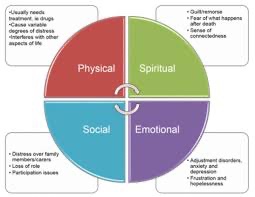
Seeing Total Pain

The following quote caught my eye from the introduction of Chaplaincy and Spiritual Care In the Twenty-First Century: An Introduction:

When Amy Greene, director of spiritual care at the Cleveland Clinic, was asked what she thinks people need from chaplains, she responded, “People want someone to see their total pain.”

P. 3

This quote reminds me of the following Talmudic passage:

אָמַר רַבִּי אַחָא בַּר חֲנִינָא כל הַמְבַקֵּר חוֹלֶה נוֹטֵל אֶחָד מִשִּׁשִּׁים בְּצַעֲרוֹ אָמְרִי לֵיהּ אִם כֵּן לִיעַלּוּן שִׁיתִּין וְלוֹקְמוּהּ אֲמַר לֵיהּ כְּעִישּׂוּרְיָיתָא דְּבֵי רַבִּי וּבְבֶן גִּילוֹ
Rav Aḥa bar Ḥanina said: Anyone who visits an ill person takes from him one-sixtieth of his suffering. The Sages said to him: If so, let sixty people enter to visit him, and stand him up, and restore him to health. Rav Aḥa bar Ḥanina said to them: It is like the tenths of the school of Rabbi Yehuda HaNasi, who said that each of one’s daughters inherits one-tenth of his possessions. His intent was that each daughter would receive one-tenth of the remainder after the previous daughter took her portion. Here too, each visitor takes from the ill person one-sixtieth of the suffering that remains, and consequently a degree of suffering will always remain with the ill person. Furthermore, visiting is effective in easing the suffering of the ill person only when the visitor is one born under the same constellation as the ill person.

The chaplain is tasked with seeing the whole person, mind, body and soul. The chaplain visit is focused on visiting the person, not just the illness. It is through this seeing, being present to the whole person, that has a fundamentally positive effect. By positive, I mean to say that the time together is one that intrinsically changes the despair and loneliness most often felt when experiencing “total pain.”

Looking for someone to be present to your “total pain.” Contact New Beginnings Spiritual Coaching and Consulting LLC at 732-314-6758 ext. 100 or via email at newbeginningsspiritualcoach@gmail.com.

Encourage the wishes of the ill

One of the challenges people face when visiting others who are sick, grieving, or in need of companionship and social connection is the ability to recognize that the visit is for the person being visited and not for themselves. Many times, we go with all the right intentions yet somehow it becomes our agenda that overshadows the good that our presence is meant to provide. I have witnessed many situations where the one being visited was doing something that many would consider “not the normal way we act” and get chastised even though the person was finding more comfort in the outside the norm activity.

This week’s Torah portion, Vayera, begins with the story of Abraham and the 3 visitors (angels, servants of Gd). The story is also understood to be a lesson in visiting the sick. The opening verse states:

וַיֵּרָ֤א אֵלָיו֙ יְהֹוָ֔ה בְּאֵלֹנֵ֖י מַמְרֵ֑א וְה֛וּא יֹשֵׁ֥ב פֶּֽתַח־הָאֹ֖הֶל כְּחֹ֥ם הַיּֽוֹם׃

The LORD appeared to him by the terebinths of Mamre; he was sitting at the entrance of the tent as the day grew hot.

Genesis 18:1

Rashi, the pre-eminent medieval commentator on the Bible, offers a couple of comments on this verse which sees this as Gd visiting the recently ill Abraham, who was recovering from his circumcision.

וירא אליו

AND THE LORD APPEARED UNTO HIM

to visit the sick man. R. Hama the son of Hanina said: it was the third day after his circumcision and the Holy One, blessed be He, came and enquired after the state of his health (Bava Metzia 86b)

Rashi explains that Gd’s appearance is unusual in that most biblical references to Gd “appearing” are into a direct prophecy, so there must be another motivation. The motivation is to visit the recovering Abraham. From this read, we learn that visiting the sick is a Godly act, or to reference the title of a work by a close colleague, visiting the sick is To Walk in God’s Ways.

Rashi offers a further read of this visit. When Gd is “present” to Abraham, Gd “presumes” that Abraham needs to recover further. As such, as Rashi indicates:

כחום היום

IN THE HEAT OF THE DAY

The Holy One, blessed be He, brought the sun out of its sheath that he might not be troubled by travellers, and when He perceived that he was grieved that no travellers came He brought to him angels in the form of men (Bava Metzia 86b).

Rashi finds the description of the weather at the end of the verse seemingly out of place. As such, he presents a Talmudic read which suggests that the heat of the day was Gd’s way of caring for Abraham. By making the heat seemingly unbearable, it would allow Abraham the rest he presumably needed by keeping guests away. Yet, this attempt at removing extra work for Abraham backfired, as it caused Abraham further anguish. Rashi expresses the opinion that this caused Abraham to not only have the continued physical anguish of recovering from the recent procedure but also the spiritual anguish of the loss of a valuable element of who he was, the man of hospitality. As a result, Gd “changes” approaches and provides guests to Abraham to help uplift his spirits.

(As an aside, this comment could explain the strangeness of why Abraham is offered the prophecy about a son to be born both by Gd and then these messengers. The angels were not needed to tell Abraham the prophecy but by being sent, there needed to be a clear cut mission, not just, “make Abraham feel uplifted.” )

As we contemplate this deeper read of the verse, it presents a valuable lesson about visiting the sick and visiting the bereaved. We are there to serve the person, not to serve ourselves. Just as Gd realized Abraham needed the guests and the regular routine to help him heal, we too should recognize that the healing comes from finding ways to promote the individual’s personal sense of wellbeing.