The Gates are Closed/ The Gates are Open

Yom Kippur has come and gone. We have prayed, fasted and spent the day in the most spiritual way possible. The gates are closed. We emerge with the hope that this year will continue to be a year of good and of life.

And yet, with one gate closed, another is open:

Today begins a New Beginning. We have achieved our yearly moment of closure, the books of the past are sealed and now we have the chance to write the book of the present.

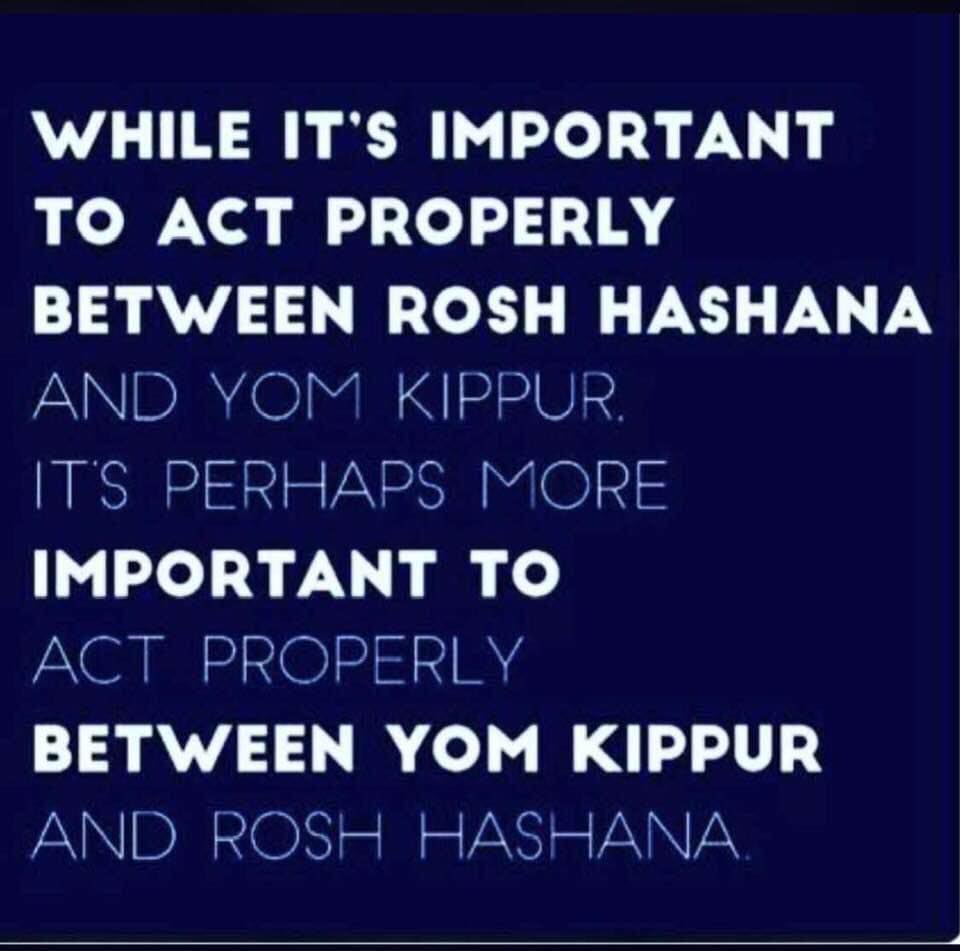
How do we take the spiritual high from yesterday forward? Perhaps the answer is best expressed in this popular meme:

As I have been reflecting on the prayers from the high holidays, specifically the viddui prayers we recited yesterday, it is clear that the confessionary nature of these words is a combination of raising for us a sense of what we have done wrong in the past and a road map of how to better ourselves. The areas of confession range from how we speak, how we interact with others and our need for mindfulness in all of our actions. If we have truly taken the day to heart, we will have hopefully walked away taking the first steps towards how we approach the next 12 months until the next Yom Kippur.

We are now in the 4 days leading up to Sukkot, Zman Simchateinu, the time of Joy. As we prepare for the celebratory days of Sukkot, may each of us take the power of Yom Kippur forward and celebrate the new opportunity placed before us.

Are you looking to take the next steps in the process of establishing your new journey: Contact New Beginnings Spiritual Coaching and Consulting LLC at 732-314-6758 ext. 100 or via email at newbeginningsspiritualcoach@gmail.com.

Facing Yom Kippur alone?

Yom Kippur, the Day of Atonement, is a very terrifying day. While it is an opportunity to start again through confession and regret, there is a sense of urgency that highlights the day. Whether one has spent this time preparing or not, how can a person wipe the entire slate clean in one 25 hour period? Sure, change is ultimately instantaneous, yet in examining the liturgy of the day, the task of repentance and finding forgiveness seems insurmountable.

Throughout Yom Kippur, the liturgy revolves around a formal confession, viddui, which lists a litany of areas we encounter and inevitably fall short of during the year. I find myself overwhelmed by the vastness of our perceived imperfections and our forced listing of them again and again. It can be lonely when confronting one’s shame, one’s failures. How can we even open our mouths to recite these words? It can be too much!

Yet, there is a short phrase in the introduction of the viddui which brings me solace. Before reciting the confession, it says:

אֱלֹהֵֽינוּ וֵאלֹהֵי אֲבוֹתֵֽינוּ תָּבֹא לְפָנֶֽיךָ תְּפִלָּתֵֽנוּ, וְאַל תִּתְעַלַּם מִתְּחִנָּתֵֽנוּ שֶׁאֵין אֲנַֽחְנוּ עַזֵּי פָנִים וּקְשֵׁי עֹֽרֶף לוֹמַר לְפָנֶֽיךָ יְהֹוָה אֱלֹהֵֽינוּ וֵאלֹהֵי אֲבוֹתֵֽינוּ צַדִּיקִים אֲנַֽחְנוּ וְלֹא חָטָֽאנוּ אֲבָל אֲנַֽחְנוּ וַאֲבוֹתֵֽינוּ חָטָֽאנוּ:

Our God and God of our fathers, let our prayer come before you and do not ignore our supplication. For we are not so brazen-faced and stiff-necked to say to you, Adonoy, our God, and God of our fathers, “We are righteous and have not sinned.” But, indeed, we and our fathers have sinned.

When we are confronting our inner self, working to overcome aspects of our lives we wish to change for the better, confessing our imperfections, there is a sense of being alone. And yet, in this phrase, “But, indeed, we and our fathers have sinned” the prayer is offering us strength, in that we are not alone in this process. We enter the auspicious day as part of a chain of tradition. We are here because it is part of our tradition, our legacy, to pause and take stock of what we have fallen short of and what we hope to rise to in the coming year. We are here because our parents, grandparents, etc. also needed a day a year to reframe life’s challenges and struggles. We are not doing this because everyone else is perfect and we are not. Rather, Yom Kippur is a day for all of us to embrace the imperfections for it is through this embrace that we can grow.

One of the struggles with growth and change in life is thinking that those around us don’t understand the struggles we are dealing with. When people are honest about their fears, worries and doubts, many barriers to change are removed. (As an example of a book that speaks about how shame is a barrier to change, see The Gifts of Imperfection: Let Go of Who You Think You’re Supposed to Be and Embrace Who You Are by Brene Brown.)

As we prepare in these final hours for Yom Kippur, may we find the resolve of knowing that we are all striving to be our ideal selves and find ways of reaching for those ideals. And if we fall short, if we err, let us remember that its OK, its part of our being human. It is merely a lonely struggle but it is a struggle we all face. May this Yom Kippur be a day of meaning, a day of introspection and a day of finding something to strive to reach for in the coming year.


“For Your Sake Living God”

In the midst of the period between Rosh Hashanah and Yom Kippur, there are liturgical additions that help frame the focus of these 10 days. One of the phrases is:

“זָכְרֵֽנוּ לְחַיִּים מֶֽלֶךְ חָפֵץ בַּחַיִּים וְכָתְבֵֽנוּ בְּסֵֽפֶר הַחַיִּים לְמַעַנְךָ אֱלֹהִים חַיִּים:

Remember us for life, King, Who desires life, and inscribe us in the Book of Life, for Your sake Living God.”

The other day, as I was reciting these words, I found myself shuddering when I came to the last phrase “for Your sake, Living God.” I began experiencing a sense that it is so difficult to live up to an ideal that if all else fails, we hope we can rely upon, “for Your sake…” inscribe us for good. As I was lost in this awesome moment, I was reminded of a short piece I recently read in Growing Each Day, a daily reader written by Rabbi Dr. Abraham Twerski o.b.m.. After asking what the phrase “for Your sake” means, Rabbi Twerski suggests a creative read of the prayer:

We might read the verse a bit differently. “Inscribe us in the book of a life that is lived for Your sake.” In other words, we pray not only for life, but for a quality of life that is meaningful and purposeful, one that will be lived for the greater glory of God (p. 5)…

Of course, we wish to be inscribed in the book of life, but it should be a life that we wish to be in rather than one that we seek to escape from (ibid.)

We recite these words during the 10 days of repentance as a focus on our striving for an ideal life of meaning, or spirit, of Godliness. I shuddered because it is an awesome and lofty goal that recognizes how hard it would be to reach. During this period, we look to formulate our ideal self, turning in prayer to God recognizing our imperfections and expressing a deep sense of hope to start clean.

Years ago, in a similar way, standing in prayer on Yom Kippur, reciting the words of confessions, the Viddui, I found myself suddenly laughing at the seeming absurdity of striving for forgiveness for all the myriad mistakes we make and will find ourselves making year in and year out. The laughter came from a place of fear, as if I didn’t laugh, I would have felt crushed by how truly difficult change is. I realized in that moment the goal of Viddui, the goal of this entire period is a striving, a framing of who we hope our ideal selves will be. And when we emerge from Yom Kippur, the question will be: do we have the opportunity afforded to us by being in the book of life to work on living towards our ideal self throughout the coming period between Yom Kippur and the next Rosh Hashanah? Will we carry forward the image of who we want to be during the doldrums of the remainder of the year?

May this new year of 5782 and this period be one of deep introspection in finding the ideal you so that we can take the opportunity to hit pause and beginning anew with a new goal, a new purpose and a new mission in our lives.