New Beginnings One Year Anniversary

Whenever we venture into the unknown, we see before us a vast expanse lying ahead, leaving us with fears and doubts as to what we will encounter along the way. For many of us, these fears stop us in our tracks and we never get the opportunity to go forth and explore. In these moments, we find ourselves similar to the biblical Patriarch Abraham when Gd calls him to “Go Forth from your land, from your birthplace and from your father’s home to the land that I will show you (Genesis 12:1).” There is a powerful idea in later Jewish writing that this call was not specific to Abraham but was a call that went out to the world that only Abraham was focused enough to hear. Perhaps this call is always out there, waiting for us when the time is right, when we are in the moment of deciding where to go next. In that moment, if we listen, we will know we aren’t going alone. Rather we must take the initial step and we will be shown what truly lies before us, not what we believe might be out there stopping us from going forward.

This is my story as well. This week marks the one year anniversary of New Beginnings Spiritual Coaching and Consulting LLC, a moment in my life of going forth to a new adventure, a new path in my life. It has been an amazing year for me on this journey of growing a private spiritual life coaching practice. New Beginnings began as a dream to build a business whose mission was to work with others confronting the spiritual and emotional challenges that arise during transitional periods in life. Through a focus on one’s spiritually and faith and the search for meaning, growth and change along the new paths we face, my goal is to foster and harness the tools we have or will need when embarking on a New Beginning. During this first year, I have worked with individuals and groups exploring areas such as:

  1. engaging one’s spiritual self in one’s life decisions
  2. grief and loss
  3. meaning making
  4. finding joy in the next chapter of life
  5. Rediscovery of “Who am I”

Through a combination of active listening, exploration, reflection and reframing, we work together to uncover layers of self-awareness. Through working together, we will often reveal the skills and tools you already possess to affect true positive change. It is my passion to help guiding others through these times of self-discovery, navigating the waves that we experience during the various transitional moments in life.

To get a more in depth sense of what New Beginnings can do for you, please check out the link to the recent interview I did with Jewish Sacred Aging’s Seekers of Meaning Podcast.

If you or someone you know is:

  • Feeling lost, without your anchor?
  • Struggling with the death of a loved one?
  • Looking for the spiritual spark to reignite your life?
  • Searching for a sense of meaning, hope or joy?
  • Trying to grapple with suffering?

Then I invite you to contact New Beginnings Spiritual Coaching and Consulting LLC at 732-314-6758 ext. 100 or via email at newbeginningsspiritualcoach@gmail.com. I look forward to supporting you along your journey and your New Beginning.


Resting on your Laurels, Or the importance of Shabbat

In exploring for myself and working with others to help foster spiritual growth and change, I stress time and again the notion of seeing every step as a positive gain even in the midst of one’s pain and suffering. Too often we get caught up in not being in our ideal states instead of embracing the road we are travelling and how far we might have already come.

In this week’s Torah portion, Bereishit, Gd provides perhaps the ultimate example of the importance of taking stock along the way. In the creation story, after Gd establishes something, whether it be light, land, animals and yes, even people, the section includes “And Gd saw that it was good (or very good in the case of day 6).” Gd, if you will, pauses after each major moment and sees that it is good even while still needing to do more. At the same time, Gd doesn’t just stop and say, OK, ‘I’ve created enough.’ The moment is good and then Gd continues until nothing is seemingly left to create.

At the end of this creation process, Gd offers us a second clue as the importance of reflection in the designation of a Sabbath day, the day Gd rested (Genesis 2:1-3). In a comment on verse 2:2, Rashi expresses an interesting read of the phrase וַיְכַ֤ל אֱלֹהִים֙ בַּיּ֣וֹם הַשְּׁבִיעִ֔י, On the seventh day God finished the work. He suggests:

דָּ”אַ מֶה הָיָה הָעוֹלָם חָסֵר? מְנוּחָה, בָּאת שַׁבָּת בָּאת מְנוּחָה, כָּלְתָה וְנִגְמְרָה הַמְּלָאכָה:

Another explanation: What did the world lack? Rest! Sabbath came — Rest came; and the work was thus finished and completed (Genesis Rabbah 10:9)!

Rashi highlights the importance that rest plays in our creative nature. Without rest, the world is incomplete!

It is not enough to be creative beings, to be action oriented beings. If all we are doing is doing, then the tasks will never end. If we don’t rest, we don’t see the places we have reached. If we don’t take stock along the way, seeing that it was “good,” then what are we really accomplishing.

I believe this notion of rest as the culmination of creation is extremely important to our spiritual work as well. On the one hand, of course it is important to always strive towards greater heights, never “Resting on your laurels.” At the same time, how can any of us know how far we have come without taking stock of our journeys, our processes. If we don’t stop, pause and rest along the way, we miss out on the solidifying of all we have done.

May each of us be blessed to find the opportunities to truly rest along the path, see where we have come, and have the time to plan what the next step will be.

Looking for support as you take a pause, giving yourself the opportunity to “rest” and reflect: Contact New Beginnings Spiritual Coaching and Consulting LLC at 732-314-6758 ext. 100 or via email at newbeginningsspiritualcoach@gmail.com.

The Gates are Closed/ The Gates are Open

Yom Kippur has come and gone. We have prayed, fasted and spent the day in the most spiritual way possible. The gates are closed. We emerge with the hope that this year will continue to be a year of good and of life.

And yet, with one gate closed, another is open:

Today begins a New Beginning. We have achieved our yearly moment of closure, the books of the past are sealed and now we have the chance to write the book of the present.

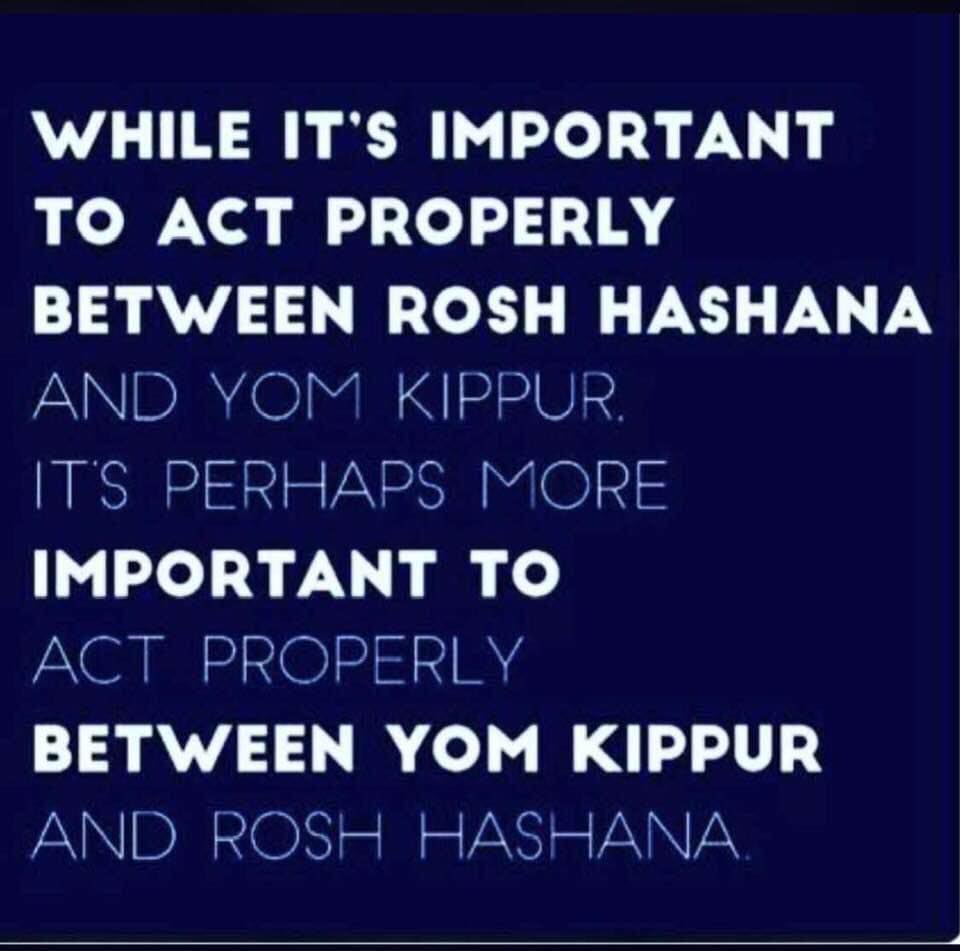
How do we take the spiritual high from yesterday forward? Perhaps the answer is best expressed in this popular meme:

As I have been reflecting on the prayers from the high holidays, specifically the viddui prayers we recited yesterday, it is clear that the confessionary nature of these words is a combination of raising for us a sense of what we have done wrong in the past and a road map of how to better ourselves. The areas of confession range from how we speak, how we interact with others and our need for mindfulness in all of our actions. If we have truly taken the day to heart, we will have hopefully walked away taking the first steps towards how we approach the next 12 months until the next Yom Kippur.

We are now in the 4 days leading up to Sukkot, Zman Simchateinu, the time of Joy. As we prepare for the celebratory days of Sukkot, may each of us take the power of Yom Kippur forward and celebrate the new opportunity placed before us.

Are you looking to take the next steps in the process of establishing your new journey: Contact New Beginnings Spiritual Coaching and Consulting LLC at 732-314-6758 ext. 100 or via email at newbeginningsspiritualcoach@gmail.com.

Listening to the whole story

How many of us only pay superficial attention when someone talks to us? Are we only conscious of hearing just what is being said? Maybe we are among the fortunate who pay just enough attention to get the gist of the message? Or perhaps, when someone is commenting about a situation or offering constructive criticism, even with the best of intentions, all we hear is the criticism without listening to the underlying suggestions of ways to improve? Are we too stuck in who we are, too stubborn to receive feedback, to recognize how the criticism is hopefully coming from a good place? (And yes, I am and have been guilty of this way too many times to count).

Sometimes the rebuke is really a blessing in disguise!

I came across a thought from the end of last week’s Torah portion that I found to be spot on as a reflection of hearing/not hearing as it pertains to growth and change. Deuteronomy 31:30 states:

וַיְדַבֵּ֣ר מֹשֶׁ֗ה בְּאזְנֵי֙ כל־קְהַ֣ל יִשְׂרָאֵ֔ל אֶת־דִּבְרֵ֥י הַשִּׁירָ֖ה הַזֹּ֑את עַ֖ד תֻּמָּֽם׃ {פ}
Then Moses recited the words of this poem to the very end, in the hearing of the whole congregation of Israel:

When the Torah uses the word אזני (in the hearing (related to the word for ear)) or any of its derivative words, it implies a different kind of listening, perhaps as in emphasizing paying attention. The people were to be paying attention to some form of poetic rendering of Moses’ final speech. This is either a reference to Deuteronomy 32 or it is a reference to the series of verses that precede 31:30 starting from 31:22, which also uses the word שירה as a reference to the words of Moses. Regardless, the word שירה has a positive connotation, the words preceding or upcoming are more of a rebuke. As such, what did they hear?

The Israelites, while hearing the harsh words from Moses, also heard hope in his words. They didn’t just hear the rebuke and the consequences of their fall. They also heard that even when falling so far, there is a point of being able to rise back up, that the relationship promised would remain. They heard the song because they were listening with their ear, listening intently to the entire speech, not just sitting with the negativity of rebuke.

Every year, I am amazed at the extent of the formal confessionary forms of prayer we engage in throughout the period between Rosh Hashanah and Yom Kippur, culminating in the Viddui/confessions of our various “sins,” which are recited time and again on Yom Kippur. It is easy to get overwhelmed by the categories of our errors and how far we must come. Yet, I am also amazed that within this hard reality check, we can emerge with a renewed feeling of “success” and belief that we will be sealed for a good year. In many synagogues, it has become the practice to sing and dance immediately post Yom Kippur as a show of our seeing beyond the words. Through our confronting our humanity in a serious fashion, we come out the otherside having taken the heaviness and made it into something to celebrate, not dread.

May each of us “hear” the prayers of Yom Kippur as the road map forward for us to grow each day. May our “ears” be open to both the voice inside ourselves looking to improve and to the feedback we hear from others.

If you are exploring ways to deepen your ability to recognize within yourself areas of desired spiritual growth: Contact New Beginnings Spiritual Coaching and Consulting LLC at 732-314-6758 ext. 100 or via email at newbeginningsspiritualcoach@gmail.com.

Aiming for the Center of the Dartboard.

Lately, I have been writing and reflecting a lot on focusing on the process, on imperfection and on the need to take growth as single steps along the path to the place we hope to reach. I find myself working daily to take this more positive approach, learning to appreciate how in a way it is all progress, both my successes and my failures. In light of these thoughts I have previously shared, I want to share a short message based on a discussion I’m involved in on Whatsapp.

Life can often seem like a game of darts. The bullseye is the goal we set before us. The dart is the tasks and tools are our disposal as we aim to reach the goal. When we aim and throw, we are ultimately hoping that the effort will lead us directly to the end goal, to the bullseye. And of course, we always want to hit the bullseye but sometimes we miss. Sometimes we miss by a little and sometimes completely. Yet, missing the target shouldn’t stop us from throwing the next dart. The challenge is, do we find the way to come back to the focus, the concentration of previous throws or do we allow the frustration to get in the way, increasing the odds of further misses?

It is difficult to fail, to miss, to be imperfect. I believe that many of the barriers we place before ourselves stems from this one fear, the fear of failure. If we fail, people will believe we are frauds. In truth, if we fail, it is not because we are frauds, rather, it is because there is no perfection and there will be times when we miss the target. And this goes for everyone around us as well.

As I sit here writing these words, I am reminded of the following read regarding the beginning of this week’s Torah portion, Vaetchanan.

וָאֶתְחַנַּ֖ן אֶל־יְהֹוָ֑ה בָּעֵ֥ת הַהִ֖וא לֵאמֹֽר׃

I pleaded with Gd at that time, saying,

אֲדֹנָ֣י יֱהֹוִ֗ה אַתָּ֤ה הַֽחִלּ֙וֹתָ֙ לְהַרְא֣וֹת אֶֽת־עַבְדְּךָ֔ אֶ֨ת־גדְלְךָ֔ וְאֶת־יָדְךָ֖ הַחֲזָקָ֑ה אֲשֶׁ֤ר מִי־אֵל֙ בַּשָּׁמַ֣יִם וּבָאָ֔רֶץ אֲשֶׁר־יַעֲשֶׂ֥ה כְמַעֲשֶׂ֖יךָ וְכִגְבוּרֹתֶֽךָ׃

“O lord Gd, You who let Your servant see the first works of Your greatness and Your mighty hand, You whose powerful deeds no god in heaven or on earth can equal!

אֶעְבְּרָה־נָּ֗א וְאֶרְאֶה֙ אֶת־הָאָ֣רֶץ הַטּוֹבָ֔ה אֲשֶׁ֖ר בְּעֵ֣בֶר הַיַּרְדֵּ֑ן הָהָ֥ר הַטּ֛וֹב הַזֶּ֖ה וְהַלְּבָנֹֽן׃

Let me, I pray, cross over and see the good land on the other side of the Jordan, that good hill country, and the Lebanon.”

וַיִּתְעַבֵּ֨ר יְהֹוָ֥ה בִּי֙ לְמַ֣עַנְכֶ֔ם וְלֹ֥א שָׁמַ֖ע אֵלָ֑י וַיֹּ֨אמֶר יְהֹוָ֤ה אֵלַי֙ רַב־לָ֔ךְ אַל־תּ֗וֹסֶף דַּבֵּ֥ר אֵלַ֛י ע֖וֹד בַּדָּבָ֥ר הַזֶּֽה׃

But Gd was wrathful with me on your account and would not listen to me. Gd said to me, “Enough! Never speak to Me of this matter again!

Deuteronomy 3:23-26

Moses tells the people he prayed to Gd to overturn the punishment of not being able to enter Israel and that Gd said “no.” There is even a suggested idea that Moses didn’t just pray once or twice but 515 times (based on the numerical value of וָאֶתְחַנַּ֖ן), always receiving “no” for an answer (see Midrash Aggadah, Deuteronomy 3:23:13). Moses admits he failed (yes, he also does also cast blame on the people for Gd’s anger and decision to keep the “punishment” that resulted from the Israelites second complaint about not having water and Moses responded inappropriately with anger (see Numbers 20:1-13)). Nevertheless, for Moses to admit that Gd said no, when so often his prayers ended up with Gd heeding the request, is itself a valuable lesson along the lines of .

There is no perfect person. We are all imperfect in some way. The imperfections, the failures are not excuses to not try, or try and try again. Yes, there are times when we must exit the one path and walk along another. But even this is not a failure, it is a transition to the next opportunity, to a new goal, A New Beginning.

May we each learn how to aim for the center, hit the target or miss the target, aim again or aim differently to hit the next target.

Looking for the tools to aim for the bullseye of your life: Contact New Beginnings Spiritual Coaching and Consulting LLC at 732-314-6758 ext. 100 or via email at newbeginningsspiritualcoach@gmail.com.

Putting on the wrong Tallit

I came across a great line in the Kedushat Levi, of R. Levi of Berditchev (second to last piece on Parashat Shelach in standard printings), that helps to shed light on this week’s Torah portion as well as provides us with a powerful perspective on keeping in our lane as we journey through life.

In reflecting on the character of Korach, R. Levi offered an interesting perspective. He suggests that Korach’s intention was not ego but it was the desire to serve Gd in the best way he perceived, which as a member of the Levite tribe meant the desire to serve in a priestly role like his cousin Aaron and sons. While noble, this was not the role Gd had in mind for Korach or for the other Levites for that matter. As such, Korach was punished with living in the state of limbo of being swallowed alive by the earth, “to live in Sheol (which biblically is like a netherworld). In the midst of analyzing Korach’s motivation and why it was problematic, R. Levi offers the analogy that Korach’s desire was like wearing a Tallit that didn’t belong to him (Reminds me of Harry Potter and the using of a wand which isn’t yours, as the wand chooses the wizard. The wand will work but not in the way that the person’s destined wand would work).

I would suggest that Kedushat Levi offers this analogy to connect the story of Korach to the end of last week’s Torah portion, which commands the Israelites in wearing a four cornered garment with tzitzit, strings. The tzitzit are worn as a constant reminder to follow after the laws Gd commanded. Part of the commandments is an underlying idea of the rules helping one stay in one’s lane, not starting after the desires of the heart and the eyes. Presumably, if you are find yourself straying from your “path,” you find yourself in limbo, or you find yourself along a path that isn’t yours. (I would also venture to suggest this analogy of the tallit is based on one of the rabbinic reads of Korach’s challenges to Moses. Karachi is said to have argued with Moses about whether a garment of all techeilet (blueish color) would qualify for the additional command to have one of the strings being of the techeilet color).

I found this metaphor resonated with me on a deeper level as regards to how we can grow in life. Most of us, with good intentions, will often go down a path we think we should go because others have found success or because it is the presumed best way to act. Yet, as we know, each of our paths is different and we shouldn’t try to walk along the path that we aren’t destined to go. We should work to properly wear our own “tallit” and not try to fit into someone else’s Tallit.

How would we know? R. Levi offers the answer. Going down a path that is “good” but not one’s path, like Korach, leaves a person in limbo. If we find ourselves living life yet feeling this sense of being neither here nor there, perhaps it is a deeper message inside our hearts to examine if we left the path we were destined for and veered onto a path we chose because it seemed for various reasons like the right one.

Need support in walking along your destined path. Contact New Beginnings Spiritual Coaching and Consulting LLC at 732-314-6758 ext. 100 or via email at newbeginningsspiritualcoach@gmail.com.

Purim 2022/5782 – Incomplete Joy/Complete Joy

Tonight begins the holiday of Purim, which focuses on the story told in Megillat Esther, set in Persia approximately 2500 years ago. Purim is a festive, fun, topsy turvy day, celebrating Jewish survival from the midst of an evil, genocidal decree. The victory and survival bring about a tremendous sense of relief and joy. This is best described in Esther 8:16:

לַיְּהוּדִ֕ים הָֽיְתָ֥ה אוֹרָ֖ה וְשִׂמְחָ֑ה וְשָׂשֹׂ֖ן וִיקָֽר׃

The Jews enjoyed light and gladness, happiness and honor.

Yet, if we take the story as a whole, something is missing. The book of Esther ends with the Jews in the same place as they were at the beginning, remaining under King Ahasuerus’s rule in Persia instead of returning to Israel and rebuilding the Second Temple.  In fact, the story ends with the anti-climatic moment of the Ahasuerus placing a tax upon all who live in his land, showing how surviving a genocidal decree doesn’t mean being free from the whims of weak leadership and potential oppression.  How can we celebrate while also sitting with this sense of incompleteness?

I would like to suggest that celebration is warranted, even if the story seems incomplete. In the moment of triumph, we can feel a tremendous burden lifted off our shoulders, leading to a sense of exhilaration or a sense of relief.  I contend most of us can find many experiences in our lives where this sense of relief in the moment might even lead us to a temporary happiness.

For the Jews of Shushan, surviving Haman’s decree provided this sense of relief.  As such, they celebrated their newly found “new lease on life.” Their celebration was one of communal care and support, guaranteeing all could celebrate through the giving of Mishloah Manot (gifts to friends) and Matanot L’Evyonim (gifts to the poor).  Subsequently, this celebration was established as a yearly practice, as being able to celebrate Purim was proof of continued survival, and the importance to taking the time to reflect on the moment. 

At the same time, 2500 years later, with the fortune of hindsight, we are led to question what were the long term gains of this survival.  They continued to be under foreign rule.  Eventually, the lightness, the relief goes away, and the reality of life returns, with all its trials and tribulations.  Yet, by establishing Purim, we are acknowledging the value in celebrating even a good that might not be complete, recognizing that it is right to celebrate momentary victories even when they remain incomplete.

This is a fundamental life lesson. While keeping the end goal in front of us is important to our journeys, if we don’t take stock in the middle, enjoying the pieces of the story each of us is writing, then we miss opportunities to reinvigorate and reinvest ourselves in our growth. May this Purim be a reminder of the importance of taking the time to celebrate the steps along the path the goals we have set for ourselves.

Updated from the piece I originally wrote here:

Find the joy in the steps along the path to change. Contact New Beginnings Spiritual Coaching and Consulting LLC at 732-314-6758 ext. 100 or via email at newbeginningsspiritualcoach@gmail.com

The power of a pause

We are constantly doing. It is hard to stop and reflect. We think that if we stop we won’t progress. If we don’t pause to reflect and to truly listen to our inner voice, so much will be lost.

The book of Leviticus, VaYikra, begins with Gd calling to Moses as an invitation to teach Moses the vast array of laws related to sacrifices. Verse 1:1 states:

וַיִּקְרָ֖א אֶל־מֹשֶׁ֑ה וַיְדַבֵּ֤ר יְהֹוָה֙ אֵלָ֔יו מֵאֹ֥הֶל מוֹעֵ֖ד לֵאמֹֽר׃

Gd called to Moses and spoke to him from the Tent of Meeting, saying:

When Gd is speaking to Moses, the Torah usually says, Gd spoke to Moses, similar to the language in the middle of verse one, after the initial call. As such, the first words, Gd called to Moses, seem superfluous. The great medieval commentator Rashi offers a pedagogical/psychological answer to this seeming redundancy.

ויקרא אל משה AND HE CALLED UNTO MOSES — This implies that the Voice went on and reached his (Moses’s) ears only but all the other Israelites did not hear it). One might think that for the subsections there was also such a call! It, however, states, “[And the Lord called unto Moses] and spake (וידבר) [to him]”, thus intimating that a דבור, a complete section had (was preceded by) a call (e. g., in our text chapters 1—4), but not the subsections. And what purpose did these subsections serve (i. e., why are the larger sections broken up into smaller ones)? To give Moses an interval for reflection between one division and another and between one subject and another — something which is all the more necessary for an ordinary man receiving instruction from an ordinary man (Sifra, Vayikra Dibbura d’Nedavah, Chapter 1 9).

There is a distinction between calling and speaking that hints towards the importance of allowing a lesson to resonate before moving on. In the Torah’s context, the verse is saying: Moses was called to Gd to be taught a series of laws. This call was an overarching invitation to be in the same space. Once Moses enters the space, Gd speaks to him. Yet, Gd doesn’t just teach everything in one breath. Rather, it is broken into different lessons. Via this picture, we can see, as Rashi indicates, the importance of teaching ideas in manageable parts while recognizing that there is an overarching subject. This message is of such importance that Rashi repeats the same idea 10 verses laters, stating:

ואם מן הצאן AND IF [HIS OFFERING BE] OF THE SHEEP — The ו (of אם) adds something to the former subject (i. e. shows that this is a continuation of it). Why, then, is there a break between the two paragraphs (i. e. why does the following form a separate paragraph)? In order to give Moses an interval between the one section and the next section to reflect upon what has already been said (Sifra, Vayikra Dibbura d’Nedavah, Section 5 1).

Rashi Vayikra 1:10

From a literal perspective, the breaks are just breaks. They indicate a change in subject. Breaks are a means of clear, structured writing. Yet, in this comment, we see that a break is more than that. It is a lesson about life. When we want to change, we can’t just do it all at once. We must go step by step and allow the change to time have to percolate. There is as much to learn in the break as there is in the words themselves.

All new beginnings take time and energy because if we do too much too quick, we are more likely to lose all momentum. If we break things down into smaller, subsections, we have a higher chance of success.

Take the first step! Open the door to a new path and begin a process of change. Contact New Beginnings Spiritual Coaching and Consulting LLC at 732-314-6758 ext. 100 or via email at newbeginningsspiritualcoach@gmail.com

Am I Living or Existing?

The inspiration for this piece came from a question posed on a WhatsApp group I am part of with friends from my year of study in Israel over 20 years ago.

Genesis 47:8-9 describes a conversation between Pharaoh and Jacob after Jacob and his family arrive in Egypt.

וַיֹּ֥אמֶר פַּרְעֹ֖ה אֶֽל־יַעֲקֹ֑ב כַּמָּ֕ה יְמֵ֖י שְׁנֵ֥י חַיֶּֽיךָ׃

Pharaoh asked Jacob, “How many are the days of the years of your life?”

וַיֹּ֤אמֶר יַעֲקֹב֙ אֶל־פַּרְעֹ֔ה יְמֵי֙ שְׁנֵ֣י מְגוּרַ֔י שְׁלֹשִׁ֥ים וּמְאַ֖ת שָׁנָ֑ה מְעַ֣ט וְרָעִ֗ים הָיוּ֙ יְמֵי֙ שְׁנֵ֣י חַיַּ֔י וְלֹ֣א הִשִּׂ֗יגוּ אֶת־יְמֵי֙ שְׁנֵי֙ חַיֵּ֣י אֲבֹתַ֔י בִּימֵ֖י מְגוּרֵיהֶֽם׃

And Jacob answered Pharaoh, “The days of the years of my sojourn [on earth] are one hundred and thirty. Few and hard have been the days of the years of my life, nor do they come up to the life spans of my fathers during their sojourns.”

Rabbi Samson Raphael Hirsch suggests that underlying the question and answer posed in these verses is a lesson about how we view our lives. As he states:

“V. 8 – Still today, royalty, whose time naturally is extremely previous at audiences, as a rule just throw out a few short words or enquiries, the replies to which they are in reality entirely indifferent. But it must be rare indeed for a king to have understood to secure more delicacy in a few interrogative words than Pharaoh did here. And even more seldom has the person addressed expressed more wisdom in a short reply, than Jacob did here. When one counts by years, one does not reckon any more the days. It is only with a few select people that each day is full of importance and is considered by them as having a special meaning. A really true human being does not lives years but days…”

After elaborating on the underlying philosophy behind Pharaoh’s question, Rabbi Hirsch presents his take on Jacob’s response:

” V. 9 – In his reply Jacob differentiates between living and existing. ‘You ask after the days of the years of my life. I have not lived much. I have sojourned on earth during one hundred and thirty years. The days of the years that I can really call my life (on which I really fully carried out all that I should) were in reality only few, and they were just the bitterest and those most full of worry…'”

R. Hirsch is suggesting in his in depth analysis of this dialogue a question for each of us to reflect on. Are we living or merely existing? Do we find each day meaningful in some way or is life merely a series of “groundhog” like days? We desire to make an impact, to live meaningful, fulfilling lives.

In fostering a new beginning, a primary goal is to change the direction of the path we have been cultivating because it seems monotonous. We can do this through a variety of means. We can foster our desire to help others, to reconnect to those we care about, to come back to a latent spirituality and creativity that might have been purposefully left dormant for years.

May each of us experience life as daily living and not merely as existence.

If you or someone you know is trying to foster a renewed sense of living life to the fullest, New Beginnings Spiritual Coaching and Consulting LLC is here to help. For more information, please check out: https://achaplainsnewjourney.wordpress.com/about/

Strength to the Weary

Among the morning blessings is one that blesses Gd for giving strength to the weary.

בָּרוּךְ אַתָּה יְהֹוָה אֱלֹהֵֽינוּ מֶֽלֶךְ הָעוֹלָם הַנּוֹתֵן לַיָּעֵף כֹּֽחַ:

Blessed are You, Adonoy our God, King of the Universe, Who gives strength to the weary.

Many of us recite this in the midst of feeling tired, either physically or emotionally, yet within this blessing is a moment of the inspiration to feel energized for the day ahead. I read a short piece that I believe helps frame the deeper sense of this blessing.

Consider: two persons, one young and the other old, walking the same road, or climbing the same mountain, with the goal far out of sight; who will reach it: the young one, starting out with full strength, but with little hope, or the old one, lacking in strength, but full of hope? The youth will soon get out of breath, and, despairing of ever attaining the goal, will give it up in frustration. But the old man will steadily forge ahead constantly renewing his strength by hope and confidence. This is what the prophet tells us: Physical strength will be of no avail, where there is no hope, but “they that hope in Gd will renew their strength (Isaiah 40:31).”

And so, when we start a new day, which may be a difficult one, it is good to bear in mind that it is Gd “who gives strength to the weary.” With hope and trust in Gd, no road is too long or too hard, and no obstacles are too difficult.

My Prayer Volume 1 by Rabbi Nissan Mindel pg. 34-35

So often we burn bright and burn out too fast because we get caught up in the moment and lose sight of the goal and the steadiness goal setting can provide us. If we take a moment to trust that the process is going at the pace it needs to and that we are along the right path, we can maintain the strength needed to forge ahead. The strength comes from the hope in the correctness of the path. This doesn’t mean the path is always the right one, but the path, right or wrong, will lead to the next crossroads and to the next new beginning. In one sense, every day is this opportunity. And so we recognize that when we are weary there is a strength we can draw on each day to strive forward.

For more information about New Beginnings Spiritual Coaching and Consulting LLC, and how we can support you on the journey through the waves of life, please check out: https://achaplainsnewjourney.wordpress.com/about/