I have always struggled with the concept of a communal day of mourning. What if I am not feeling that sense of sadness that is required to truly experience the day? Does that make me unfeeling, uncaring? Am I separating myself from the community in moments when I can’t conjure up the emotional pain and suffering that comes from taking on signs of mourning on this day?
Sure, we have found ways over the centuries to overcome the difficulty of feeling the loss of a sacred building and sacrificial services by lumping all the tragedies of Jewish history into this one day. We even have the Midrashic tradition claiming that Tisha B’Av is a cursed day going all the way back to the Torah’s story about the spies (see Parashat Shelach). And so, we read Lamentations (Eichah), read a variety of poems of elegy (Kinnot) and try every which way to feel a sense of longing for the rebuilding of the Third Temple and the end of all Jewish tragedies.
But…then I remember – It isn’t about emotions alone. It is about memory. Tisha B’Av in our contemporary world is about carving a day out of our busy lives to sit and remember the past, remember the pain of what was. What we read on this day tries to offers reasons and explanations, yet, the most powerful moments are when we recite those short, pithy phrases during Kinnot that feel like we are just throwing our hands up in frustration and despair.
One refrain, which repeats in a couple of the poems is the chorus Oy, what has befallen us. After expressing or listing a moment, we have nothing left to “say” but Oy. There are no words at some point. All that is left is the cry of despair.
Today, whether you “feel” it or not, take the time to reflect on the unanswered, the loss of attempts at explanation, the moments in the past and present when all we can do is sit there numb, not sure what to think or feel but Oy!
May this Tisha B’Av be the last Tisha B’Av of suffering and may we merit to see brighter days ahead.
I came across a line yesterday while reading The Soul of the Mishna by Rabbi Yakov Nagen. He suggests:
Throughout the six days of the week, we change the face of reality. Our actions denote a conception of reality that is lacking, and humanity’s inability to accept the lack. Action is forward-looking, toward a different reality that will appear as a result. The essence of Shabbat is the opposite: accepting reality as it is here and now, enabling one to be present in the moment.
p. 110
Our daily grind is the mission to create change in our lives. So many of us always feel like we are always on, constantly going from one thing to another. We are always searching for something else, something different, something meaningful and powerful. Too often we just keep moving and never stop to sit in the moment.
When we look at current suggestions about self-care, we find many advocates for making a Sabbath for oneself, designing a 24 hour period of detaching from constant connectivity and consciously reconnecting with oneself and those around you. This is a day of “not-doing.” It is a day of rest, rejuvenation, and returning to oneself. It is a day of being present.
As we continue to search for spiritual growth and find true meaning in life, do we give ourselves the time to sit where we are instead of just moving forward, looking for the next step. Are we smelling the roses?
Today, may we reflect on whether we give ourselves the time, whether formally or not, to be present and be accepting of reality. Do we live life only as people always grinding, or do we live Shabbat oriented lives as well, taking time to just be present to the here and now?
Looking to discover your more authentic, spiritually focused self? Let me help you along this path! Contact New Beginnings Spiritual Coaching and Consulting LLC at 732-314-6758 ext. 100 or via email at newbeginningsspiritualcoach@gmail.com
As much as I am here to help others and to support them in life’s challenging moments, I would be lying if I didn’t acknowledge how much I have learned from those people with whom I have been privileged to work. The other day, while I was visiting a hospice patient and the person’s family, one of the family members, as we were reflecting on meaning in life, shared the following poem, The Invitation (see here for a different reflection on this poem).
It doesn’t interest me what you do for a living. I want to know what you ache for and if you dare to dream of meeting your heart’s longing.
It doesn’t interest me how old you are. I want to know if you will risk looking like a fool for love, for your dream, for the adventure of being alive.
It doesn’t interest me what planets are squaring your moon. I want to know if you have touched the centre of your own sorrow, if you have been opened by life’s betrayals or have become shrivelled and closed from fear of further pain.
I want to know if you can sit with pain, mine or your own, without moving to hide it, or fade it, or fix it.
I want to know if you can be with joy, mine or your own; if you can dance with wildness and let the ecstasy fill you to the tips of your fingers and toes without cautioning us to be careful, be realistic, remember the limitations of being human.
It doesn’t interest me if the story you are telling me is true. I want to know if you can disappoint another to be true to yourself. If you can bear the accusation of betrayal and not betray your own soul. If you can be faithless and therefore trustworthy.
I want to know if you can see Beauty even when it is not pretty every day. And if you can source your own life from its presence.
I want to know if you can live with failure, yours and mine, and still stand at the edge of the lake and shout to the silver of the full moon, ‘Yes.’
It doesn’t interest me to know where you live or how much money you have. I want to know if you can get up after the night of grief and despair, weary and bruised to the bone and do what needs to be done to feed the children.
It doesn’t interest me who you know or how you came to be here. I want to know if you will stand in the centre of the fire with me and not shrink back.
It doesn’t interest me where or what or with whom you have studied. I want to know what sustains you from the inside when all else falls away.
I want to know if you can be alone with yourself and if you truly like the company you keep in the empty moments.
By Oriah Mountain Dreamer
In my reading of this poem, I find the words suggest that true connection in relationship, both relationship to oneself and relationship to others is not the externals we define ourselves by but the internal makeup of who we struggle to be. True spiritual growth is allowing our inner soul to be the driving factor in our lives, not the externals. To get to this place, we must first work on our self-exploration, finding our inner soul.
Today, let me invite each of you to reflect on this poem and start down the path of revealing the real, complicated life we all experience. May we find the way to live a more authentic life.
Looking to discover your more authentic, spiritually focused self? Let me help you along this path! Contact New Beginnings Spiritual Coaching and Consulting LLC at 732-314-6758 ext. 100 or via email at newbeginningsspiritualcoach@gmail.com
During Shavuot, I came across an idea which I have been reflecting on these past couple of days. During the prayers we recite on Shavuot, we refer to the holiday as Zeman Matan Torateinu, the day of the giving of the Torah, not the day of receiving the Torah. What is the difference between a day on which we were given something vs. a day we received something? Aren’t those just two sides of the same coin?
R. Menachem Genack, in his introduction to a book of R. Dr. Norman Lamm’s collected sermons, Torah Beloved, offers a simple, yet important answer to this question. He writes:
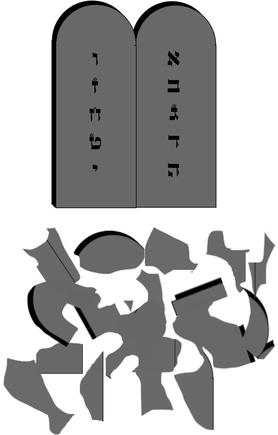
The reason we do not refer to Shavuot as the day on which we received the Torah is that Shavuot is not the day on which we received the Torah. Before I am accused of heresy, let me clarify. The Luhot which Moshe received on Shavuot were shattered at the base of the mountain, forty days later. We never received them. It was only after two more forty-day periods of prayer and fasting, on Yom Kippur, that God gave Moshe the second set of Luhot which the Jewish people were able to receive, unshattered. Thus, the day on which we received the Torah is actually Yom Kippur, not Shavuot, and that is why Shavuot is not identified in our liturgy as the day we received the Torah.
pg. XV
Shavuot is a culmination of sorts. It is a holiday that concludes a seven week countdown for the early harvest period. In our modern take, it is the completion of a seven week period of preparation to receive the Torah. Either way, Shavuot is an ending. Yet, when we reflect on R. Genack’s words, we realize that Shavuot is an end that remains incomplete. In a way, Shavuot is just the beginning. Shavuot was the first moment of what became a 120 day process of being able to truly receive the Torah.
To answer the question of giving vs. receiving, it makes sense that Shavuot is referred to as the Giving Torah day, not the receiving Torah day. When we are given something, it doesn’t automatically mean we have received it. Yes, it is now something in our “possession,” but there is a difference between something just dropped into one’s lap vs. being ready to receive it. I think reception in the context of the Torah needed to be an active process of grabbing hold of the precious item being given. And clearly, this is not something that is so easily done. For R. Genack, recalling the entire story of receiving the whole tablets, from Shavuot to Yom Kippur, we can learn a lesson about recognizing the different demarcation points in our lives.
All milestones, important moments in life contain two sides of the same coin. The milestone is a moment of accomplishment, of arriving at this junction of life. And yet, a milestone is also a stop along the way, from which we move to the next stop along our journey. It is a New Beginning. And we have an opportunity to always be ready to go for the next milestone while also celebrating the place we have arrived.
So my charge for today: Each morning, when we wake up, we have a chance to start fresh. We have completed and arrived at this new point. We have built up to be ready for today’s newness. Take a moment today reflecting on how we got to this moment, this day and then take a moment to recognize how we can take whatever brokenness came along with getting here and build and mend the brokenness while starting on this next step of our journeys today and every day.
Looking to discover your more authentic, spiritually focused self? Let me help you along this path! Contact New Beginnings Spiritual Coaching and Consulting LLC at 732-314-6758 ext. 100 or via email at newbeginningsspiritualcoach@gmail.com
I know what you are thinking right now. We aren’t near Rosh Hashanah; Isn’t the upcoming holiday Shavuot, the holiday celebrating the giving of the Torah. Why are you posting an image of judgment scales, which would be more appropriate to share in a few months for Rosh Hashanah? Wouldn’t this be a better picture to depict Shavuot?
Yet, if we examine a recently I came across fromom the Shlah HaKadosh (R. Isaiah Horowitz), we would see that the celebration of receiving the Torah and the scales of judgment work come together. He writes (Aseret HaDibrot, Shavuot):
חייב אדם לשמוח בזה החג ביותר, כי הוא יום שזכינו בו לכתר תורה. ובפסחים פרק אלו דברים (סח, ב), הכל מודים בעצרת דבעינן נמי לכם. מר בריה דרבינא יתיב כולא שתא בתעניתא, בר מעצרתא ויומי דפוריא כו’. רב יוסף ביומא דעצרתא עבד ליה עגלא תילתא, אמר, אי לאו ההוא יומא כמה יוסף איכא בשוקא. מכל מקום גילו ברעדה כתיב (תהלים ב, יא), והשמחה אשר שמח תהיה שמחה רוחניית והודות והלל להשם יתברך שנתן לנו התורה, מתעורר מאוד בלבו להתקדש ולתקן מעשיו ולהיות מוכתר בכתר תורה לקיים (יהושע א, ח) והגית בו יומם ולילה, כי היום הקדוש הזה הוא יומא דדינא:
וזה לשון תולעת יעקב דף נ”ח, ודע כי כמו שבראש השנה רצה הקדוש ברוך הוא להשגיח ולדרוש מעשה בני אדם כי הוא יום הבריאה הראשונה וחדוש העולם, וכמו שתקנו לומר זה היום תחלת מעשיך כדברי רבי אליעזר שאמר בתשרי נברא העולם (ר”ה ח, א), כן רצה ביום מתן תורה שהוא מורה על החדוש העולם להשגיח ולדרוש על מעשה העולם ולדונו על פירות האילן, כדאיתא בפרק קמא דראש השנה (טז, א) בארבע פרקים העולם נידון כו’, בעצרת על פירות האילן. וכבר ביארנו כי הפירות ההם הם הנשמות הפורחות מאילנו של הקדוש ברוך הוא, והעולם נידון ביום זה על התורה שנתנה בו שבטלו עצמה ממנה והוא אמרם על פירות האילן בלא השלימם בתורה ובמצות כראוי.
To Summarize: Shavuot is a day of celebrating receiving the crown of Torah. It is a day of rejoicing, a day dedicated to the spiritual rejoicing we experienced in receiving the Torah. The day is a time to renew our commitment to Torah study and enwrapping ourselves in the beauty of Gd’s word. It is the time we have the opportunity to renew this coronation. As such, it is a judgment day like Rosh Hashanah. This is based on the Mishnah from Rosh Hashanah (1:2), which says:
At four times of the year the world is judged: On Passover judgment is passed concerning grain; on Shavuot concerning fruits that grow on a tree; on Rosh HaShana, all creatures pass before Him like sheep [benei maron], as it is stated: “He Who fashions their hearts alike, Who considers all their deeds” (Psalms 33:15); and on the festival of Sukkot they are judged concerning water, i.e., the rainfall of the coming year.
Shavuot, Azteret, is the day the world is judged concerning fruits that grow from a tree. Reading this Mishnah with an eye towards the mystical, the spiritual, The Shlah suggests that the Torah, which is considered the Tree of Life, bears the fruits that result from our study and effort. What does all of this mean? How do we get judged on our intellectual output and what are we supposed to do to have a “favorable” judgment?
Reflecting on the bolded question, what keeps coming back to mind is the word effort. We are judged not on what we produce, but the effort we exert. Yes, there is a goal and desire to come up with novel, unique, deep approaches in our learning. But, this isn’t the goal and message of Shavuot. Rather, the goal is strengthening our daily connection to the Torah, to the gift and beauty of the corpus that is Gd’s word, Gd’s revealed “self” to the world. The goal of Shavuot is that this holiday is the moment each year we recommit to planting the seeds of deepening our desire to study daily. Through study, through connecting to Gd’s essence, we recommit to upholding one of the foundational points of the world (as we see from these words of Pirkei Avot (1:2)):
Shimon the Righteous was one of the last of the men of the great assembly. He used to say: the world stands upon three things: the Torah, the Temple service, and the practice of acts of piety.
When we exert effort, we are deserving of the crown of Torah. When we do our due diligence, when we put our effort in, we will see the results. To quote from a recent podcast/shiur from a friend, who was quoting from a former US President, Ask Not What Hashem Can Do For You, But What You Can Do For Hashem.
May we find that on Shavuot, whatever we learn, whenever we learn, that this holiday be one in which we recommit to our desires for spiritual and intellectual growth, putting in just a little bit more effort than we usually do, for with that effort we will find ourselves taking that most important first step forward to a New Beginning in our relationship to our spirituality and our faith.
Looking to discover your more authentic, spiritually focused self? Let me help you along this path! Contact New Beginnings Spiritual Coaching and Consulting LLC at 732-314-6758 ext. 100 or via email at newbeginningsspiritualcoach@gmail.com
Late yesterday, I updated my Facebook profile picture and cover photo to reflect who I am currently. Interesting that this change got a lot of reactions from my social media feed. This lesson in social media ties into something that I have been thinking about, “who is the real me?” This question relates to how we portray ourselves in public vs. how we see ourselves in private. We live in a very public, open world in our digital age. We live in a world where the majority of us are not just sharing public and private personas in our small communities. Living in a global community requires an increased consciousness of what we want others to see and that most likely moves us further away from our true, inner self that we often show in the privacy of our homes. And if I were to be honest, this is a challenging state to constantly have to navigate.
When we meet new people, are they showing us the glossy website version of themselves, the deep, troubled version or something in between? Sure, meeting a new person and expecting an instant trust is hard to ask of anyone. Yet, why is it that we hide behind an image. We are all guilty of this.
My Spiritual Life Coaching Practice, which is informed by my pastoral/spiritual care training, is also informed by the real, imperfect person that I am. No two people will ever have the same experiences. And, nobody is ever alone in experience, as we all have a well of emotional and spiritual ups and downs we can draw upon to be present with someone else struggling. I believe that if we are to help others discover hope, meaning, New Beginnings in a transitional period in life, we have to meet them from the place of our humanness and vulnerability. We must maintain boundaries with each other and we must find a way to build the trust needed to explore and effect the changes we are looking for when engaging a professional to help in our self discovery.
As I write these words, I realize how so much of this notion of showing the “real” me is predicated on trusting myself to be OK and compassionate to the real, imperfect self that I am. My belief is that each of us is masking our true, real selves behind a mask because we aren’t OK with who we are. Too many of us don’t like the person we see in the mirror, even though we wish we could. And yes, that last line is channeled from an interesting albeit strange self-help practice call the High Five Habit, in which we develop a notion of self-compassion and confidence through literally offering ourselves a high five each morning in the mirror.
May today be the day we begin to foster our self-compassion, trust and acceptance of the person we see in the mirror and may this person be the person we share with others.
Looking to discover your more authentic, spiritually focused self? Let me help you along this path! Contact New Beginnings Spiritual Coaching and Consulting LLC at 732-314-6758 ext. 100 or via email at newbeginningsspiritualcoach@gmail.com
Beginning of Chapter 44. This chapter returns to Love of Gd, working with the two level of love we outlined in the previous chapter. Here was see that lower love of Gd is manifest in fulfilling the Torah and its commandments while love is the yearning of the soul to be connected with the divine. He introduces a third approach, one which combines both the lower and upper levels of love. This is the desire of closeness that we have when recognizing the duality of physical and spiritual realms “existing” together. This section also reflects on “fake it till you make it.” Even if you aren’t really feeling the connection to Gd, strive towards it at all times.
All episodes can also now be heard on Apple Podcasts – here
Do you want to work on taking the actions of your life and find meaning in all you do and who you are? Are you struggling with your spiritual growth. Contact New Beginnings Spiritual Coaching and Consulting LLC at 732-314-6758 ext. 100 or via email at newbeginningsspiritualcoach@gmail.com
Conclusion of chapter 43. We conclude this chapter with a short piece on how the fear/awe and love are levels and building blocks for spiritual growth. The Alter Rebbe suggested in this part that usually the pattern is lower fear, lower love, upper fear and upper love. However, there are times when the lower level love takes precedence over fear. We discuss how and when this would be.
All episodes can also now be heard on Apple Podcasts – here
Do you want to work on taking the actions of your life and find meaning in all you do and who you are? Are you struggling with your spiritual growth. Contact New Beginnings Spiritual Coaching and Consulting LLC at 732-314-6758 ext. 100 or via email at newbeginningsspiritualcoach@gmail.com
Beginning of Chapter 43. We continue to focus on the notion of fear/awe of Gd. This section goes deeper into the distinction between “lower” fear and “upper” fear. Additionally, once we suggest that fear/awe are experienced in two different modalities, he circles back to love of Gd, suggesting a similar dichotomy between this worldly love (Ahavat Olam) and “great” love (Ahavah Rabba). We also discuss how these categories are part of a continuum as it relates to our spiritual growth.
All episodes can also now be heard on Apple Podcasts – here
Do you want to work on taking the actions of your life and find meaning in all you do and who you are? Are you struggling with your spiritual growth. Contact New Beginnings Spiritual Coaching and Consulting LLC at 732-314-6758 ext. 100 or via email at newbeginningsspiritualcoach@gmail.com
Conclusion of Chapter 42. We conclude the discussion about awe of Gd with two final points. First, part of being in awe of Gd is to observe the world and universe and to see the grandeur and beauty of existence. Second, we practice being contrite and in awe thrice daily when we bow during our prayers. This action is a physical reminder of our role as servants before a master.
All episodes can also now be heard on Apple Podcasts – here
Do you want to work on taking the actions of your life and find meaning in all you do and who you are? Are you struggling with your spiritual growth. Contact New Beginnings Spiritual Coaching and Consulting LLC at 732-314-6758 ext. 100 or via email at newbeginningsspiritualcoach@gmail.com





 New beginnings: A blog about spirituality, chaplaincy and renewal