Who is The Real Me

Late yesterday, I updated my Facebook profile picture and cover photo to reflect who I am currently. Interesting that this change got a lot of reactions from my social media feed. This lesson in social media ties into something that I have been thinking about, “who is the real me?” This question relates to how we portray ourselves in public vs. how we see ourselves in private. We live in a very public, open world in our digital age. We live in a world where the majority of us are not just sharing public and private personas in our small communities. Living in a global community requires an increased consciousness of what we want others to see and that most likely moves us further away from our true, inner self that we often show in the privacy of our homes. And if I were to be honest, this is a challenging state to constantly have to navigate.

When we meet new people, are they showing us the glossy website version of themselves, the deep, troubled version or something in between? Sure, meeting a new person and expecting an instant trust is hard to ask of anyone. Yet, why is it that we hide behind an image. We are all guilty of this.

My Spiritual Life Coaching Practice, which is informed by my pastoral/spiritual care training, is also informed by the real, imperfect person that I am. No two people will ever have the same experiences. And, nobody is ever alone in experience, as we all have a well of emotional and spiritual ups and downs we can draw upon to be present with someone else struggling. I believe that if we are to help others discover hope, meaning, New Beginnings in a transitional period in life, we have to meet them from the place of our humanness and vulnerability. We must maintain boundaries with each other and we must find a way to build the trust needed to explore and effect the changes we are looking for when engaging a professional to help in our self discovery.

As I write these words, I realize how so much of this notion of showing the “real” me is predicated on trusting myself to be OK and compassionate to the real, imperfect self that I am. My belief is that each of us is masking our true, real selves behind a mask because we aren’t OK with who we are. Too many of us don’t like the person we see in the mirror, even though we wish we could. And yes, that last line is channeled from an interesting albeit strange self-help practice call the High Five Habit, in which we develop a notion of self-compassion and confidence through literally offering ourselves a high five each morning in the mirror.

May today be the day we begin to foster our self-compassion, trust and acceptance of the person we see in the mirror and may this person be the person we share with others.

Looking to discover your more authentic, spiritually focused self? Let me help you along this path! Contact New Beginnings Spiritual Coaching and Consulting LLC at 732-314-6758 ext. 100 or via email at newbeginningsspiritualcoach@gmail.com

Who isn’t an imposter? The struggle of confidence

Let’s be real today. Who among us isn’t struggling to a certain extent with feeling like an imposter? According to this overview of imposter syndrome from Psychology Today, 70% of adults will have the feelings related to imposter syndrome at least once in life. In other words, most of us will have experienced this sense at some point in life.

I find myself reflecting on confidence and feeling like an imposter often. I find that part of the struggle is because we are inundated with the pristine images presented on social media. And just to be clear, we all do this. We get headshots to show our ideal selves, our smiling faces, our confidence. Most of us weed out the awkward picture for the perfect shot. We try not to post our foibles, only our successes.

Today, I want to say, I get the imposter feeling because many times I myself struggle with confidence. Recently I had an experience which reminded me of this struggle. The other day I was working along with a colleague and when he started speaking about me to a third person while I was present, sharing some of my “resume,” I found myself feeling both a sense of embarrassment to hear praise about myself (not in a humble sense, so don’t presume this comes from a sense of humility) and a sense of confidence being reminded that, yes, I am those things. For those who know me, that response is not surprising. Yes, I am aware of my resume and I do know what I have accomplished or attempted to accomplish. Yet, I struggle to believe it to be true. I struggle like we all struggle wondering whether we really have made an impact.

Why am I sharing this, being vulnerable with my readers?

I have a philosophy I bring to my work as a spiritual coach and I always tried to bring to my chaplaincy. It was something I learned early on in hospice work. Inevitably, during the course of a visit with the hospice patient and/or family, people would start asking me basic questions about my life, such as, was I married, did I have children, where do I live. At first, though I would respond, I was hesitant to answer, boundaries and all. Eventually, I realized that this was their way of testing the waters to see the humanness of the professional across the room. Sure, we could argue it is a form of avoidance in the midst of seriousness, but I truly believe it was a method for building trust. As such, I came to see this part of the conversation as a value unto itself. Sure, there are limits and professional boundaries and we aren’t there to unburden ourselves. Yet, if we don’t relate and connect on the basic human level, we will never fully engage the depth and sacredness of the space. In my coaching work, I have found the importance of bringing myself into the space, drawing from our common humanity to help further explore and build trust and relationship, which inevitably goes a long way to helping someone grow and discover.

Back to the imposter syndrome. We are all struggling in one way or another with who we really are and with how we perceive how others perceive us. It is part of being human. My hope is that each of has ways to remind ourselves that while it is a struggle, if we really think through all the naysaying, we might find how much we really are the person we claim to be, not an imposter pretending to be what we aren’t. May each of you find the confidence to overcome feeling like an imposter.

Are you struggling with your sense of self-confidence? Wondering if you really are the person people see you as? Are you working on your spiritual growth? Faith? Feeling lost in the midst of the journey of life? Contact New Beginnings Spiritual Coaching and Consulting LLC at 732-314-6758 ext. 100 or via email at newbeginningsspiritualcoach@gmail.com

Rebbe Nachman’s advice – New series

In addition to my recordings on Tanya, (see latest episode – Episode 38, and link to episodes on Apple Podcasts – here), and my occasional, reflective writing as the muse speaks to me, I am planning a couple of other serial postings. Keep on the lookout for new writing projects.

For now, I want to begin with a new series writing and commenting on the spiritual and psychological underpinnings as I see them in from the aphorisms and quotations of Rebbe Nachman of Breslov as culled together in the work, Likkutei Etzot. Based on the sales blurb on breslovbooks.com, Likkutei Etzot is:

The teachings in the Likutey Moharan not only contain novel enlightening concepts but also contain very practical advice and directions on how to implement the wisdom in the teachings. Lekuty Eitzos extracts and summarizes the main practical advice from Rabbi Nachman’s teachings, outlining them in a clear organized fashion. Aside from Lekutey Moharan thoughts are also taken from the sefer Sichos Haran. Now Rebbe Nachman’s guidance is made readably accessible, where one can directly locate and relate to his powerful advice. This work was compiled by Rebbe Nosson. He understood the strong, clear guidance Rebbe Nachman offers and wanted to make it more accessible for the masses. Likutey Eitzos was later reprinted with additions by Rabbi Nachman of Tcherin Lekutay Eitzos is therefore sometimes referred to as the “early” or “later” edition. This book is an amazingly powerful aid for one’s spiritual journey in this world.

I plan to explore selected pieces of advice, in order of the book. The text and translation come from Sefaria. I invite readers to search Sefaria for the original source texts to get a sense of the quotations context. However, my goal is to see the quotes as independent statements requiring our attention and reflection.

The first section is about אֱמֶת וֶאֱמוּנָה, Truth and faith.


א. עִקַּר הַגְּאֻלָּה תְּלוּיָה בָּאֱמוּנָה, כִּי עִקַּר הַגָּלוּת אֵינוֹ אֶלָּא בִּשְׁבִיל חֶסְרוֹן אֱמוּנָה: (לק”א סי’ ז’ אות א’)
In essence, redemption is dependent on faith. The root cause of the exile is simply a lack of faith (Likutey Moharan 7:1).

In this first quote, we can surmise a powerful idea in relation to mindset. Many times the sense of personal exile and redemption is one of perception. When we are in a “good place,” which might be a place where we are feeling strong in our faith in something greater than ourselves, we might well feel a freedom and sense of being redeemed from the trials and tribulations of what came before. At other times, this sense of faith will ebb, will shrink, will shatter. This is often in moments of crisis, moments taking us off the path we feel we have set before ourselves. In those moments of exile, part of the mindset of feeling exiled, feeling lost, can be rooted in the ebbing of our sense of order in the ways of the world. It can be rooted in our loss of sense of connection to Gd. Of course, many times it is the opposite, the exile leads to a sense of lost faith, lost trust.

While this statement can and is read as a call to merely strengthen faith and by extension we will find redemption, I would not be so quick to make that leap. I have witnessed those in “crisis,” in a personal exile being stronger and more secure in their faith than those for whom life is “whole” (though very few really have absolute wholeness in life).

In the eyes of my chaplaincy/spiritual coaching work, a statement like this is a good reinforcer to the work we support others in as it relates to their individual sense of belief, faith and spirituality. While things don’t occur so simply, it is in the depth of recognizing personal exile and redemption can have elements of spiritual struggle or the lack thereof that we can explore in our work.

Comments are welcome as we explore the work of Rebbe Nachman together.

Are you struggling with your spiritual growth? Faith? Feeling lost in the midst of the journey of life? Contact New Beginnings Spiritual Coaching and Consulting LLC at 732-314-6758 ext. 100 or via email at newbeginningsspiritualcoach@gmail.com

Spiritual Companionship/Coaching is a Two Way Street

It is a both a beauty and a challenge. In the opening pages of the book, Parting: A Handbook for Spiritual Care Near the End of Life, the authors offer a powerful description of what spiritual companionship means:

When you sign on to be a spiritual companion, you enter a two-way street. You invite intimacy, and you share from your own soul. You are a source of strength, but you look to the dying person for inspiration and moments of strength as well.

You open the window for peace to the surround the one who is dying, and you feel its breeze on your face.

You look for truth, for the expression of candid and deep feelings ranging from agony and anger to joy and acceptance, and find you must bare your feelings also.

Both of you will grow. You will care for one another. And you both will find tears to be a healing release and closeness of body, mind, and spirit to be a shelter from the cold night of pain and grief.

p. 2-3

While the chaplain, spiritual coach, spiritual care provider, (pick your title), has the ethical and professional responsibility to maintain boundaries, the ability to accompany a person from a spiritual place requires the professional to enter the sacred space heart and soul. We are the mostly non-anxious presence in the midst of a person’s struggle with the vulnerabilities that come from illness and loss of sense of wholeness. As such, when we enter, we are open to relationship being a two way relationship. While this does increase the risk of compassion fatigue and burnout, when we are meeting people from the place of relationship, we must meet the person as two vulnerable, imperfect human beings, not just in a the hierarchical relationship that is presumed by the professional role the chaplain or spiritual coach brings to the space.

This reminds me of the following passage from the Talmud:

וְהַיְינוּ דְּאָמַר רַבִּי חֲנִינָא: הַרְבֵּה לָמַדְתִּי מֵרַבּוֹתַי, וּמֵחֲבֵירַי יוֹתֵר מֵרַבּוֹתַי, וּמִתַּלְמִידַי יוֹתֵר מִכּוּלָּן.

And this is what Rabbi Ḥanina said: I have learned much from my teachers and even more from my friends, but from my students I have learned more than from all of them.

BT Taanit 7a

If you are in the midst of illness or spiritual struggle and are in need of a person to be on this journey with you, Contact New Beginnings Spiritual Coaching and Consulting LLC at 732-314-6758 ext. 100 or via email at newbeginningsspiritualcoach@gmail.com

Spiritual Nourishment

I was recently reading Restoring the Healer: Spiritual Self-Care for Health Care Professionals by William Dorman. This book offered a health care chaplain’s perspective on methods for how to best care for oneself so as to be engaged and effective in the helping of our patients, families and those for whom we have been tasked to care. One particular piece struck me from this book. The author writes:

These patients are like manna in the desert during your bleak and tiresome days. They energize you. They nurture your heart and soul. In the years to come, you will draw inspiration, stamina, and encouragement from your memories of these patients. Healers share an old adage: “ I get more from that patient than I am able to give him or her.”

Restoring the Healer p. 23-4

I found the metaphor of Manna poignant, as it is a sustenance of the spirit that we find at times. I recall one of my early hospice patients, a woman who was struggling with cancer. In one of our visits, she told me that I would always remember her as the person I cut my teeth on.

She was right!

For that patient, and the others who have taught and inspired me over the years, this quote sums up what they meant for me.

This message goes further than health care. What is your spiritual sustenance in those challenging times? From where do you draw your inspiration? What carries you through those difficult days?

Struggling to find your inspiration, your spiritual sustenance? Contact New Beginnings Spiritual Coaching and Consulting LLC at 732-314-6758 ext. 100 or via email at newbeginningsspiritualcoach@gmail.com.

Many Faiths, One Truth

Years ago, I recall a hospice visit with a Presbyterian family in which we spent time during the visit holding hands and praying together, each of us from our different backgrounds, creating a holy and sacred space of care and support. The memories of this moment serve as a regular reminder of the grandeur and beauty we can create through our coming together to care for each other.

Spiritual Care, Interfaith Chaplaincy, Spiritual Life Coaching all work within a framework of working with others through the eyes of our collective human experiences of meaning making, hope and faith. The chaplain, spiritual care provider, coach enters the space recognizing the invisible boundaries that at first seem to exist in relation to the backgrounds of both parties in the sacred space. Each encounter is an intricate dance of balancing the universalistic goal of supporting and helping others with the particularisms that might arise in the space resulting from each one’s background. I offer this brief reflection because of an old post I shared here which I decided to revisit.

In May, 2010, the Dalai Lama had the following op-ed published in the NY Times (copied from here):

Many Faiths, One Truth

By TENZIN GYATSO

Published: May 24, 2010

WHEN I was a boy in Tibet, I felt that my own Buddhist religion must be the best — and that other faiths were somehow inferior. Now I see how naïve I was, and how dangerous the extremes of religious intolerance can be today.

Though intolerance may be as old as religion itself, we still see vigorous signs of its virulence. In Europe, there are intense debates about newcomers wearing veils or wanting to erect minarets and episodes of violence against Muslim immigrants. Radical atheists issue blanket condemnations of those who hold to religious beliefs. In the Middle East, the flames of war are fanned by hatred of those who adhere to a different faith.

Such tensions are likely to increase as the world becomes more interconnected and cultures, peoples and religions become ever more entwined. The pressure this creates tests more than our tolerance — it demands that we promote peaceful coexistence and understanding across boundaries.

Granted, every religion has a sense of exclusivity as part of its core identity. Even so, I believe there is genuine potential for mutual understanding. While preserving faith toward one’s own tradition, one can respect, admire and appreciate other traditions.

An early eye-opener for me was my meeting with the Trappist monk Thomas Merton in India shortly before his untimely death in 1968. Merton told me he could be perfectly faithful to Christianity, yet learn in depth from other religions like Buddhism. The same is true for me as an ardent Buddhist learning from the world’s other great religions.

A main point in my discussion with Merton was how central compassion was to the message of both Christianity and Buddhism. In my readings of the New Testament, I find myself inspired by Jesus’ acts of compassion. His miracle of the loaves and fishes, his healing and his teaching are all motivated by the desire to relieve suffering.

I’m a firm believer in the power of personal contact to bridge differences, so I’ve long been drawn to dialogues with people of other religious outlooks. The focus on compassion that Merton and I observed in our two religions strikes me as a strong unifying thread among all the major faiths. And these days we need to highlight what unifies us.

Take Judaism, for instance. I first visited a synagogue in Cochin, India, in 1965, and have met with many rabbis over the years. I remember vividly the rabbi in the Netherlands who told me about the Holocaust with such intensity that we were both in tears. And I’ve learned how the Talmud and the Bible repeat the theme of compassion, as in the passage in Leviticus that admonishes, “Love your neighbor as yourself.”

In my many encounters with Hindu scholars in India, I’ve come to see the centrality of selfless compassion in Hinduism too — as expressed, for instance, in the Bhagavad Gita, which praises those who “delight in the welfare of all beings.” I’m moved by the ways this value has been expressed in the life of great beings like Mahatma Gandhi, or the lesser-known Baba Amte, who founded a leper colony not far from a Tibetan settlement in Maharashtra State in India. There he fed and sheltered lepers who were otherwise shunned. When I received my Nobel Peace Prize, I made a donation to his colony.

Compassion is equally important in Islam — and recognizing that has become crucial in the years since Sept. 11, especially in answering those who paint Islam as a militant faith. On the first anniversary of 9/11, I spoke at the National Cathedral in Washington, pleading that we not blindly follow the lead of some in the news media and let the violent acts of a few individuals define an entire religion.

Let me tell you about the Islam I know. Tibet has had an Islamic community for around 400 years, although my richest contacts with Islam have been in India, which has the world’s second-largest Muslim population. An imam in Ladakh once told me that a true Muslim should love and respect all of Allah’s creatures. And in my understanding, Islam enshrines compassion as a core spiritual principle, reflected in the very name of God, the “Compassionate and Merciful,” that appears at the beginning of virtually each chapter of the Koran.

Finding common ground among faiths can help us bridge needless divides at a time when unified action is more crucial than ever. As a species, we must embrace the oneness of humanity as we face global issues like pandemics, economic crises and ecological disaster. At that scale, our response must be as one.

Harmony among the major faiths has become an essential ingredient of peaceful coexistence in our world. From this perspective, mutual understanding among these traditions is not merely the business of religious believers — it matters for the welfare of humanity as a whole.

In my original reflection on this piece, I found myself questioning what I perceived his primary argument to be, that through the commonality of compassion we should find the ability to rise above our particularistic beliefs to find a single unified humanity. I struggled at the time because I believed that it is from the particular backgrounds we came from that can best serve us in working together. In the original post, I wrote “While he is correct about said premise, compassion doesn’t necessarily translate into the reality of all religions being of a single truth. I think we sometimes lose track of our differences and hence this causes more conflict than would be had if we come to the table stating our stances on all topics.” Part of my claim was that so often we enter common space and apologize for who we are because we are afraid of the confrontation. Yet, if we take a deeper look at relationships, it is in the confrontation that I believe we can find compassion, care and real growth.

If we treat a space of with the compassion of respect, through listening, reflecting, sharing and being comfortable in the uncomfortable, we can foster our collective humanity. Often, we think the solution is to remove aspects of what we are bringing to the common space because of fear. Yet, by entering the space with people from other backgrounds, faiths, practices, etc. each of us has already taken the first step to building the bridge.

Announcement: Aromatherapy Partner

I want to announce that I am now partnering with Robin B. Kessler, CCA. She is a Certified Clinical Aromatherapist and the Owner of RBK Aromatherapy LLC. For more information about Robin, see my Partners/Consultants page.

Below is an excerpt from Robin’s website explaining what aromatherapy is and how it can help.

What is Aromatherapy?
It can be described as an art and science of utilizing naturally extracted aromatic essences from plants to balance, harmonize and promote a  health of body, mind and spirit.
Essential oils have been found to provide both psychological and physical benefits when used correctly and safely.  It is not just using essential oils, it is using other methods like herbs and resins which can be burned or infused in carrier oils to help soothe the body and spirit.

How Can It Help me?
Aromatherapy can help with Anxiety, Stress, Pain Management, Allergies, Concentration & Memory, Headaches, Skin Conditions, Confidence and much more.

https://www.rbkaromatherapy.com/

In reflecting on the inclusion of aromatherapy as an offering of my coaching practice, I find myself reflecting on an aspect of the Israelite Temple service. In studying the various korbanot, sacrifices, Gd commanded the Israelites to provide as delineated throughout the Torah, including in this week’s portion, Shelach, one will notice a common theme. The phrase רֵ֤יחַ נִיחֹ֙חַ֙ לַֽיהֹוָ֔ה, an odor pleasing to Gd, repeats itself over and over as part of the descriptive nature of the sacrifice. Part of the sacrificial ritual is in the scent ascending to Gd as a sign of acceptance. Another element of the Temple rituals that also related to the olfactory senses was the ketoret, the incense offering.

In our times, without these sacrifices, we have found and created alternatives to allow these rituals to continue to play an important part in our lives. To bridge the gaps between us and our spiritual selves, we must constantly work towards enhancing our sense of wellbeing. There are many tools people choose to use, whether it is meditation, yoga, exercise, etc. One of the tools we can use is Aromatherapy.

I look forward to this opportunity to expand the offerings of New Beginnings Spiritual Coaching and Consulting LLC to further enhance the goal of supporting and helping you during your journey through the waves of life.

Need support to navigate the waves of life. Contact New Beginnings Spiritual Coaching and Consulting LLC at 732-314-6758 ext. 100 or via email at newbeginningsspiritualcoach@gmail.com.

Seeing Total Pain

The following quote caught my eye from the introduction of Chaplaincy and Spiritual Care In the Twenty-First Century: An Introduction:

When Amy Greene, director of spiritual care at the Cleveland Clinic, was asked what she thinks people need from chaplains, she responded, “People want someone to see their total pain.”

P. 3

This quote reminds me of the following Talmudic passage:

אָמַר רַבִּי אַחָא בַּר חֲנִינָא כל הַמְבַקֵּר חוֹלֶה נוֹטֵל אֶחָד מִשִּׁשִּׁים בְּצַעֲרוֹ אָמְרִי לֵיהּ אִם כֵּן לִיעַלּוּן שִׁיתִּין וְלוֹקְמוּהּ אֲמַר לֵיהּ כְּעִישּׂוּרְיָיתָא דְּבֵי רַבִּי וּבְבֶן גִּילוֹ
Rav Aḥa bar Ḥanina said: Anyone who visits an ill person takes from him one-sixtieth of his suffering. The Sages said to him: If so, let sixty people enter to visit him, and stand him up, and restore him to health. Rav Aḥa bar Ḥanina said to them: It is like the tenths of the school of Rabbi Yehuda HaNasi, who said that each of one’s daughters inherits one-tenth of his possessions. His intent was that each daughter would receive one-tenth of the remainder after the previous daughter took her portion. Here too, each visitor takes from the ill person one-sixtieth of the suffering that remains, and consequently a degree of suffering will always remain with the ill person. Furthermore, visiting is effective in easing the suffering of the ill person only when the visitor is one born under the same constellation as the ill person.

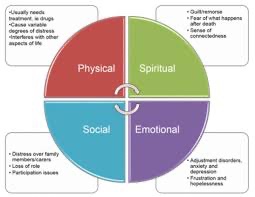
The chaplain is tasked with seeing the whole person, mind, body and soul. The chaplain visit is focused on visiting the person, not just the illness. It is through this seeing, being present to the whole person, that has a fundamentally positive effect. By positive, I mean to say that the time together is one that intrinsically changes the despair and loneliness most often felt when experiencing “total pain.”

Looking for someone to be present to your “total pain.” Contact New Beginnings Spiritual Coaching and Consulting LLC at 732-314-6758 ext. 100 or via email at newbeginningsspiritualcoach@gmail.com.

Living and Growing from a place of not knowing

Too often we fashion ourselves as experts in things we are quite unfamiliar with. This is a mechanism to protect the more vulnerable parts of our personality because we are afraid our not knowing is a sign of lacking when in reality no one knows everything. We feel scared when we are thrust into something we feel unprepared for and sometimes to protect ourselves we act like we know.

Rabbi Dr. Abraham Twerski, in Growing Each Day, expounded on the following Talmudic passage from Berachot 4a:

דְּאָמַר מָר: לַמֵּד לְשׁוֹנְךָ לוֹמַר ״אֵינִי יוֹדֵעַ״, שֶׁמָּא תִּתְבַּדֶּה וְתֵאָחֵז.

articulated by the Master: Accustom your tongue to say: I do not know, lest you become entangled in a web of deceit.

Rabbi Dr. Twerski suggested:

“While no human being can know everything, some people cannot admit any ignorance about anything. For them, any admission of lack of knowledge threatens their fragile egos… Furthermore, the only way we can acquire knowledge is by accepting that we do not have it. People who claim to know everything cannot learn. Therefore, many opportunities to learn pass them by, and their denying their ignorance actually increases their ignorance… (p.216)”

Saying I don’t know is not strictly an admission of not knowing. Rather it is an opening and invitation to explore. It is through this exploration that we can know, and remove the desire to “fool” ourselves or others. Unfortunately, it is common that our fears of being “seen” actually further hinder our growth and ability to make forward strides. It is that fear that keeps us stagnant and yet leaves us feeling antsy, anxious, unsettled. We are unsettled because we close ourselves off from the value of listening to others and truly listening to ourselves.

One of the core elements of my chaplaincy and now my coaching is to foster the dual listening in the space of care. By my listening to others and hopefully the individuals listening to the words they are saying, it allows us to cultivate the gaining of knowledge through exploration, questions and reflections. Together we open the gates to find new vistas to confront challenging and difficult situations.

May we be blessed to be comfortable in the uncomfortable space of not knowing.

If you are looking to explore and discover new approaches to the difficulties in your life, Contact New Beginnings Spiritual Coaching and Consulting LLC at 732-314-6758 ext. 100 or via email at newbeginningsspiritualcoach@gmail.com.