Believing in Oneself is a form of Humility

Most of us are familiar with some version of the following story (found here):

So there is a joke you probably know on the topic of humility. The chief rabbi of the synagogue at Yom Kippur is beating his breast and crying, tears running down his cheeks “I’m nothing, Lord! I’m nothing! I’m absolutely nothing!” Next to him the chief donor to the synagogue, a wealthy banker kneels down and hits himself on the chest and yells “I’m nothing! God forgive me for thinking I’m something. I’m not. I’m nothing!” Whereupon Shlomo a poor man who sweeps the synagogue out after services and hauls trash gets down on his knees and yells “I’m nothing! I’m nothing.” The rabbi observes this, elbows the banker and whispers “Look who thinks he’s nothing.”

We tend to confuse humility, the idea that we lack pride and the idea of having an attitude that even if we are skilled and knowledgeable, it doesn’t make us inherently better than anyone else, with feelings of low self-worth and self esteem. In most spiritual practices this distinction is crucial because it can help frame a fundamental spiritual practice of self-nullification. Self-nullification is about recognizing that within the greater universe, we are practically nil. In many religions, this is described in relation to the divine, that from a divine perspective, the only real existence is the divine (see here for one example of a Jewish perspective of the definition and purpose of self-nullification).

Yet, in conjunction with this important practice, our spiritual growth can only truly become manifest if we balance this self-nullification with knowing that our lives have purpose and meaning. I have been thinking about this in relation to a piece I read last weekend from R. Elimelech Biderman in Torah Wellsprings (Parashat Beshalach – see the full piece here pgs.4-5).

To quote a few excerpts from the piece:

Reb Tzadok HaKohen (Tzidkas HaTzaddik 154) writes: “Just as one must believe in Hashem (Gd), one must also believe in himself. This means to believe that Hashem is interested in him. He must believe that his soul comes from Above, and Hashem has pleasure from him and has enjoyment when he does Hashem’s will. This is the meaning of the pasuk (verse) (Shmos ויאמינו בה’ ובמשה עבדו (14:31, ‘And they believed in Hashem and in Moshe…’ Moshe represents the six-hundred-thousand Yidden (Jews) of that generation. They believed that Hashem desires them and derives pleasure from them and from the good that’s in them.”

It is hard for people to believe that Hashem wants them because they know their faults. However, faults and errors are part of the creation of the world. This shouldn’t prevent us from believing that Hashem wants us…

From the very essence of creation, a pattern of imperfection emerged.

Yet after all of that, it states (Bereishis 1:31) וירא אלקים את כל אשר עשה והנה טוב מאוד, ”And Hashem saw all that He had made, and behold it was very good.”

This is what Hashem calls good. It is because of imperfections that Hashem created the world. Hashem has pleasure when we overcome the struggles, downfalls, blockades, and hardships and do His will. So, you can believe in yourself, even if you are imperfect. In fact, your imperfections are the purpose of the entire creation. This trait enables you to bring a nachas ruach (inner sense of wellbeing) to Hashem more than all the malachim (angels) in heaven…

Our approach in life is two fold. We must be humble in recognizing our finite nature, our inherent imperfections and our existence in relation to Gd. At the same time, we cannot see ourselves as so low and unworthy that we never strive for anything, we never strive to grow and improve and lessen the imperfections we have in life. When we have a healthy sense of self-compassion and self-worth, we are able to do the things that help us move along our paths to fulfill our goals, our purpose for being.

This is a challenging practice to work on. It can feel extremely difficult to maintain the balance between humility and self-worth. Yet, we must always be working to find the balance, the right mix, so that we are moving forward step by step, moment by moment. We have the opportunity each day to practice through prayer, through our relationships with others and through our work towards attaining our personal goals.

May we each work to foster our own balance between believing in ourselves and the humility to recognize each of us is another part of our interdependent existence.

If you or someone you know is looking to forge ahead and set new goals for the journey of life or trying to find a sense of meaning in life, we are here to help foster spiritual and emotional growth and change. Schedule your appointment today here. For more information, please contact New Beginnings Spiritual Coaching and Consulting LLC at 732-314-6758 ext. 100 or via email at newbeginningsspiritualcoach@gmail.com
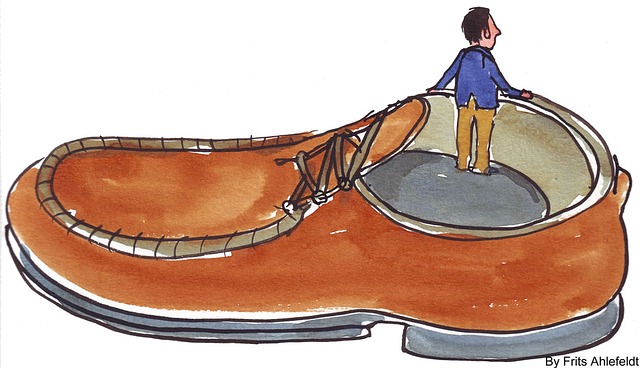

Standing in someone else’s shoes

If you could be someone else for a day, who would you be, and why?

I was playing around with the Jetpack app (newer app to serve for wordpress.com) and came across prompt questions to write about. Interestingly, this was today’s question. I think this question is a great exercise in self reflection. At first glance, the question presumes we want to be someone we are not and that we have an image of who that person is. The answer we give could be a combination of our current personal struggles, our dreams and our perception of what life is like for the other person. Yet, we also know that this wish is perhaps a bit like how we see the grass is greener on the other side, thinking it better to be anywhere but here.

Nevertheless, let’s play this question out a little bit using a deeper dive. What are we looking for/at when we imagine life as someone else? Is it about looks, riches, the joy we perceive? Is it a momentary isolated picture on Facebook which makes us dream of that life? Do we see an immaculate house while living in clutter? Whatever the picture is of life in another’s shoes, when we have those moments, perhaps it is the opportune moment to take steps that lead us to a New Beginning.

The change we are seeking when dreaming of that other life might not even be about the facts we are imagining. They might be about a desire for someone different than what we are currently doing. Maybe it’s how we schedule the day. Maybe it is re-prioritizing the important and the unimportant. Or maybe it really is a desire to be different and that we should foster bigger change through small, goal oriented steps. Any which way we look at it, trying to imagine being another person can actually be beneficial if it comes from a cautious growth oriented mindset and not from a place of jealousy.

After all that, I am sorry to disappoint everyone but truth is, I don’t really have a desire to be someone else for a day. I am truly blessed to be who I am and have worked to recognize that the desires to be someone else where really all about how to be better in my own life.

Are you imaging your life would be different that it is? Wondering if you really are the person people see you as? Are you working on your spiritual growth? Faith? Feeling lost in the midst of the journey of life? Contact New Beginnings Spiritual Coaching and Consulting LLC at 732-314-6758 ext. 100 or via email at newbeginningsspiritualcoach@gmail.com

Who isn’t an imposter? The struggle of confidence

Let’s be real today. Who among us isn’t struggling to a certain extent with feeling like an imposter? According to this overview of imposter syndrome from Psychology Today, 70% of adults will have the feelings related to imposter syndrome at least once in life. In other words, most of us will have experienced this sense at some point in life.

I find myself reflecting on confidence and feeling like an imposter often. I find that part of the struggle is because we are inundated with the pristine images presented on social media. And just to be clear, we all do this. We get headshots to show our ideal selves, our smiling faces, our confidence. Most of us weed out the awkward picture for the perfect shot. We try not to post our foibles, only our successes.

Today, I want to say, I get the imposter feeling because many times I myself struggle with confidence. Recently I had an experience which reminded me of this struggle. The other day I was working along with a colleague and when he started speaking about me to a third person while I was present, sharing some of my “resume,” I found myself feeling both a sense of embarrassment to hear praise about myself (not in a humble sense, so don’t presume this comes from a sense of humility) and a sense of confidence being reminded that, yes, I am those things. For those who know me, that response is not surprising. Yes, I am aware of my resume and I do know what I have accomplished or attempted to accomplish. Yet, I struggle to believe it to be true. I struggle like we all struggle wondering whether we really have made an impact.

Why am I sharing this, being vulnerable with my readers?

I have a philosophy I bring to my work as a spiritual coach and I always tried to bring to my chaplaincy. It was something I learned early on in hospice work. Inevitably, during the course of a visit with the hospice patient and/or family, people would start asking me basic questions about my life, such as, was I married, did I have children, where do I live. At first, though I would respond, I was hesitant to answer, boundaries and all. Eventually, I realized that this was their way of testing the waters to see the humanness of the professional across the room. Sure, we could argue it is a form of avoidance in the midst of seriousness, but I truly believe it was a method for building trust. As such, I came to see this part of the conversation as a value unto itself. Sure, there are limits and professional boundaries and we aren’t there to unburden ourselves. Yet, if we don’t relate and connect on the basic human level, we will never fully engage the depth and sacredness of the space. In my coaching work, I have found the importance of bringing myself into the space, drawing from our common humanity to help further explore and build trust and relationship, which inevitably goes a long way to helping someone grow and discover.

Back to the imposter syndrome. We are all struggling in one way or another with who we really are and with how we perceive how others perceive us. It is part of being human. My hope is that each of has ways to remind ourselves that while it is a struggle, if we really think through all the naysaying, we might find how much we really are the person we claim to be, not an imposter pretending to be what we aren’t. May each of you find the confidence to overcome feeling like an imposter.

Are you struggling with your sense of self-confidence? Wondering if you really are the person people see you as? Are you working on your spiritual growth? Faith? Feeling lost in the midst of the journey of life? Contact New Beginnings Spiritual Coaching and Consulting LLC at 732-314-6758 ext. 100 or via email at newbeginningsspiritualcoach@gmail.com