Often we feel like we are traveling on a dark road with no end in sight. We can’t begin to figure out where the destination is. All we see is the uncertainty that lies ahead. How can we overcome the inevitable fear we feel on this long, unknown path? One way is to work to change the image we see before us. Perhaps, this next images changes the mood.
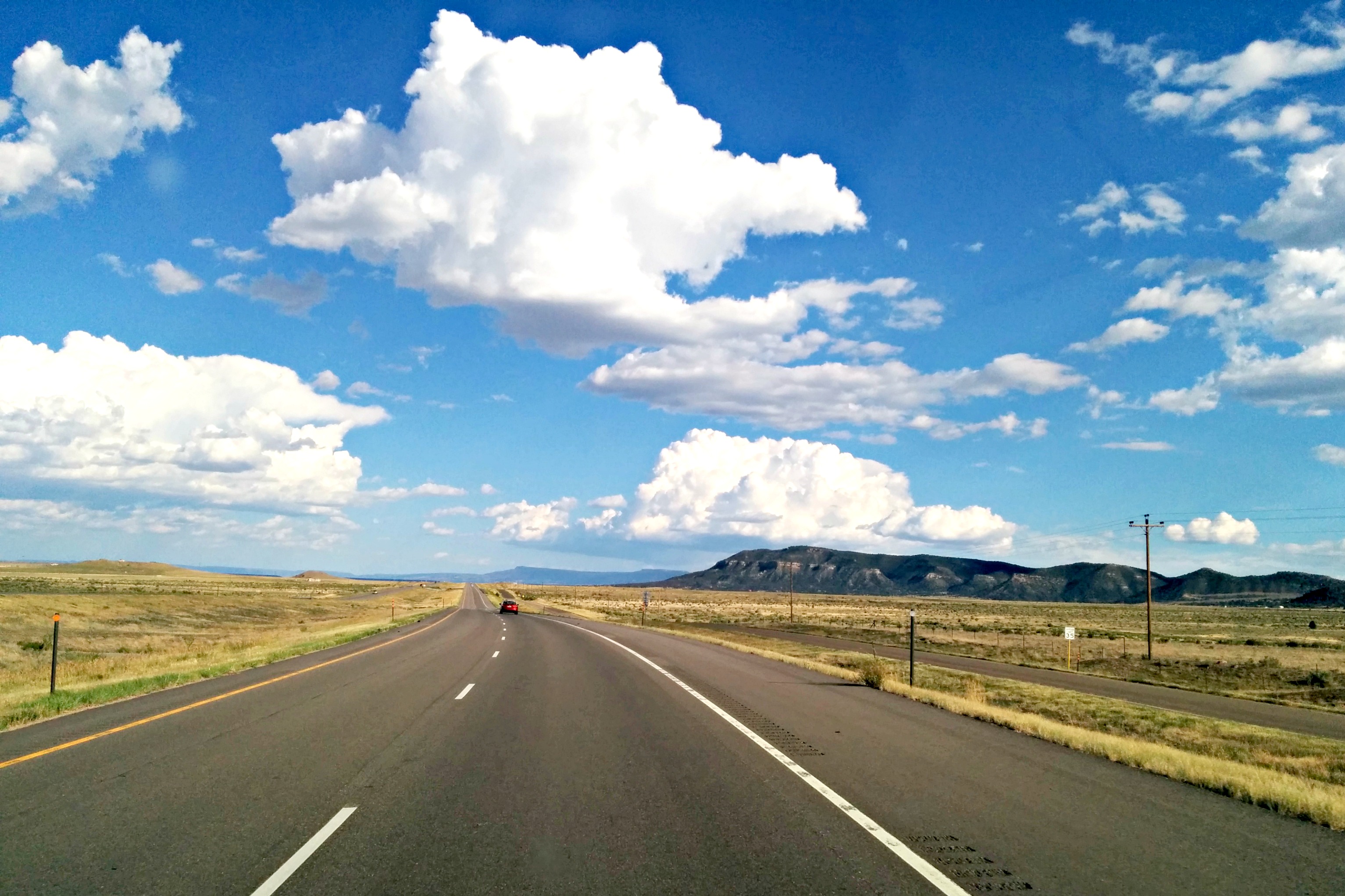
Imagine this brighter image. Yes, it is an open road, but with the sun, we will hopefully have a better sense of where we are able to go.
The first step on the journey to change and find our path is to “turn on the light.” This is not a simple practice. It is one which takes time and effort to find the “switch.” Yet, once we shift our perception, we can then begin to progress to the next destination along the road of life.
Often, as we are trying to find our way along our personal journeys, we search for tools to help us attain a greater focus on where we are going. I want to share one tool which I recently read about in The Awakened Brain: The New Science of Spirituality and Our Quest for an Inspired Life by Lisa Miller, PhD. The method is called Three Doors. The goal is described as helping to “show that when we’re using the lens of achieving awareness alone, we see boulders blocking our path, but when we engage our awakened attention, the boulders are actually stepping-stones that show us the path forward (P. 180).” This method resonates for me because it puts into focus the importance of reflecting on what was to help guide us forward while also allowing the what was to not prevent our next steps, something I have written about in other posts, including this early one Let the Broken Pieces Fall.
Three Doors Exercise (p. 180-181):
On a sheet of paper or in your journal, draw the road of your life
Identify a place on the road where you faced a hurdle: a loss, a disappointment, a death; a time when the thing you wanted – a job, a relationship, an award or accomplishment, an acceptance letter from a particular school – seemed lined up, in reach; and then somehow, unexpectedly, the door slammed, and you didn’t get what you wanted or what you thought you were going to get. Draw the slammed door on the road.
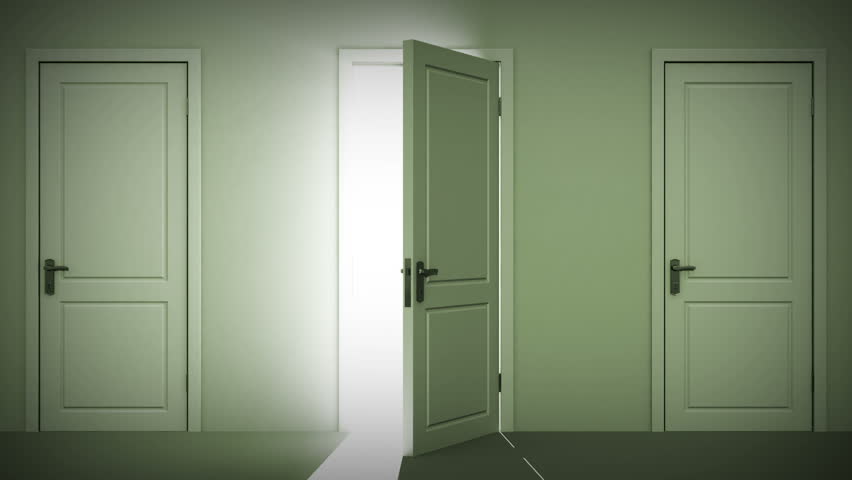
Now consider what happened as a result of that loss or disappointment that wouldn’t have happened otherwise. Because the door closed, and because you didn’t claw ahead trying to force it back open, because you stopped and looked around, you saw a new door you hadn’t noticed before. What new insight of connection or path emerged, what new doorway opened, when the first door closed? Add the open door, leading to the new landscape along the road.
Next, can you locate a messenger or helper who showed up and, with or without knowing they played a role, somehow supported or guided you? Perhaps it was someone you’d never met before or someone you knew well; someone who showed up in person or called you or sent you a letter, or someone you thought of at a crucial moment. Who were the messengers or helpers who pointed you to the open door? Draw the messenger(s) on the road.
Repeat steps 2 through 4 twice more, so that your road of life shows three doors that closed and three that opened, and who showed up along the way to you on your path.
As I was reflecting on this exercise, I recall times when I have worked through a similar map to recognize how certain moments continue to line up in ways that have helped navigate me along a certain path towards were I am today. The catch is that an exercise like this cannot be done just one. It needs to be repeated multiple times during our lives to capture a greater sense of how the trials and tribulations of our journeys have led us to where we are at the moments we reflect on where to go next.
May each of us be attentive enough to see how a closed door is not an ending but is merely a marking point to take another exit along the journey each of us is going on.

 New beginnings: A blog about spirituality, chaplaincy and renewal