I know this theme gets played out many times, yet it is so important to remind ourselves again and again about the importance of gratitude. Gratitude is not just merely about saying “Thank You,” but it is a mindset we would do well to cultivate. To live a life of gratitude is a daily spiritual practice, from the moment we wake up to the moment we go to sleep.
Unfortunately, there are many moments in life when it is quite challenging to maintain this gratitude mindset. We face moments and times of tragedy and trauma and we get subsumed by the all too real powerful emotions crisis presents to us. Yet, we wish to persevere, to live and to grow. And we can, with much work and support. Gratitude can be one of the various tools we can work to harness in those difficult moments.
As we think about gratitude today, I invite you to listen to one perspective on the importance of giving thanks I had the opportunity to listen to this morning. My colleague and friend Rabbi Benyamin Vineburg, BCC, recorded a conversation on Thanksgiving with his father Rabbi Dr. Sid Vineburg, Ed. D for the Be Wholly Podcast. I highly recommend listening to this episode, as it is a personal look at finding gratitude living with chronic illness. See below for the links:
If you or someone you know is struggling, spiritually and/or emotionally, trying to find a sense of meaning in these times of struggle, know that you are not alone. Contact New Beginnings Spiritual Coaching and Consulting LLC at 732-314-6758 ext. 100 or via email at newbeginningsspiritualcoach@gmail.com
I woke up this morning thinking about all the ideas I want to share. And then I came to this page, ready to go and… NOTHING. I suddenly found myself tongue-tied, or maybe it is writer’s block, but either way, I found myself staring at a blank screen. Eventually, I decided to just start writing to see what would happen, so this is my journey at the moment.
Yesterday, I came across a quote,
“Life Gets Better When You Decide You Can Reinvent Yourself as Often as You Need.”
Life is funny. One moment we think we have it all figured out. We know what we want to say or do, and the next, when we try to actualize what it is we have figured out, we hit a wall. And the wall is the block we have for treating Today as a new opportunity. We know we want to. We know we perhaps even need a refresh. And yet, when we try to hit the refresh button, we just can’t seem to do it.
When we are working towards today being a New Beginning, we are in essence trying to enter the road of life from a new entrance. We have the opportunity to do so. From the moment we wake up, we have choices to make. These choices are not easy.
Should I stay in bed for five more minutes or get up?
Should I start my day doomscrolling or wait to look at my phone?
Learn or write?
Exercise or not?
Etc – choose your own morning struggles
We all know what we wish the answers to these kinds of questions are. And yet, we find ourselves tired, worn down, beaten up, just plain exhausted. So we inevitably fall back on the habits we wish we could change because they are comfortable and easy, even though they aren’t the best choices we could be making.
And this is Why It Is So Difficult. Even now, as I am sitting and sharing, thinking about how it is a daily grind to break the habits we have when we want to improve ourselves, I find my mind drifting to all the things I need to do or should be doing instead of writing. Of course, this in itself is part of the writer’s block struggle I am having. Nevertheless, the other voice in my mind is reminding me about how this action, this choice, is important because I want it to be important.
What can we do when we feel that the daily reinvention we wish we could facilitate just doesn’t seem to be in the cards?
Choose one thing to change and work on that and that alone.
Start with just a small chunk of time to focus on the change. It could be as short as a minute of focused gratitude, or a minute of doing something instead of more social media scrolling.
Make this small thing the habit to work on for a week (a week seems like an interval many use for small habitual changes).
Build week over week. If we keep at one new thing a week to help reinvent ourselves, we will eventually see bigger growth, bigger changes.
When you despair that the change is not working well, don’t fret. As I have shared many times on this site, each step forward is one to celebrate. We need to focus on the wins, not the things we inevitably will continue to struggle with.
Let me conclude. This writing exercise this morning is my attempt to show myself this process as well. I really wasn’t sure where my thoughts would take me this morning but here we are. We have journeyed together today to see how just trying to do can produce something.
May each of us in these challenging times remember that all we need to do is take that first step forward along the path we wish to forge. May today, and everyday, bring opportunity for reinvention and for renewed possibilities.
If you or someone you know is struggling, spiritually and/or emotionally, trying to find a sense of meaning in these times of struggle, know that you are not alone. Contact New Beginnings Spiritual Coaching and Consulting LLC at 732-314-6758 ext. 100 or via email at newbeginningsspiritualcoach@gmail.com
I recall a history professor of mine in Yeshiva University sharing that he would give an A to the entire class if not a single “war” was fought during the entire two semester long course, War in Western Civilization. Of course, as he said, the odds were in his favor as there were very few years in recorded history (he claimed 11 at the time) that did not have some kind of war happening somewhere in the world.
As you can see, and please forgive my cynicism for just a moment, to suggest the world is in A crisis moment might be an unfair statement, for most of existence is one crisis moment after another, at least somewhere. Yet, I cannot help but feel that these current times truly feel like the crisis moments of my life, and I must presume of so many other people as well.
In essence, we are all struggling. We are all grieving. The world is not a safe place. Each community, each minority, has had multiple moments of this struggle, this feeling of crisis over the past couple of decades. This is not to suggest struggles just suddenly arose. Rather, it is to recognize that for so many of us, in this moment, we are overwhelmed by the consistency and waves of hatred, bigotry, anti…, and overall feelings of insecurity.
Before I go further, I would be remiss if I didn’t “blame” much of our emotional turmoil on the 24/7 information sharing that we have. And yes, we could just tune it out, as I hope many of you are trying to do. Yet, if you are like me, it is quite difficult to not always want to know and see who said what and when. Some have suggested “doomscrolling” is our way of creating a false feeling of having a bit of control back in these moments when we might feel like we are mere pawns in someone else’s game. While I think there is much validity in that suggestion, I am hard pressed to place the blame for all of the emotional ups and downs merely on the amount of time one spends online.
Let me repeat my words from the previous paragraph. We are all struggling and all grieving.
We are grieving from the imagery of terrorism at its worst.
We are grieving because we are seeing the truth that people will believe whatever they wish to believe, even if the information is patently false.
We are grieving the continued loss of trust in the stories we hear and tell each other.
We are grieving the overt signs of hatred all around us.
We are grieving the loss of presumed safety, whether we really had it or not.
We are grieving and struggling with feeling displaced.
We are grieving because everything around us feels so out of sorts.
What do we do with this? Who do we turn to in times like this? How can we find support if even those who we naturally turn to for support are struggling?
Two weeks ago, I shared a thought on Reflections on how to deal with Crisis. Please take a look if you haven’t, and if you have, it is important to remember the actionable points each and every day.
Yes it is true that each of us, coaches, mental health professionals, chaplains, psychologists, etc. are also personally affected and struggling in our own lives with the depth of numbness and pain during this time when we are grieving. And we are trained within our professional disciplines to be present even within our own struggles. It is important in times like this to not try to weather these emotions alone. If you are struggling, having trouble staying on target in your own lives and/or trying to figure out the best strategies for how to be during this traumatic moment, please seek out help!
While we are truly in a time when it feels we are pushing the big boulder uphill by ourselves, I want to remind you of another image of going uphill. Perhaps instead of seeing the boulder we are pushing, we can see the hand reaching out to help us up, like in the image below from the background of my business card.
We are finding ourselves in an uphill battle, struggling with the waves of life. When I started my coaching practice, my vision was to be able to help people navigate the waves of life through the lens of spirituality and meaning making. We are all on these waves right now. My hope is that each of us has someone who is reaching out to pull us up. We can help pull others up while also needing a hand outstretched to us as well.
If you or someone you know is struggling, spiritually and/or emotionally, trying to find a sense of meaning in these times of struggle, know that you are not alone. Contact New Beginnings Spiritual Coaching and Consulting LLC at 732-314-6758 ext. 100 or via email at newbeginningsspiritualcoach@gmail.com
Imagine, or maybe just remember, what it was like to turn to a parent and say, “it’s really your fault I am the way I am.” While we all might feel this way at one point or another, it is one thing to think it and another to voice this feeling aloud. If this is the case with one’s parents, how much more so would this be the case as it relates to our relationship with Gd. And yet, we find countless examples in the Jewish tradition that suggest we can verbally express the blame for our imperfections and troubles back at Gd.
One recent thought I came across expresses this concept from a statement in the work Hayyei Moharan, which describes anecdotes about the life of Rebbe Nachman of Breslov. The idea is a creative reinterpretation of how we understand the use of the plural in Viddui.
It is written in Chayei Moharan (601) in regards to viduy – the confession prayer, that Rebbe Nachman once said to Reb Yudel of Dashiv (a chossid of Rebbe Nachman, who was first, a chossid of Reb Pinchas Koritzer), “tell me something from your Rebbe, the Tzaddik, Reb Pinchos Koritzer. Reb Yudel responded, “Reb Pinchos once said that we say ashamnu, bagadnu, gazalnu in a plural tense, when really we should be saying it in a singular tense. However, (the reason [ed.]) we say it plurally is because we are really saying, so to speak, in a way of claim and argument towards Hashem, ashamnu, we have been guilty, that if not for you, Hashem, giving us the energy and ability to sin, we wouldn’t be able to sin.”
Sea of Wisdom Parshas Nitzavim/VaYeilech 5783 – R. Itche Meir Morgenstern
How do we have the audacity to turn around our imperfections and place some of the blame back on Gd? Well, this idea of Rebbe Nachman’s is not unique to him, but has precedent throughout the Jewish tradition. I found myself reminded of something I shared over a decade ago, which remains highly relevant as we enter Rosh Hashanah, 5784. At the time, I prepared a sermon describing multiple examples of spiritual audacity. See here for the full piece.
As part of this piece, I drafted the following prayer:
Dear G-d. We are here again standing in your shadow. We are in your presence. We are unworthy, because we are full of sin. But you know what G-d, it’s your fault we sinned. You are the master of the world. You created us with good and evil. You created the evil inclination, the yetzer hara. Therefore, we are blameless because without that stumbling block, we wouldn’t be in need of judgment each year.
Looking back, I am not sure I was correct in the usage of the phrase, “we are blameless.” If we believe we have the choice to make before each decision, then we are responsible for what we do. Yet, most of us often in life really feel so much about ourselves is not in our control. It wasn’t our fault, it’s someone or something else outside of our control that we can blame. True and… if we are to then find a path for growth and change, we need to be willing to accept responsibility as well.
For this Rosh Hashanah, when we sit down and reflect on the life we have led through 5783 and the life we wish to lead starting 5784, can we both be comfortable to verbalize our feelings that so much of who we are might not be our “faults” and also hold personal responsibility to acknowledge how much we can do to take the steps to forge a new path forward? When we confess to our shortcomings, we are taking the first step. So, speak your real thoughts, pray with abandon just like our ancestors, and simultaneously, examine the barriers holding us back from spiritual growth and plan strategies so we can see a better year in this upcoming year.
May this year be the start of a New Beginning and filled with opportunities for reaching closer to your goals and dreams.
Looking to gain further, broader insight in becoming your more authentic, spiritually focused self? Let me help you along this path! Contact New Beginnings Spiritual Coaching and Consulting LLC at 732-314-6758 ext. 100 or via email at newbeginningsspiritualcoach@gmail.com
As I continue to reflect on my recent trip to Israel, one of the things that always strikes me when I am there is how comfortable I feel in Israel. This has many layers, from religiously and spiritually as well as I get a sense in certain parts of the country that it is like I am home. This makes travelling less fraught with worries and anxieties. And, this does also have a shadow side.
During this trip, as with most of my trips, I find myself drawn to spend time by the Kotel, the Western Wall. It is a place of prayer and pilgrimage. It is a sacred space. And while historically the physical wall itself was merely one of the four sides of the retaining wall for the Temple Mount, the area has become a spiritual focal point and symbol for so much. And yet, sometimes, the mystique seems to disappear.
During this trip, I had two types of experiences. Some of my sojourns to the wall, I was left with something lacking. I couldn’t find my spiritual comfort zone, struggled to pray with much focus, almost finding myself asking what was even the point of making the trek from the apartment I was staying at. It can be difficult to feel inspired when the sacred space seems commercialized and is overflowing with people. Other times, I found that inspiration. This occurred in two ways. When I went on Shabbat afternoon and found the area pretty empty and quiet, I was able to hear my thoughts better. Other times, even in the midst of massive crowds, context can be key. Being there for a Bar Mitzvah and public Selichot, both times when the place is packed, also inspired me because it was the opportunity to experiences new things in a place I know so well.
I am sharing these thoughts because I came across and was reminded of a beautiful concept drawn from a question about Psalm 27. During the month of Elul, it is customary to recite this chapter twice a day. Reading the Psalm, we can see many themes that tie into the High Holidays. One, which I want to explore, emerges from Verse 4.
One thing I ask of the LORD, only that do I seek: that I may dwell in the House of Hashem all the days of my life, to behold the sweetness of Hashem and to contemplate in His Sanctuary.
There is a fundamental question that arises from this passage. How can we ask Gd to both live in Gd’s house forever and also be visitors “contemplating” his temple? Doesn’t this seem contradictory.
Over Shabbat I was reminded of this question from a Parasha printout called Alei Deshe, which shares the Torah thoughts of R. Shaul Alter, Rosh Yeshiva of Gur. He shared:
The answer given to this seeming contradiction is that our request is to reside permanently in Hashem’s house, and yet maintain the freshness and excitement of one who comes only as a visitor. But how is this possible? After all, a person naturally loses enthusiasm for activities that continue for a lengthy period of time.
In order to understand this, we must look at the words preceding the request for visitor-like excitement: לַחֲז֥וֹת בְּנֹעַם־יְ֝הֹוָ֗ה, to behold the sweetness of Hashem. When one feels the pleasure and beauty of sitting in Hashem’s house and serving Him, he will naturally maintain his enthusiasm for it, and will return day after day feeling as if it were his first day there.
Too often in life, finding ourselves in moments that used to drive us, inspire us, excite us, and suddenly it has little to no meaning. The shiny new toy feels like it loses its shine. When this happens, we get frustrated, we try to find something new. For most of us, it is easier to discard and move on to something new. Yet, perhaps the issue isn’t the lost luster but it starts with us. Did we go in with the wrong expectations? Did we presume to find the same inspiration and joy without playing our part in being present and focusing?
In this preparation season for Rosh Hashanah, are we truly listening to the daily shofar sound, to the added prayers, to our stirring souls which are looking to make meaningful changes to our lives. Have we slowed down to see? Or are we merely heading to the place we always head to because that’s just what we do?
Going back to my personal experiences, I found that if once I could remember inspiration comes just as much from what we put in as from what the moment gives me, I was able to feel that sense of enthusiasm of “visiting” instead of the routine feeling of always being present. It required a refocus, a renewed effort and, at least with the late night trek for Selichot, doing something new and different to help refind that spiritual connection I was seeking all along.
May each us, during these last two weeks leading to Rosh Hashanah, find our things that inspire us and find new ways to put in and take out those drops of inspiration so that we may see in ourselves growth and renewal during this upcoming new year.
Looking to gain further, broader insight in becoming your more authentic, spiritually focused self? Let me help you along this path! Contact New Beginnings Spiritual Coaching and Consulting LLC at 732-314-6758 ext. 100 or via email at newbeginningsspiritualcoach@gmail.com
For the past couple of weeks, I was away in Israel with one of my children. We went to participate and celebrate the Bar Mitzvah of one of his closest friends. During the Bar Mitzvah brunch, the Bar Mitzvah boy’s mother shared that part of her goal for celebrating in Israel was to give context to their Jewish living. I was struck by the word Context, recognizing that in the realm of spirituality and religion, context can, and I believe, needs to be an essential element of growth.
What is context?
If we look at the image above, we can see that our perspectives can be limited if we are only looking at a single frame. We, who see the entire image, of course see the elephant in the room. Yet, for the people in the picture, they only see the frame in front of them. When we think about fostering spiritual growth, the same may apply.
For many, the search for spirituality begins by reading. There is so much available to consume about all faiths, religions, practices, rituals, that we can get lost in the frame of reference we are searching in. Each of us has the limitations of the frame through which we are seeing.
After a while, most realize that reading just isn’t enough. We need to explore, see, feel, experience, the practices and rituals. We want to observe people living life in the manner we have read. This is the pilgrimage moment. And while I might be accused of overstating it a little bit with the word pilgrimage, to me, the physical exploration and exposure is the essence of the term. In biblical terminology, pilgrimage was the three times a year of going to Jerusalem to experience the festivals of Passover, Shavuot and Sukkot, putting into context all the things the people were doing in the areas they were living. To see the ritual in action, to bear witness, was all part of the pilgrimage. As such, when we choose to go beyond the study and reading to the seeing, we too are going on a pilgrimage, and in that pilgrimage we are giving ourselves the contextualization of what we have gained from book learning.
In the Jewish calendar, we are in the midst of Elul, the month prior to Rosh Hashanah, a month of reflection and retrospection. It is a time in which we search for how we can be inspired to grow and change during the next year. Part of this reflection period for many is getting perspective on what has inspired us in the past and trying to see things from a broader perspective, not just from the little frame in front of us but from the wider context.
As we march forward, may each of us find the context in our lives that helps us grow spiritually/religiously.
Looking to gain further, broader insight in becoming your more authentic, spiritually focused self? Let me help you along this path! Contact New Beginnings Spiritual Coaching and Consulting LLC at 732-314-6758 ext. 100 or via email at newbeginningsspiritualcoach@gmail.com
I came across a line yesterday while reading The Soul of the Mishna by Rabbi Yakov Nagen. He suggests:
Throughout the six days of the week, we change the face of reality. Our actions denote a conception of reality that is lacking, and humanity’s inability to accept the lack. Action is forward-looking, toward a different reality that will appear as a result. The essence of Shabbat is the opposite: accepting reality as it is here and now, enabling one to be present in the moment.
p. 110
Our daily grind is the mission to create change in our lives. So many of us always feel like we are always on, constantly going from one thing to another. We are always searching for something else, something different, something meaningful and powerful. Too often we just keep moving and never stop to sit in the moment.
When we look at current suggestions about self-care, we find many advocates for making a Sabbath for oneself, designing a 24 hour period of detaching from constant connectivity and consciously reconnecting with oneself and those around you. This is a day of “not-doing.” It is a day of rest, rejuvenation, and returning to oneself. It is a day of being present.
As we continue to search for spiritual growth and find true meaning in life, do we give ourselves the time to sit where we are instead of just moving forward, looking for the next step. Are we smelling the roses?
Today, may we reflect on whether we give ourselves the time, whether formally or not, to be present and be accepting of reality. Do we live life only as people always grinding, or do we live Shabbat oriented lives as well, taking time to just be present to the here and now?
Looking to discover your more authentic, spiritually focused self? Let me help you along this path! Contact New Beginnings Spiritual Coaching and Consulting LLC at 732-314-6758 ext. 100 or via email at newbeginningsspiritualcoach@gmail.com
As much as I am here to help others and to support them in life’s challenging moments, I would be lying if I didn’t acknowledge how much I have learned from those people with whom I have been privileged to work. The other day, while I was visiting a hospice patient and the person’s family, one of the family members, as we were reflecting on meaning in life, shared the following poem, The Invitation (see here for a different reflection on this poem).
It doesn’t interest me what you do for a living. I want to know what you ache for and if you dare to dream of meeting your heart’s longing.
It doesn’t interest me how old you are. I want to know if you will risk looking like a fool for love, for your dream, for the adventure of being alive.
It doesn’t interest me what planets are squaring your moon. I want to know if you have touched the centre of your own sorrow, if you have been opened by life’s betrayals or have become shrivelled and closed from fear of further pain.
I want to know if you can sit with pain, mine or your own, without moving to hide it, or fade it, or fix it.
I want to know if you can be with joy, mine or your own; if you can dance with wildness and let the ecstasy fill you to the tips of your fingers and toes without cautioning us to be careful, be realistic, remember the limitations of being human.
It doesn’t interest me if the story you are telling me is true. I want to know if you can disappoint another to be true to yourself. If you can bear the accusation of betrayal and not betray your own soul. If you can be faithless and therefore trustworthy.
I want to know if you can see Beauty even when it is not pretty every day. And if you can source your own life from its presence.
I want to know if you can live with failure, yours and mine, and still stand at the edge of the lake and shout to the silver of the full moon, ‘Yes.’
It doesn’t interest me to know where you live or how much money you have. I want to know if you can get up after the night of grief and despair, weary and bruised to the bone and do what needs to be done to feed the children.
It doesn’t interest me who you know or how you came to be here. I want to know if you will stand in the centre of the fire with me and not shrink back.
It doesn’t interest me where or what or with whom you have studied. I want to know what sustains you from the inside when all else falls away.
I want to know if you can be alone with yourself and if you truly like the company you keep in the empty moments.
By Oriah Mountain Dreamer
In my reading of this poem, I find the words suggest that true connection in relationship, both relationship to oneself and relationship to others is not the externals we define ourselves by but the internal makeup of who we struggle to be. True spiritual growth is allowing our inner soul to be the driving factor in our lives, not the externals. To get to this place, we must first work on our self-exploration, finding our inner soul.
Today, let me invite each of you to reflect on this poem and start down the path of revealing the real, complicated life we all experience. May we find the way to live a more authentic life.
Looking to discover your more authentic, spiritually focused self? Let me help you along this path! Contact New Beginnings Spiritual Coaching and Consulting LLC at 732-314-6758 ext. 100 or via email at newbeginningsspiritualcoach@gmail.com
During Shavuot, I came across an idea which I have been reflecting on these past couple of days. During the prayers we recite on Shavuot, we refer to the holiday as Zeman Matan Torateinu, the day of the giving of the Torah, not the day of receiving the Torah. What is the difference between a day on which we were given something vs. a day we received something? Aren’t those just two sides of the same coin?
R. Menachem Genack, in his introduction to a book of R. Dr. Norman Lamm’s collected sermons, Torah Beloved, offers a simple, yet important answer to this question. He writes:
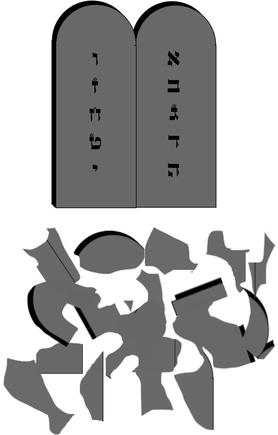
The reason we do not refer to Shavuot as the day on which we received the Torah is that Shavuot is not the day on which we received the Torah. Before I am accused of heresy, let me clarify. The Luhot which Moshe received on Shavuot were shattered at the base of the mountain, forty days later. We never received them. It was only after two more forty-day periods of prayer and fasting, on Yom Kippur, that God gave Moshe the second set of Luhot which the Jewish people were able to receive, unshattered. Thus, the day on which we received the Torah is actually Yom Kippur, not Shavuot, and that is why Shavuot is not identified in our liturgy as the day we received the Torah.
pg. XV
Shavuot is a culmination of sorts. It is a holiday that concludes a seven week countdown for the early harvest period. In our modern take, it is the completion of a seven week period of preparation to receive the Torah. Either way, Shavuot is an ending. Yet, when we reflect on R. Genack’s words, we realize that Shavuot is an end that remains incomplete. In a way, Shavuot is just the beginning. Shavuot was the first moment of what became a 120 day process of being able to truly receive the Torah.
To answer the question of giving vs. receiving, it makes sense that Shavuot is referred to as the Giving Torah day, not the receiving Torah day. When we are given something, it doesn’t automatically mean we have received it. Yes, it is now something in our “possession,” but there is a difference between something just dropped into one’s lap vs. being ready to receive it. I think reception in the context of the Torah needed to be an active process of grabbing hold of the precious item being given. And clearly, this is not something that is so easily done. For R. Genack, recalling the entire story of receiving the whole tablets, from Shavuot to Yom Kippur, we can learn a lesson about recognizing the different demarcation points in our lives.
All milestones, important moments in life contain two sides of the same coin. The milestone is a moment of accomplishment, of arriving at this junction of life. And yet, a milestone is also a stop along the way, from which we move to the next stop along our journey. It is a New Beginning. And we have an opportunity to always be ready to go for the next milestone while also celebrating the place we have arrived.
So my charge for today: Each morning, when we wake up, we have a chance to start fresh. We have completed and arrived at this new point. We have built up to be ready for today’s newness. Take a moment today reflecting on how we got to this moment, this day and then take a moment to recognize how we can take whatever brokenness came along with getting here and build and mend the brokenness while starting on this next step of our journeys today and every day.
Looking to discover your more authentic, spiritually focused self? Let me help you along this path! Contact New Beginnings Spiritual Coaching and Consulting LLC at 732-314-6758 ext. 100 or via email at newbeginningsspiritualcoach@gmail.com
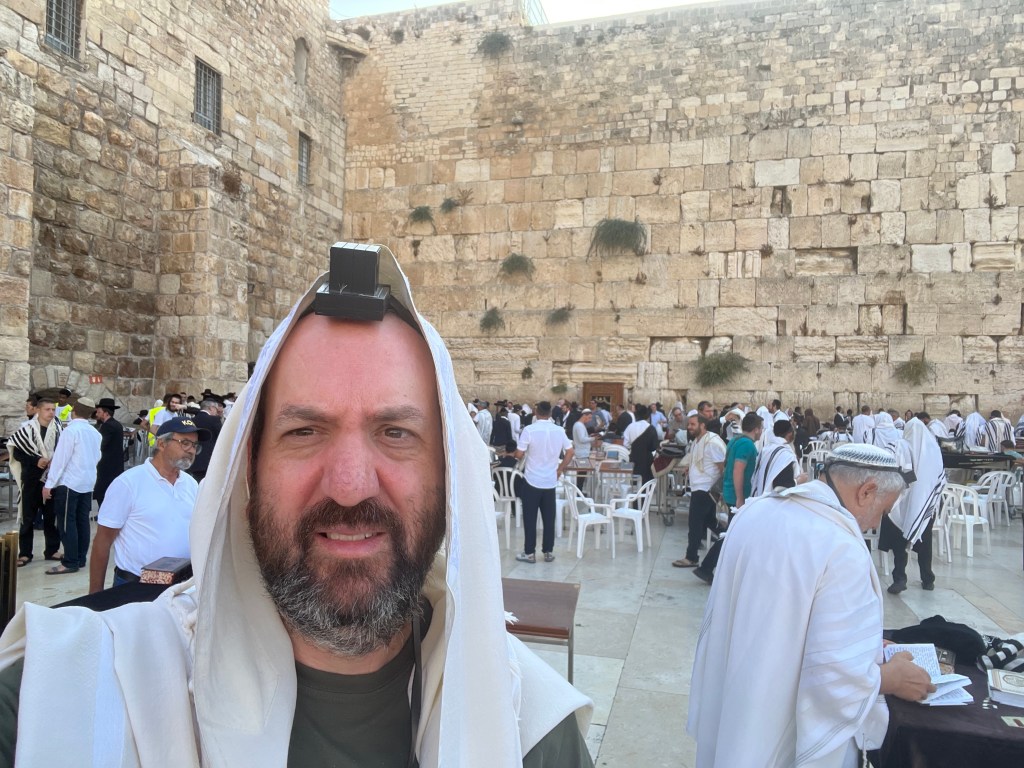
Late yesterday, I updated my Facebook profile picture and cover photo to reflect who I am currently. Interesting that this change got a lot of reactions from my social media feed. This lesson in social media ties into something that I have been thinking about, “who is the real me?” This question relates to how we portray ourselves in public vs. how we see ourselves in private. We live in a very public, open world in our digital age. We live in a world where the majority of us are not just sharing public and private personas in our small communities. Living in a global community requires an increased consciousness of what we want others to see and that most likely moves us further away from our true, inner self that we often show in the privacy of our homes. And if I were to be honest, this is a challenging state to constantly have to navigate.
When we meet new people, are they showing us the glossy website version of themselves, the deep, troubled version or something in between? Sure, meeting a new person and expecting an instant trust is hard to ask of anyone. Yet, why is it that we hide behind an image. We are all guilty of this.
My Spiritual Life Coaching Practice, which is informed by my pastoral/spiritual care training, is also informed by the real, imperfect person that I am. No two people will ever have the same experiences. And, nobody is ever alone in experience, as we all have a well of emotional and spiritual ups and downs we can draw upon to be present with someone else struggling. I believe that if we are to help others discover hope, meaning, New Beginnings in a transitional period in life, we have to meet them from the place of our humanness and vulnerability. We must maintain boundaries with each other and we must find a way to build the trust needed to explore and effect the changes we are looking for when engaging a professional to help in our self discovery.
As I write these words, I realize how so much of this notion of showing the “real” me is predicated on trusting myself to be OK and compassionate to the real, imperfect self that I am. My belief is that each of us is masking our true, real selves behind a mask because we aren’t OK with who we are. Too many of us don’t like the person we see in the mirror, even though we wish we could. And yes, that last line is channeled from an interesting albeit strange self-help practice call the High Five Habit, in which we develop a notion of self-compassion and confidence through literally offering ourselves a high five each morning in the mirror.
May today be the day we begin to foster our self-compassion, trust and acceptance of the person we see in the mirror and may this person be the person we share with others.
Looking to discover your more authentic, spiritually focused self? Let me help you along this path! Contact New Beginnings Spiritual Coaching and Consulting LLC at 732-314-6758 ext. 100 or via email at newbeginningsspiritualcoach@gmail.com







 New beginnings: A blog about spirituality, chaplaincy and renewal