One of my interests is archaeology. I find it fascinating to read about the discovery of the material culture from the past. Of course, most archaeological finds are small nuggets of a past that require us to then put the pieces together. It is hard work, sifting and discovering and then trying to rebuild what was. It always looked so cool, at least from a distance. Truth is, while I enjoy consuming the reports about the finds, I really don’t like the idea of digging in the physical dirt.
Nevertheless, as I shared the other day when describing my spiritual coaching practice, I see myself as an archaeologist of the soul. I work with others to sift through the dirt that is covering the shards and whole pieces of the person they are trying to bring to the fore. By listening and reflecting and listening some more, we are able to see the beauty that is sometimes hidden very deep within the person. The challenge for people is not giving up before they get to finding the gem that is them.
To illustrate the struggle that comes with digging deeper and deeper until we find the treasure of our soul, I was fortunate to come across the following thought and analogy:
Rabbi Shimshon David Pinkus writes as follows (Shearim B’Tefillah – Pg 43).
It is very common that a person, in their bitterness and despondency, cannot open their mouth in prayer. Sometimes this is due to the overwhelming sorrow and brokenness of his heart, and yet at other times, it is because they feel distant from the Creator and unworthy of approaching Him. In all of these states, one ceases to pray.
But ponder upon the following analogy: it is like someone searching for a treasure of sapphires, digging into the earth here and there in the quest for the treasure. Suddenly, they reach a place where the earth is so hard that he cannot penetrate it in any way. They try and try, but are unsuccessful. What do they do? They go to search and dig elsewhere…
But how foolish can one be!
They have reached the very sapphire, this is the very reason that it was so difficult to dig into. One would do well not to move from there until they know and find a way to bring the rare treasure home.
Similarly, when one experiences brokenness of the heart, and feel unable to open their mouth in prayer due to immense sorrow and spiritual distance from G-d, behold, the very desired treasure is before you, the sapphire of true prayer – the most beautiful prayer is a genuine cry. Cry to the L-rd from the depth of your heart…
HaMeir LaAretz, Pathways of the Soul, Parshat Bo 5784, p. 10
Whether it is our struggles to imbue prayer with meaning or uncovering the hidden gems of who we are, when we stop trying, we inevitably miss the opportunities to see “success.” I find time and time again that the lack of instant results causes most of us to give up and veer off the road we have been working so hard to pave.
Today, and everyday, it is of the utmost importance to push ahead, to dig a little deeper because we never know when the results will come, which we hope they will. True success comes from a combination of hard work, perseverance and good fortune along the way, And as we have been reflecting on in a couple of previous posts (here and here), we cannot just wait for the good fortune, we must take action all along the way.
Looking for help in uncovering the hidden gems inside of you and discover the person who are trying to be? If you or someone you know is looking to forge ahead and set new goals or trying to find a sense of meaning in life, we are here to help foster spiritual and emotional growth and change. Schedule your appointment today here. For more information, please contact New Beginnings Spiritual Coaching and Consulting LLC at 732-314-6758 ext. 100 or via email at newbeginningsspiritualcoach@gmail.com
While most of us have flown with dirty laundry in our suitcases, I would venture to guess that most of us have never considered taking a big bag of garbage on a plane. Yet, that is what happened in the following story:
The Rambam tells us that the shofar is calling to us, ” Awaken all people who are in a slumber.” The call of the shofar – of Rosh Hashanah and Elul – tells us to inspect our deeds and improve our ways.
A talented and popular speaker from Eretz Yisrael organized a trip to kivrei tzaddikim in Poland, and several people from Eretz Yisrael signed up. The trip would begin on a Monday morning in Elul, and they would be returning home by the following Sunday night.
The speaker would speak well, and the audience would be inspired and entertained, but a lot of organizing was still needed for this trip to be a success. Hotels needed to be booked in advance, food for a week’s time needed to be prepared or arranged, buses needed to be ordered, and recreational activities and interesting places to visit in addition to kivrei tzaddikim were also part of the itinerary. For many days and nights, this popular speaker was busy with arranging all these details, and on the night before the trip, he was exhausted.
The flight from Eretz Yisrael to Europe was scheduled for 5:00 a.m. The organizer planned to be awake most of the night until someone picked him up to go to the airport at 2:00 a.m. to make last-minute arrangements. At 1:30 a.m., he was finally ready for the trip, so he took out a pen and paper and began planning his first speech.
As planned and on schedule, at 2:00 a.m., the driver arrived at his door to pick him up and take him to the airport, but he didn’t hear him knock, and he didn’t hear the subsequent phone and bell ringing. He had fallen into a deep sleep, and he didn’t wake up until 2:30. At that point, they had to rush to catch the flight. For him to miss the flight would be terrible because, as we wrote, he was in charge of every detail of this trip.
The driver was very anxious and worried that they would miss the flight, and he rebuked the speaker/organizer for falling asleep at this critical time.
The speaker didn’t respond. He accepted the humiliation in silence. Anyway, there was no time to respond because he had to quickly gather his bags and get into the car.
In his haste and confusion, he also grabbed a bag of garbage and took it with him, thinking it was part of his luggage. His wife had put it next to the door to be tossed into the garbage bin outside.
At the airport, he placed his bags on a conveyor belt, and when the garbage bag passed through the machine, the machine started beeping. The bag contained empty metal cans of tuna, corn, and so on. The TSA staff opened the suspicious bag, and needless to say, the smell was terrible. There were also screws in the garbage bag, which could be used for creating a bomb.
He was immediately called to the side for questioning. This was the last thing he needed at this hectic time. Fortunately, they quickly realized it was a mistake, and they accepted his explanation that he was rushing and tired and didn’t realize what he was taking.
This delay proved to be beneficial for him because they helped him get on the plane in time. Aboard the plane, he decided to put aside the drashah he had halfway prepared, and he told them the story of what happened to him in the few hours before the flight. He explained to the group that this is the lesson of the shofar. The shofar is calling to us to awaken. If we don’t heed its call, we will come along with the garbage.
(This is what happened to him. He didn’t hear the phone and doorbell ring, so he ended up taking along garbage.) But if you wake up in time, you can cleanse yourself from the bad and come to Rosh Hashanah with taharah from aveiros.
R. Elimelech Biderman Torah Wellsprings Parashat Ki Savo 5783
We are mere days away from Rosh Hashanah. Are we awake yet? Are we working towards this moment of renewal? Truth is, most of us struggle to different degrees with living an unaware life. We think we are awake, judging where we are at via measuring our productivity. Hopefully we feel we are making strides towards our goals and dreams. Yet, even as we journey forward, many of us still find ourselves in a daze, perhaps even sleepwalking through life. And in this daze, perhaps we start grasping for things that end up veering us off the path we have laid out for our journeys.
During these last days before Rosh Hashanah, it isn’t too late to wake up. Most of us dream to be a better version of the person we see before us. While it is important to be compassionate to the person we are, we should also be striving to take the next steps along the path we are forging. Now is the time. Choose one thing we believe we can build on and start now. Make the New Beginning in your life now. By resolving to take this first step, we can be sure that we are carrying our luggage and not the bag of garbage to the next stop in our journeys.
May each of us find much meaning and growth in this High Holiday season, awakening to the person we wish to be.
Looking to gain further, broader insight in becoming your more authentic, spiritually focused self? Let me help you along this path! Contact New Beginnings Spiritual Coaching and Consulting LLC at 732-314-6758 ext. 100 or via email at newbeginningsspiritualcoach@gmail.com
Life is full of frustrations. We work hard, make good decisions, try to improve, and feel like nothing is working. We reach milestone moments and times in the calendar when we resolve to change, and then we fall back into the old habits. And then we try again, thinking this time we will see success, only to fall short, at least as it comes to our perceived timeline for change.
So what happens with perceived failure after failure? We want to quit. We start to wonder, “what’s the point?!” We haven’t gotten to where we want to be, so why keep striving forward?
(Rabbeinu HaOhr Letzion – Vol. 1, p. 424): There was a bachur who had just recently entered the realm of mitzvot. His parents had “succeeded” in enrolling him in an excellent yeshiva that had a high level of learning. However, his talents didn’t measure up, and he couldn’t keep up with the pace. He came before Rabbi Ben Tzion Abba Shaul, disheartened and despairing. No, he didn’t advise him to transfer to another yeshiva of lower standards. On the contrary, he encouraged him, saying, “Persist stubborly and remember the words of Rashi (Shemot 19:5): From now on everything will be sweet, as all beginnings are difficult! There is a barrier that needs to be broken, and then the road is smooth!”
The bachur wasn’t convinced.
Rabbi Ben Tzion asked, “Tell me, how much is one plus one?”
“Two,” the bachur replied, perplexed. After all, he wasn’t a complete fool.
“And how much is two plus two?”
“Four,” he responded, surprised by this childish examination.
“You didn’t even think, you just answered hastily,” Rabbi Ben Tzion said.
“Well, know that you will rule over the entire Torah in the same way. Whenever someone asks you a question, you will give an immediate answer. That is my promise!”
He relied on that, returned to his studies, concentrated diligently, and failed the examination. He was broken and shattered. He felt this wasn’t meant for him.
With great affection, Rabbi Ben Tzion held his hand and said, “You see, this is the problem. When they say that all beginnings are difficult, some people think it refers to time – a day, a week, a month. They don’t understand that it refers to a stage. For one person, it takes a short time, and for another, a long time. But this is a barrier that can be broken, and one can continue on the path of Hashem. A day will come when everything will shine. How much joy you will experience! Know that your life will be a life of constant happiness!”
PATHWAYS TO THE SOUL Parashat Ki Tavo 5783 – Smallness Leads To Greatnes – R. Israel Abargel
Why did R. Ben Tzion Abba Shaul ask the student seemingly rudimentary math? At first glance, like the student, I would have been perplexed by the random questions out of nowhere. It seems that the rabbi was not engaging the anguish the young man was expressing. However, R. Ben Tzion was trying to teach a lesson. If we think back, I would venture to suggest that most of us would be unable to conjure up the feelings of frustration we had when learning how to count, how to add, subtract, etc. And yet, we struggled and most of us eventually were able to come to a point where knowing 1+1 felt natural and to a point where we forgot how hard it was. It is clear that R. Ben Tzion was trying to show the student that all things start from struggle and can lead to much success if we persist, regardless of time.
Goals are crucial to growth. And goals are dangerous when we don’t allow ourselves to modify and adapt the path based on how far we have come. If we perceive a sense of failure or a sense of why haven’t I accomplished this yet, we are more susceptible to quitting.
In coaching others and in my own growth, one of the biggest points of emphasis is to see how far we have come. We might not be where we see ourselves, but we have come so far already. Setbacks are going to happen. But a setback doesn’t mean we haven’t succeeded. It just means we have more work to do to see the final goal we have set for ourselves.
May each of us strive and struggle on our way to achieving the New Beginnings we wish for ourselves and may we recognize how far we have come along the way.
Looking to gain further, broader insight in becoming your more authentic, spiritually focused self? Let me help you along this path! Contact New Beginnings Spiritual Coaching and Consulting LLC at 732-314-6758 ext. 100 or via email at newbeginningsspiritualcoach@gmail.com
Beginning of Chapter 44. This chapter returns to Love of Gd, working with the two level of love we outlined in the previous chapter. Here was see that lower love of Gd is manifest in fulfilling the Torah and its commandments while love is the yearning of the soul to be connected with the divine. He introduces a third approach, one which combines both the lower and upper levels of love. This is the desire of closeness that we have when recognizing the duality of physical and spiritual realms “existing” together. This section also reflects on “fake it till you make it.” Even if you aren’t really feeling the connection to Gd, strive towards it at all times.
All episodes can also now be heard on Apple Podcasts – here
Do you want to work on taking the actions of your life and find meaning in all you do and who you are? Are you struggling with your spiritual growth. Contact New Beginnings Spiritual Coaching and Consulting LLC at 732-314-6758 ext. 100 or via email at newbeginningsspiritualcoach@gmail.com
Change can seem overwhelming. It can seem daunting. And sometimes the trouble is we have a picture in our minds of all the different and varied ways we want to change. If we just sit in all of the chaos and confusion about order and process for change, most of us won’t even begin to take action. In this quote from Rabbi Dr. Abraham J. Twerski, reflecting on counting the 49 days between Passover and Shavuot, he reminds us that change begins with a first step and that change is a gradual, day by day process.
We recognize that as humans we have many imperfections, and that it is our responsiblity to improve upon our character traits.
When we realize how far we are from the ideal, we may exclaim, “What an order!” We may be so overwhelmed by the enormity of the challenge of improving ourselves that we may despair of accomplishing it, and simply do nothing.
As we count the Omer one day at a time, we are helped to realize that the task is not as overwhelming as we thought. We are not required to achieve perfection, and what we do, we can do in daily installments. Improvement of character can be in morsels, and need not be in bundles.
Although we can not achieve perfection by our own efforts, if we sincerely do that which we can, all that which we can, the perfection we strive for will be given to us as a gift from above.
Too often, striving for perfection is really the most imperfect thing we can do. If we instead set attainable goals and short, simple steps to reach those goals, we might find ourselves in a place close to perfection, one in which we cherish our drive to grow and improve. I know that in my personal growth, I have struggled the most when I have tried to shortcut my way to this false sense of perfection. When I set myself manageable, good to great goals, I have found success, even in ways I never perceived.
May each of us foster real, attainable, goals of growth and find the first step to establishing a New Beginning to our journey.
Today, I am thinking about my motivations. Why do I do the things I do? Why share my thoughts with others through this medium? Why do I help others in times of crisis? Why do I live a life focused on spiritual growth? These questions, among others, are part of my daily reflections. Of course, at times one question sticks out more than the rest while other questions percolate below the surface, ready to come forth when they need time and reinforcement.
I am reminded of this because of the following idea from the thought of Rebbe Nachman.
A person should be so honest that when he carries out the mitzvot and all their fine details it is for the sake of God alone. Even if he were completely alone with no one to watch him, he would still carry them all out scrupulously. Being free of the slightest hint of dishonesty, he would never do anything merely to impress others (Ibid.).
Do my motivations change if others watch me do an action? Am I consistent in private and public? Being consistent in our inner and outer selves is quite difficult. It is something that I know to be a daily struggle. Most of us tend to find elements of our motivations coming from external incentives, whether honor, glory, the hope someone will return the favor (quid pro quo), etc. This is not a negative. Yet, this cannot be seen as an ideal for us to live by. While it is part of our growth to need these external incentives for our growth, the true goal is to move beyond the reward and do it for its own sake. To me, reading these words of Rebbe Nachman, I am reminded of this statement from Pirkei Avot, Ethics of our Fathers:
Antigonus a man of Socho received [the oral tradition] from Shimon the Righteous. He used to say: do not be like servants who serve the master in the expectation of receiving a reward, but be like servants who serve the master without the expectation of receiving a reward, and let the fear of Heaven be upon you.
Pirkei Avot 1:3
Our spiritual growth is a continuous process of struggle to be consistent in the motivations for all we do. Today, may we reflect on what makes us do the great things we do and begin working on aligning our real motivations with the actions we take.
Are you struggling with your spiritual growth? Faith? Feeling lost in the midst of the journey of life? Contact New Beginnings Spiritual Coaching and Consulting LLC at 732-314-6758 ext. 100 or via email at newbeginningsspiritualcoach@gmail.com
This morning, I received an email letting me know that my profile was featured on the front page of my regions BNI (Business Network International) website. It was a pleasant surprise for me!
As some know, I joined BNI back in August. BNI’s philosophy of networking is based on the motto, Giver’s Gain. This motto is about the notion of business being relational and not just transactional. During my months with BNI, I have been fortunate to connect to a group of people working in diverse professional settings. This group has truly been about the give and receive, both as it relates to nuts and bolts business as well as to seeing the passion and love people bring to the work they do. I have learned a lot from my colleagues and really appreciate them for all they bring to the group.
If you are struggling to establish and pursue your goals and dreams and need help working through the underlying motivations? Or if you know someone who is working on goal setting and needs support in the process, Contact New Beginnings Spiritual Coaching and Consulting LLC at 732-314-6758 ext. 100 or via email at newbeginningsspiritualcoach@gmail.com
Whenever we venture into the unknown, we see before us a vast expanse lying ahead, leaving us with fears and doubts as to what we will encounter along the way. For many of us, these fears stop us in our tracks and we never get the opportunity to go forth and explore. In these moments, we find ourselves similar to the biblical Patriarch Abraham when Gd calls him to “Go Forth from your land, from your birthplace and from your father’s home to the land that I will show you (Genesis 12:1).” There is a powerful idea in later Jewish writing that this call was not specific to Abraham but was a call that went out to the world that only Abraham was focused enough to hear. Perhaps this call is always out there, waiting for us when the time is right, when we are in the moment of deciding where to go next. In that moment, if we listen, we will know we aren’t going alone. Rather we must take the initial step and we will be shown what truly lies before us, not what we believe might be out there stopping us from going forward.
This is my story as well. This week marks the one year anniversary of New Beginnings Spiritual Coaching and Consulting LLC, a moment in my life of going forth to a new adventure, a new path in my life. It has been an amazing year for me on this journey of growing a private spiritual life coaching practice. New Beginnings began as a dream to build a business whose mission was to work with others confronting the spiritual and emotional challenges that arise during transitional periods in life. Through a focus on one’s spiritually and faith and the search for meaning, growth and change along the new paths we face, my goal is to foster and harness the tools we have or will need when embarking on a New Beginning. During this first year, I have worked with individuals and groups exploring areas such as:
engaging one’s spiritual self in one’s life decisions
grief and loss
meaning making
finding joy in the next chapter of life
Rediscovery of “Who am I”
Through a combination of active listening, exploration, reflection and reframing, we work together to uncover layers of self-awareness. Through working together, we will often reveal the skills and tools you already possess to affect true positive change. It is my passion to help guiding others through these times of self-discovery, navigating the waves that we experience during the various transitional moments in life.
Looking for the spiritual spark to reignite your life?
Searching for a sense of meaning, hope or joy?
Trying to grapple with suffering?
Then I invite you to contact New Beginnings Spiritual Coaching and Consulting LLC at 732-314-6758 ext. 100 or via email at newbeginningsspiritualcoach@gmail.com. I look forward to supporting you along your journey and your New Beginning.
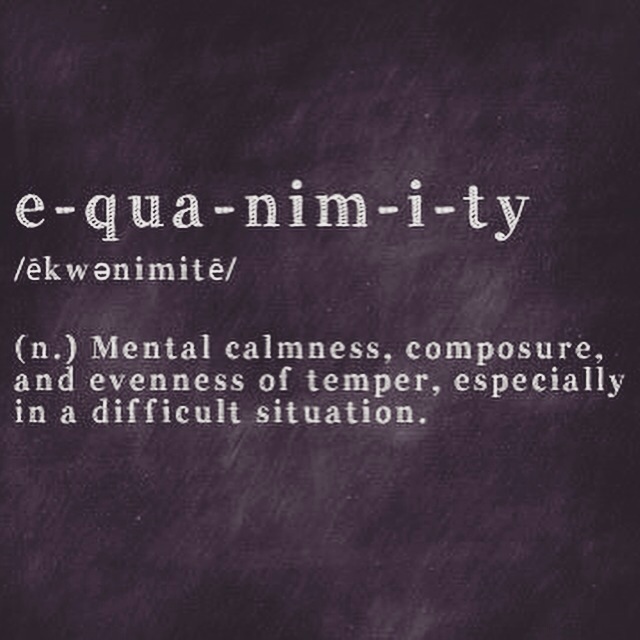
Here is a topic I originally posted on back in June 2010, at a time when I was beginning to explore the next part of my professional and personal journey. How does a person approach change, endings, and beginnings? One approach, which I believe we all should strive towards is a sense of equanimity, the ability to see all situations as somehow equal within our plane of existence. This might be one of the most difficult to cultivate, yet, it would offer a path to handling the downs and ups in a more tranquil way.
This notion of equanimity is described well in the following passage:
Shiviti-I have set God before me at all times.” (Psalms 16:8) Shiviti is an expression of hishtavut (equanimity): no matter what happens, whether people praise or shame you, and so, too, with anything else, it is all the same to you. This applies likewise to any food: it is all the same to you whether you eat delicacies or other things. For [with this perspective] the yetzer hara is entirely removed from you. Whatever may happen, say that “it comes from [God], blessed be He, and if it is proper in His eyes…” Your motives are altogether for the sake of Heaven, and as for yourself nothing makes any difference. This [sense of equanimity] is a very high level.
At the time, here is a my proposed read of these words:
For the Baal Shem Tov, Shiviti is the notion of equanimity, which provides the means for allowing G-d to dwell within ourselves. When we are able to rise above ourselves, whether with something good or something bad, we nullify our being, humbling ourselves to a place were G-d then enters. Do we respond to praise and derision in the same manner?
For the Baal Shem Tov, equanimity is not just with regard to our character traits, the internal aspect of our lives, but it is also in the material, the external. Do we see everything in the world having equal value, were the most expensive item and the cheapest item are on equal footing? Shiviti is the ability to reach a place of absolute nullification in the eyes of G-d.
As I look back on this post, I am again struck by the notion of balance. How do we balance the positive and negative in our lives? I was recently reminded of a popular notion that just a little bit of negativity, a shot to our sense of self, requires a lot of positivity to overcome the hurt experienced. There are some who go so far as to suggest we need five times the positive to overcome one negative (see, for example, The Magic Relationship Ratio, According to Science). Perhaps, while so much of our self-work is to find the “positive,” we might be better served to find a more balanced approach, one that doesn’t lift the positive too far up nor allow the negative to drive us down too much.
In relation to this, I am reminded of the adage from Pirkei Avot (4:1):
Who is rich? He who is content in his lot, as it is said: “You shall enjoy the fruit of your labors, you shall be happy and you shall prosper” (Psalms 128:2) “You shall be happy” in this world, “and you shall prosper” in the world to come.
A person who is content with what they have, in all aspects of life, will be able to experience the richness of life. And, if we consider the notion of finding equanimity as “setting Gd before me at all times,” which is speaking to the ability of endowing our lives with a balanced, day to day spirituality, we will truly find a greater depth and meaning to our day to day existence.
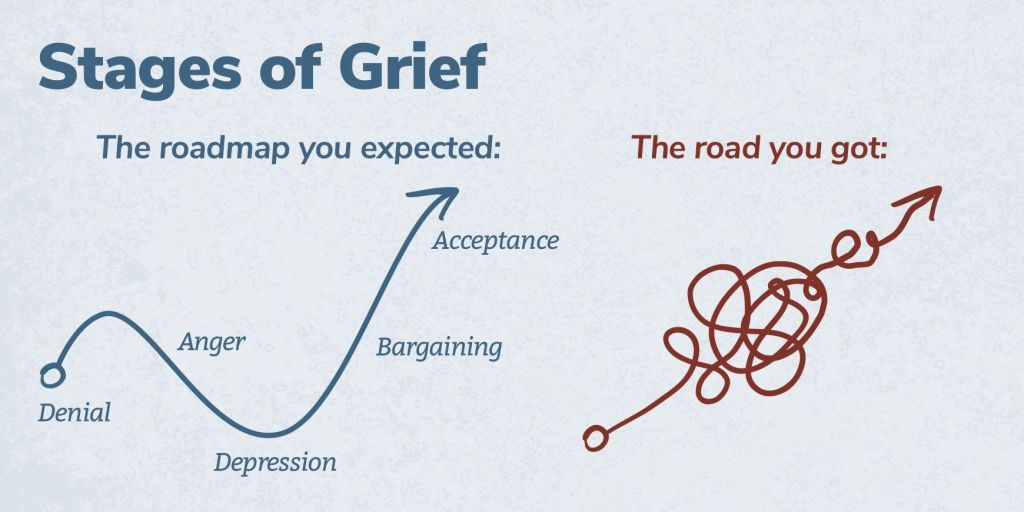
Grief is not a straight line – It is a back and forth journey
Death is the inevitable conclusion of life. Perhaps we could even go so far as to suggest that death always accompanies us. While this is a morbid outlook, suggesting a life in which we are constantly looking over our shoulder for the Angel of Death to tap us as “next,” the recognition of our impermanence is also a prime driver to our continued striving to live life fully. Regardless of whether the recognition of death has a positive or negative impact, death being a constant in life is practically unavoidable. (This is not the same as embracing death as a good. This is acknowledging a fact we must also encounter).
As much as death is a part of life, grieving is the natural response to death. Grieving is the experience of an opening of the emotional floodgates. We might even suggest that grieving is the merging of all emotions. People are angry, sad, guilt-ridden, and also relieved, content, and serene in the face of death. We can and do experience all these emotions at times after the death of someone important to our lives. The complexity of our emotions can be overwhelming. The challenge is embracing all of these emotions in a way that allows us to integrate the change that death causes in our lives. I believe that one of the major struggles we face in mourning a loved one is the internal struggle we experience because we don’t like feeling out of sorts that result from the onslaught of thoughts, images and emotions we face. As such, we try to “ignore” them or fight against them. In my experience, this struggle is often part of what underlies the sense people have of not “moving on,” “getting better,” etc.
With this premise, I want to add my perspective to the recent discussion about the inclusion in the DSM-5 (here) of a new diagnosis called “prolonged grief disorder (for a working definition, see here).” This diagnosis was debated in a recent article in the New York Times, How Long Should It Take to Grieve? Psychiatry has come up with an answer (NYT link). According to the article, prolonged grief disorder would apply to anyone who is “incapacitated, pining and ruminating after a year of loss, and unable to return to previous activities.” The issue of providing a timeframe has been the center of much debate within the greater debate about whether “complicated” grief should be considered a mental disorder, instead of being seen as a “fundamental aspect of our human experience.”
In reflecting on prolonged grief, I was reminded of a topic that has fascinated me for years. Many write about grief and mourning in a theoretical manner and the in a different way when describing the personal experience. One version of this which I would like to offer is the story of Maimonides and his experience of his brother’s death. Maimonides, the great 12th century Rabbi and Jewish thinker, in his laws of mourning, wrote the following:
One should not grieve too much over his deceased relative, as it is written : “Weep not for him who is dead, wail not over him” (Jeremiah 22:10); that is, weep not for him too much, since this is the way of the world. He who grieves too much over what is bound to happen is a fool. What measure of mourning should one follow? Three days for weeping, seven for lamenting, thirty days for abstaining from a haircut, and the rest of the five things.
Mishneh Torah – Hilkhot Avel 13:11
Maimonides, in essence, is proposing a time frame and window in which “grieving” is normal. From a purely ritualistic and theoretical perspective, this statement should is a prescription for mourning. His premise is; considering death is inevitable to life, why should we get bogged down for too long in sadness. It seems foolish. Yet, before judging the above, there is another side to Maimonides. While Maimonides the legal scholar is offering a prescription to “normal” grief, in a letter Maimonides wrote to a judge by the name of Yefet, we meet Maimonides the person:
“A few months after we departed from [the Land of Israel], my father and master died (may the memory of the righteous be a blessing). Letters of condolences arrived from the furthest west and from the land of Edom…yet you disregarded this. Furthermore, I suffered many well-known calamities in Egypt, including sickness, financial loss and the attempt by informers to have me killed.
The worst disaster that struck me of late, worse than anything I had ever experienced from the time I was born until this day, was the demise of that upright man (may the memory of the righteous be a blessing), who drowned in the Indian Ocean while in possession of much money belonging to me, to him and to others, leaving a young daughter and his widow in my care. For about a year from the day the evil tidings reached me I remained prostrate in bed with a severe inflammation, fever and mental confusion, and well nigh perished.
From then until this day, that is about eight years, I have been in a state of disconsolate mourning. How can I be consoled? For he was my son; he grew up upon my knees; he was my brother, my pupil. It was he who did business in the marketplace, earning a livelihood, while I dwelled in security. He had a ready grasp of Talmud and a superb mastery of grammar. My only joy was to see him. “The sun has set on all joy.” [Isa. 24:11.] For he has gone on to eternal life, leaving me dismayed in a foreign land. Whenever I see his handwriting or one of his books my heart is churned inside me and my sorrow is rekindled… And were it not for the Torah, which is my delight, and for scientific matters, which let me forget my sorrow, “I would have perished in my affliction” [Ps. 119:92].
The same man who wrote about limiting one’s grief might also be a prime example of “prolonged grief disorder” as diagnosed today. I would be hard pressed to prove this “diagnosis.” Simply put, to reconcile Maimonides the scholar and Maimonides the person is that from a legalistic perspective the ideal is to follow the prescribed ritual as a means of guiding one through grief. Even his harsh comment in which he suggests that the one who excessively mourns is a fool is perhaps a statement imploring people to realize that ritual used effectively must have boundaries and be limited. Yet, in the lived experience, this is neither easy nor what most experience.
To conclude, I would suggest this insight from Maimonides theoretical vs. lived experience can be a guide in thinking about the phrase of “Prolonged Grief Disorder.” The challenge of diagnosing grief as a “disorder” because of action/inaction after a certain period is that for many, the real grief journey doesn’t truly begin until after a year has past. I believe this to be the case because it is only after having cycled through a year and all the events of the year that one has experienced the loss in its various iterations. The question is how does one live in the midst of this new reality. How does a person integrate the death into one’s life? Throughout the first year post death, we are encountering a life without the person, both in our day to day living and during the big moments, holidays, celebrations, etc. After going through this cycle once, the majority should find the emotional pain less acute both in the day to day as well as during these moments. The sadness will remain. The empty chair/s will always remain. The DSM diagnosis is not rejecting that our emotional response to death won’t remain with sadness, tears, etc. It is a functional diagnostic coding tool to extend mental health care to those who experience difficulty in the transitions that grieving should offer in integrating the death into the life we want to continue living.




 New beginnings: A blog about spirituality, chaplaincy and renewal