Putting The Soul into Learning: Talmud Torah as a Spiritual Experience

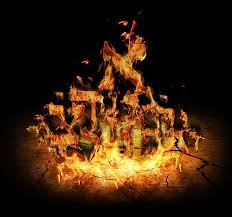
Black Fire on White Fire – the multiple levels of Torah.

Every so often, I come back to the following story (see here for the original posting). I find much comfort in the layers that I have gleaned from it. Here is one version as I recently wrote up for Congregation Ahavas Achim’s Shavuot Journal.

Hasidic stories have many layers of interpretation and points for reflection. From the simple niceties of storytelling to deep esoteric concepts, many of these stories require time and focus to explore the breadth and depth of the lessons we can glean.  One of my favorite stories describes the origins of how R. Dov Ber of Mezeritch (Maggid of Mezeritch) became a follower of the Baal Shem Tov (see Sefer Baal Shem Tov, vol. 1 pg. 7-8 or Keter Shem Tov Helek 2 23a).

(Freely translated/adapted): I heard from a Hasid, at some point R. Dov Ber began hearing about the greatness of the holy Rabbi, Baal Shem Tov, and how people would travel from far and wide to witness and receives his prayers.  R. Dov Ber was known as one who had a sharp mind and was an expert in Shas and Poskim.  Additionally, he had his hands in the wisdom of the Kabbalah.  He was curious as to what made the Baal Shem Tov so great. 

He finally decided to travel to the Baal Shem Tov in order to test him.  As he was travelling, he began having regrets, for R. Dov Ber was a matmid, (someone always immersed in study) and he was unable to maintain his learning while travelling, thus distressing him.  He finally resolved to continue, knowing that he would hear Torah when he arrived to see the Baal Shem Tov.  Alas, this was not to be. Instead, the Baal Shem Tov shared a story about a how he was travelling for days and ran out of food to provide for his wagon driver.  He then happened upon a poor non-Jew from whom he purchased bread to provide for his wagon driver.  The Baal Shem Tov also described how he ran out of food for his horses on a journey. While the stories contained tremendous wisdom, R. Dov Ber did not see the wisdom or depth of the Baal Shem Tov’s words. 

R. Dov Ber went to his assistant and told him to ready the wagons for his return trip the next morning, as it was too dark to travel on this particular night. At midnight, with everything prepped to go, R. Dov Ber was summoned to meet with the Baal Shem Tov. 

The Baal Shem Tov asked him, “Do you know how to learn?” 

He responded, “Yes.”

The Baal Shem Tov then continued saying, “I have heard that you know how to learn.  Tell me, do you have knowledge of the wisdom of the Kabbalah?”

He responded, “Yes.”

The Baal Shem Tov then asked his attendant to bring him a copy of the Etz Chaim (Kabbalat HaAri) and showed R. Dov Ber an essay, which the Baal Shem Tov asked him to explain.  R. Dov Ber took the text, reviewed it and returned to the Baal Shem Tov and explained the text to him.

The Baal Shem Tov said, “You don’t know anything.”  So R. Dov Ber went back, looked it over again and told the Baal Shem Tov, “The correct interpretation is like I already stated, so if you think you know a better explanation, please tell it to me for I will hear truth from whomever shares truth.”

The Baal Shem Tov responded, “Stand up, for this passage contains names of angels.”

As soon as he said this, the text illuminated the entire house and a fire surrounded them.  They sensed the presence of the angels mentioned in the text. 

The Baal Shem Tov then said to R. Dov Ber, “In truth, the interpretation is as you said, however your learning lacks soul (ed. Note – emphasis mine).”

At this moment, R. Dov Ber told his servant to return home and he would be staying with the Baal Shem Tov to learn from his great wisdom. 

Many of us struggle with the greater goals of Torah study. Throughout Jewish tradition, we have many philosophies and motives for study, including:

  1. Studying the works of our tradition is an act that is to be done lishma, for its own sake.
  2. Studying the Torah is a process that helps maintain the world, as we learn in Pirkei Avot 1:2, that one of the world’s pillars is the Torah. 
  3. Studying the Torah is for the sake of action, Lilmod al Minat L’Maaseh, study in order to do. 

Yet, even with these goals and ideas, I would presume that we all struggle at times to see the soulful depth of what we are learning. We struggle to keep these ideals in mind. 

If we reflect on the above story, perhaps we can garner a new appreciation for the centrality of Torah in our lives, something we reinvest in over Shavuot. R. Dov Ber did not recognize the Torah of storytelling, of the seemingly mundane. For him, Torah was merely the fixed “text” of Talmud, halacha, kabbalah. Anything outside of that was seen as mundane, unimportant. He couldn’t grasp the value in the experiential aspects of Torah study.  That is, until the Baal Shem Tov opened his eyes to the deeper Torah that comes from experiencing it, integrating it beyond the words on paper. The Baal Shem Tov showed R. Dov Ber the soul of learning.

Today, we are blessed to be able to learn anytime, anywhere, almost anything we want.  This is a blessing and a challenge. Many partake in daily set study, whether Daf Yomi, Mishna Yomi, Nach Yomi, or some other Yomi. Others have set learning based on certain desired quotas and measures that one takes upon oneself.  We can connect to great scholars around the world.  We are fortunate to be able to have access to both the texts and teachers who can help guide us through.  Yet, how many times do we despair because the study moves too fast, or because we don’t recall the material from one day to the next. 

We shouldn’t give up. As we can see from the story of R. Dov Ber, it isn’t just the ability to read a text that speaks to our growth in Torah study.  It is about how we are engaged in the study.  R. Dov Ber stayed with the Baal Shem Tov to learn what being engaged in the text meant.  For us, it is how we approach our learning. If we are consistent, if we are mindful and engaged with mind, body and soul, then we will find true success.  Not just in what we know, but in how Torah guides us in our lives. 

This is the message of Shavuot as we celebrate it today.  Shavuot, as Zman Matan Torateinu, the time of receiving our Torah, is a time to reinvest in our learning.  Many do this through staying up and learning/being engaged in learning on the first night. Others through the communal focus on study activities throughout Shavuot.  In all of these moments, we are tasked with both the study and also the experience of study so as to inspire us to strive towards deeper and more meaningful study.  May each of us experience a soulful learning this Shavuot.  

We are here to walk along the path of spiritual, soulful growth with you. Contact New Beginnings Spiritual Coaching and Consulting LLC at 732-314-6758 ext. 100 or via email at newbeginningsspiritualcoach@gmail.com.


Harnessing the tools of the past and reflections on Growing Together

Recently I decided to reflect on some of my older blog posts as part of my journey into discovering new beginnings. Part of my process has been discovering things from past experiences as a means of fostering new avenues of growth. Through this deliberate work I have gained insights that are helping to guide me as I continue along my path forward.

I believe the work of reflection, of reviewing the steps that have led us to a particular moment is invaluable to growth. At the same time, I do not believe this reflective work should be a means of relying on past experiences as a security blanket to calm us in those times of not knowing. Rather, it is a strengthening and revealing of tools for us to carry along while we search for new horizons.

Original post here

The beginning of the work, “The Celebration of Life,” by Norman Cousins, provides a stirring definition of how we are able to gain and clarify our understanding of an idea.  Each individual approaches an idea with a different, unique perspective.  I believe hearing and listening to everyone’s individual story and perspective is fundamental to our lives and our growth. As an aside, this would also be the basic premise behind much of analytical philosophy as well, namely the idea that word usage is subjective to the individual using that particular word.  

Cousins writes (p. 1-2):

One grows into one’s philosophy.  Year by year an individual is shaped by the sights, the sounds, the ideas around him.  Consciously or not, he is forever adding to or subtracting from the sum total of his beliefs or attitudes or responses, or whatever it is we mean when we say that a person has a certain outlook on life.  I do not mean to say that clearly defined truths of religions and philosophies are inevitably subject to the interpretation of an individual according to his or her experience.  But I would like to suggest that one of the prime glories of the human mind is that the same idea or occurrence is never absorbed in precisely the same way by any two individuals who may be exposed to it.  Each of us views a sunset, reads a book, or participates in a conversation in a different way from another, and each will take from these experiences a different meaning and memory, which will enrich the common human experience. 

In this first paragraph, Cousins presents a beautiful description that we experience life through our own eyes. Even formal situations, education, religion, sports, are communal moments of a group of individuals experiencing different things in the same place. I think we need constant reminders of this first point.

In this sense, each human being is a process – a filtering process of retention or rejection, absorption or loss.  This process gives each person individuality.  It determines whether a human being justifies the gift of human life, or whether he or she lives and dies without having been affected by the beauty of wonder, and the wonder of beauty, without having had any real awareness of kinship or human fulfillment.

Can any individual recognize and define the essence of his own individuality?  Can a camera photograph itself?  It can in a mirror, but even the mirror sees only the outside of the camera.  A mind that attempts to perceive itself can use the tools of language and logic.  But the material with which it deals is beyond mere words or reason.  The marrow of human thought or personality eludes its own product – human analysis – even with the most advanced scientific instrumentation.

At the same time, as growth and developing the self is a process, we can never even truly see everything about ourselves as well. At best, as Cousins implies, we see ourselves in a mirror, which would imply we experience ourselves less from the inside and more from how we reflect back into our minds eye. Part of how we do this is working with others to help us bring out areas of ourselves we aren’t able to completely see in ourselves. My love of what I do includes exploring with people the deeper person that the person is and can be through fostering this exploration and growth.

So, if we are to pursue our essential philosophical quest in the world – our search for integration – we need to bring together rational philosophy, spiritual belief, scientific knowledge, personal experience, and direct observation into an organic whole. 

In pursuing this integration, we turn to a device worked out more than 2,300 years ago: the Socratic dialogue.  The dialogue as a literary device goes back to Socrates.  Its function is to provide a path for the systematic exploration of ideas.  As used by the Greeks, the dialogue seemed uniquely suited to philosophical thought.  The relationship of human beings not just to each other but to the universe, the ability of people to take command of historical experience, the importance attached to abstract ideas and the need to define values and to put them to work, the reach of human beings when confronted with great challenge, the contemplation of the connection between cause and effect –  all these aspects of the human situation were central to the dialogue. 

To me, these last two paragraphs bring us to the core. To grow as a person, we cannot do it alone. We must work with others to grow, to journey, to keep becoming the person we wish to be. This dialogue for the sake of growth is an underlying perspective on the rabbinic adage from Pirkei Avot (1:7):

יְהוֹשֻׁעַ בֶּן פְּרַחְיָה וְנִתַּאי הָאַרְבֵּלִי קִבְּלוּ מֵהֶם. יְהוֹשֻׁעַ בֶּן פְּרַחְיָה אוֹמֵר, עֲשֵׂה לְךָ רַב, וּקְנֵה לְךָ חָבֵר, וֶהֱוֵי דָן אֶת כָּל הָאָדָם לְכַף זְכוּת:

Joshua ben Perahiah and Nittai the Arbelite received [the oral tradition] from them. Joshua ben Perahiah used to say: appoint for thyself a teacher, and acquire for thyself a companion and judge all men with the scale weighted in his favor.

Through appointing a rabbi/spiritual guide/therapist, connect to a companion/a confidante, one will be able to find growth both intrapersonally and interpersonally. This comes about from the conversations, the listening, reflecting and exploration we do with this person.

May each of us find growth through our individualism as members of a group.

If you are looking to explore and see yourself in a new way, Contact New Beginnings Spiritual Coaching and Consulting LLC at 732-314-6758 ext. 100 or via email at newbeginningsspiritualcoach@gmail.com.

Living and Growing from a place of not knowing

Too often we fashion ourselves as experts in things we are quite unfamiliar with. This is a mechanism to protect the more vulnerable parts of our personality because we are afraid our not knowing is a sign of lacking when in reality no one knows everything. We feel scared when we are thrust into something we feel unprepared for and sometimes to protect ourselves we act like we know.

Rabbi Dr. Abraham Twerski, in Growing Each Day, expounded on the following Talmudic passage from Berachot 4a:

דְּאָמַר מָר: לַמֵּד לְשׁוֹנְךָ לוֹמַר ״אֵינִי יוֹדֵעַ״, שֶׁמָּא תִּתְבַּדֶּה וְתֵאָחֵז.

articulated by the Master: Accustom your tongue to say: I do not know, lest you become entangled in a web of deceit.

Rabbi Dr. Twerski suggested:

“While no human being can know everything, some people cannot admit any ignorance about anything. For them, any admission of lack of knowledge threatens their fragile egos… Furthermore, the only way we can acquire knowledge is by accepting that we do not have it. People who claim to know everything cannot learn. Therefore, many opportunities to learn pass them by, and their denying their ignorance actually increases their ignorance… (p.216)”

Saying I don’t know is not strictly an admission of not knowing. Rather it is an opening and invitation to explore. It is through this exploration that we can know, and remove the desire to “fool” ourselves or others. Unfortunately, it is common that our fears of being “seen” actually further hinder our growth and ability to make forward strides. It is that fear that keeps us stagnant and yet leaves us feeling antsy, anxious, unsettled. We are unsettled because we close ourselves off from the value of listening to others and truly listening to ourselves.

One of the core elements of my chaplaincy and now my coaching is to foster the dual listening in the space of care. By my listening to others and hopefully the individuals listening to the words they are saying, it allows us to cultivate the gaining of knowledge through exploration, questions and reflections. Together we open the gates to find new vistas to confront challenging and difficult situations.

May we be blessed to be comfortable in the uncomfortable space of not knowing.

If you are looking to explore and discover new approaches to the difficulties in your life, Contact New Beginnings Spiritual Coaching and Consulting LLC at 732-314-6758 ext. 100 or via email at newbeginningsspiritualcoach@gmail.com.

Four sons as four different experiences of the Seder

The four sons described in the haggadah represent different approaches to engaging with each other and ourselves during the seder.  In reflecting on this section of the haggadah, we most often focus our attention on the chacham, the “wise” son and the rasha, the “wicked” son, comparing and contrasting the questions they raise and the answers given.  This debate is an essential element of engaging with the haggadah, in that we must struggle between our hyperfocus on carefully fulfilling the various rituals of the seder while also wondering what is tonight’s value and worth. 

            After the wise and wicked, we come to the third and fourth sons, the tam, the “simple” child and the one who doesn’t know what to ask. At first glance, most of us presume these “sons” are merely unable to reflect on the depth of Passover’s meaning.  For the simple son, this means asking a direct and simple question, “what is this.” And for the one who doesn’t know how to ask, our picture is usually of a young child, with the lesson being that we are responsible to teach the story to all, regardless of how they are able to engage.

            However, if we take a step back from our pre-conceived ideas about these four sons, perhaps our approach on the seder night can change as well. The Haggadah’s text doesn’t indicate if any of the four children is really so distinct from the other.  All we have are the single word descriptions related to the type of question posed. Imagine all four sons being about the same age, the same type and having been educated in the same way.  How do we know that these four are really so much different?  Since we recognize that the four sons is a paradigm for four different ways to approach the seder, we can presume there is a commonality between the four.  As such, allow me to offer a nuanced, variant way to read the four sons.

            Wise son:  The wise son, in asking about various details of the halachot for Pesach night, is the person whose relationship to the seder night is to the formal and intricate details of the night’s rituals.  Notice that this is the only son for whom we do not quote from the Torah.  Instead, the answer given is to review the laws of Pesach all the way until the idea of not eating after the afikoman.  This is a means of encouraging the experience of Pesach being tied into the rituals of the night. Yet, while the intricacies are of value, the wise son’s question seems to be missing a whole other element, relating to the story of Pesach night.  Nevertheless, we don’t try to steer this child into a different conversation.  Rather, we meet the child in their “wisdom.”

            Wicked son:  The wicked son is always a complicated topic as we read the question, in which he asks “what is this worship to you,” in a more negative tone than the wise son’s similarly phrased question of “what are all the laws, statutes and rules that Gd commanded you.” Leaving aside the various debates about why the distinction is made between the two questions, I want to focus on the response.  Sometimes, we sit at the Seder and honestly feel left out, feel alienated, feel like it isn’t speaking to “us.”  It can get to the point where we just wonder what’s the point of all the fuss on Passover night.  As such, the wicked son is saying, why are we bothering with all this, it doesn’t relate to me.  The response is jarring, not to run off the “wicked” son, but to respond to the despondency and frustration with a harsh reality check.  For this son, like the wise son, we engage the person where they are at in the moment.  This person won’t relate to the discussion of the laws of the night, nor for that matter a whole review of the story, at least until such time as the “wicked” son is able to become reengaged in how this story of our redemption is a story that should relate to him.

            As we can see from these first two sons, for many at the seder, the engagement with the seder is a deep, profound and also challenging experience. Yet, as is becoming clear, even in the dialogue of the wise and wicked, we are not just beholden to the script but must have the flexibility to engage with the person where they are at. I think this becomes more pronounced when we reflect on the simple son and the son who doesn’t know how to ask. 

Simple Son and Son who doesn’t know how to ask: Often times, we wait and wait for the perfect, deep, profound question. On Passover night, many a times we contrive to come up with the philosophical question that allows for a long conversation around the table during Maggid. And while that is a lofty goal, perhaps there is another way to approach the Seder. If we approach the Seder “unprepared” then we can approach it as more of the experience of the night rather than the intellectual undertaking that it often becomes. In certain ways, the wise and wicked sons both seem to lose sight of the experience of the night. Meanwhile, the simple and the one who doesn’t know how to ask, provide two examples of how important the overall experience of spontaneity at the seder can be in relation to the impact of preparation and reflection before joining together Passover night.

The simple son’s question of “what is this” implies not simplicity from ignorance but rather, the question of, “as we sit here tonight, what is the lesson of the night?  What is the message we are to walk away with?”  The answer given, “With the strength of [His] hand did the Lord take us out from Egypt, from the house of slaves’ (Exodus 13:14),” indicates that the primary lesson of the night about Gd redeeming us, bringing us out of the slavery towards freedom, is the ultimate take away message.  We might forget the long debates, the details of the arguments, but we should never lose sight of this most fundamental lesson. 

            Regarding the one who doesn’t know how to ask, the answer, strangely, is the same verse we offer the wicked son, “And you will speak to your son on that day saying, for the sake of this, did the Lord do [this] for me in my going out of Egypt (Exodus 13:8).”  We deliver this verse is a softer way to this last son, not because the last son is a small child who just is too young to know what to ask.  Rather, like the simple son, the one who doesn’t know how to ask is sitting at the seder, experiencing the rituals, reading the haggadah and presumes that there is nothing more they need to ask.  Yet, the goal is to personalize the experience. We invite this person to join in by introducing the idea that just like Gd did for me, so too Gd does for you.  We are not denying the experience in the moment of this last type of person.  Rather, we want to make sure this last son is engaged in the seder as an experience of the present, not just of the past, so we personalize it. 

            When we look at the four sons in this way, we can now see the commonality of the types.  All four are engaging in how to best experience the seder.  Each approaches it from a different vantage point.  And we respond from where that person is at.  Yet, I would also suggest that within the various answers we are also trying to expand the experience beyond where the person is most comfortable.  With the wise and wicked, we offer extreme answers to both engage and to push them to go beyond themselves. 

Most of us have moments of all four types during the Seder.  The four sons become the blueprint for how each of these modes of thought can be brought together to enhance our Seder night.  As such, whether we feel wise, wicked, simple or just can’t seem to find the question, we can and should engage one another in ways that invites the different parts of ourselves to truly be able to fulfill, “In every generation a person is obligated to see themselves as if they left Egypt.”

Nissan and Renewal

Yesterday marked the new month of Nissan in the Jewish calendar. According to the Torah, the month we know as Nissan is the first month of the Jewish calendar:

הַחֹ֧דֶשׁ הַזֶּ֛ה לָכֶ֖ם רֹ֣אשׁ חֳדָשִׁ֑ים רִאשׁ֥וֹן הוּא֙ לָכֶ֔ם לְחדְשֵׁ֖י הַשָּׁנָֽה׃

This month shall mark for you the beginning of the months; it shall be the first of the months of the year for you.

While this date is not celebrated or formally acknowledged as the new year (for that we wait until the 7th month, Tishrei, when we celebrate Rosh Hashanah), Nissan is an auspicious time as it was the month of the Israelite redemption and the first month commemorated by the Israelites in Egypt, which we acknowledge in a special reading from Exodus (12:1-20) on the Shabbat preceding or coinciding with the new month.

In light of the Israelites new beginning, I wanted to reflect on new beginnings and the symbolism of this new day and month. In the lunar calendar, a new month begins when the moon is no longer or almost no longer visible from Earth. The month encapsulates the amount of days the moon cycles from invisibility to full visibility to invisibility again. This cycle can be a symbol for how life goes for many of us. In the words of Rabbi Dr. Abraham J. Twerski:

Whereas the secular calendar is based on the sun, the Jewish calendar is based on the moon. Many commentaries remark that there is a symbolism in the lunar calendar. After reaching its maximum brightness, the light of the moon begins to decrease until it disappears completely. Then, out of the darkness a bright new crescent appears.

This is something to remember when circumstances in life are such that we find ourselves in utter darkness, without any visible sign whence our salvation may come. We should know that out of the depths of darkness, a new brightness can appear…

Living Each Day p. 181

While every month contains this message, in a way this idea is most exemplified by the story that places in Nissan, leading up to Passover. On the night of Passover, the main section of the seder, Maggid (telling the story) is designed as a microcosm of the first 15 days of the moon’s cycle, as we are to tell the story through the eyes of going from slavery to freedom, from darkness to night. Passover night in a way is the apex. Yet, after the apex, the climax of the Exodus, the actual leaving, the Israelites lives wax and wane, with moments of terror and fear followed by moments of redemption and hope.

Perhaps this is the lesson of the days leading to Passover. We must prepare for both the celebration and integration of what redemption means and also prepare for the realization that a redemption is also a new beginning and new opportunity. And new opportunities are not easy, not always shining with light. Sometimes the path is dark even after part is lit up.

May this be a season of renewal, of new beginnings, or finding the light when things seem dark and finding the tools to combat the waning light that often happens after reaching the next step.

Looking for methods to foster feelings of renewal: Contact New Beginnings Spiritual Coaching and Consulting LLC at 732-314-6758 ext. 100 or via email at newbeginningsspiritualcoach@gmail.com

Purim 2022/5782 – Incomplete Joy/Complete Joy

Tonight begins the holiday of Purim, which focuses on the story told in Megillat Esther, set in Persia approximately 2500 years ago. Purim is a festive, fun, topsy turvy day, celebrating Jewish survival from the midst of an evil, genocidal decree. The victory and survival bring about a tremendous sense of relief and joy. This is best described in Esther 8:16:

לַיְּהוּדִ֕ים הָֽיְתָ֥ה אוֹרָ֖ה וְשִׂמְחָ֑ה וְשָׂשֹׂ֖ן וִיקָֽר׃

The Jews enjoyed light and gladness, happiness and honor.

Yet, if we take the story as a whole, something is missing. The book of Esther ends with the Jews in the same place as they were at the beginning, remaining under King Ahasuerus’s rule in Persia instead of returning to Israel and rebuilding the Second Temple.  In fact, the story ends with the anti-climatic moment of the Ahasuerus placing a tax upon all who live in his land, showing how surviving a genocidal decree doesn’t mean being free from the whims of weak leadership and potential oppression.  How can we celebrate while also sitting with this sense of incompleteness?

I would like to suggest that celebration is warranted, even if the story seems incomplete. In the moment of triumph, we can feel a tremendous burden lifted off our shoulders, leading to a sense of exhilaration or a sense of relief.  I contend most of us can find many experiences in our lives where this sense of relief in the moment might even lead us to a temporary happiness.

For the Jews of Shushan, surviving Haman’s decree provided this sense of relief.  As such, they celebrated their newly found “new lease on life.” Their celebration was one of communal care and support, guaranteeing all could celebrate through the giving of Mishloah Manot (gifts to friends) and Matanot L’Evyonim (gifts to the poor).  Subsequently, this celebration was established as a yearly practice, as being able to celebrate Purim was proof of continued survival, and the importance to taking the time to reflect on the moment. 

At the same time, 2500 years later, with the fortune of hindsight, we are led to question what were the long term gains of this survival.  They continued to be under foreign rule.  Eventually, the lightness, the relief goes away, and the reality of life returns, with all its trials and tribulations.  Yet, by establishing Purim, we are acknowledging the value in celebrating even a good that might not be complete, recognizing that it is right to celebrate momentary victories even when they remain incomplete.

This is a fundamental life lesson. While keeping the end goal in front of us is important to our journeys, if we don’t take stock in the middle, enjoying the pieces of the story each of us is writing, then we miss opportunities to reinvigorate and reinvest ourselves in our growth. May this Purim be a reminder of the importance of taking the time to celebrate the steps along the path the goals we have set for ourselves.

Updated from the piece I originally wrote here:

Find the joy in the steps along the path to change. Contact New Beginnings Spiritual Coaching and Consulting LLC at 732-314-6758 ext. 100 or via email at newbeginningsspiritualcoach@gmail.com

The power of a pause

We are constantly doing. It is hard to stop and reflect. We think that if we stop we won’t progress. If we don’t pause to reflect and to truly listen to our inner voice, so much will be lost.

The book of Leviticus, VaYikra, begins with Gd calling to Moses as an invitation to teach Moses the vast array of laws related to sacrifices. Verse 1:1 states:

וַיִּקְרָ֖א אֶל־מֹשֶׁ֑ה וַיְדַבֵּ֤ר יְהֹוָה֙ אֵלָ֔יו מֵאֹ֥הֶל מוֹעֵ֖ד לֵאמֹֽר׃

Gd called to Moses and spoke to him from the Tent of Meeting, saying:

When Gd is speaking to Moses, the Torah usually says, Gd spoke to Moses, similar to the language in the middle of verse one, after the initial call. As such, the first words, Gd called to Moses, seem superfluous. The great medieval commentator Rashi offers a pedagogical/psychological answer to this seeming redundancy.

ויקרא אל משה AND HE CALLED UNTO MOSES — This implies that the Voice went on and reached his (Moses’s) ears only but all the other Israelites did not hear it). One might think that for the subsections there was also such a call! It, however, states, “[And the Lord called unto Moses] and spake (וידבר) [to him]”, thus intimating that a דבור, a complete section had (was preceded by) a call (e. g., in our text chapters 1—4), but not the subsections. And what purpose did these subsections serve (i. e., why are the larger sections broken up into smaller ones)? To give Moses an interval for reflection between one division and another and between one subject and another — something which is all the more necessary for an ordinary man receiving instruction from an ordinary man (Sifra, Vayikra Dibbura d’Nedavah, Chapter 1 9).

There is a distinction between calling and speaking that hints towards the importance of allowing a lesson to resonate before moving on. In the Torah’s context, the verse is saying: Moses was called to Gd to be taught a series of laws. This call was an overarching invitation to be in the same space. Once Moses enters the space, Gd speaks to him. Yet, Gd doesn’t just teach everything in one breath. Rather, it is broken into different lessons. Via this picture, we can see, as Rashi indicates, the importance of teaching ideas in manageable parts while recognizing that there is an overarching subject. This message is of such importance that Rashi repeats the same idea 10 verses laters, stating:

ואם מן הצאן AND IF [HIS OFFERING BE] OF THE SHEEP — The ו (of אם) adds something to the former subject (i. e. shows that this is a continuation of it). Why, then, is there a break between the two paragraphs (i. e. why does the following form a separate paragraph)? In order to give Moses an interval between the one section and the next section to reflect upon what has already been said (Sifra, Vayikra Dibbura d’Nedavah, Section 5 1).

Rashi Vayikra 1:10

From a literal perspective, the breaks are just breaks. They indicate a change in subject. Breaks are a means of clear, structured writing. Yet, in this comment, we see that a break is more than that. It is a lesson about life. When we want to change, we can’t just do it all at once. We must go step by step and allow the change to time have to percolate. There is as much to learn in the break as there is in the words themselves.

All new beginnings take time and energy because if we do too much too quick, we are more likely to lose all momentum. If we break things down into smaller, subsections, we have a higher chance of success.

Take the first step! Open the door to a new path and begin a process of change. Contact New Beginnings Spiritual Coaching and Consulting LLC at 732-314-6758 ext. 100 or via email at newbeginningsspiritualcoach@gmail.com

Don’t forget about the inner essence

One of the biggest challenges in finding a true balance in life is how much our profession becomes our defining character trait. Most of us tend to introduce ourselves by our profession because it is something concrete to hang our hat on. Yet, the professional we are is not who we are.

Over the course of the past few weeks, the Torah cycle has arrived at the building of the Tabernacle in the desert. In a few places throughout this latter part of Exodus, Gd warns the people that while building the Tabernacle is of much value, the people must be careful to not work on it on Shabbat. R. Eliezer Melamed in the introduction to his work on the Laws of Shabbat vol. 1, expresses an idea about this connection which I feel speaks to the challenge of getting to who we really are:

One might have thought that only secular activities would be prohibited on Shabbat, but actually the Torah prohibits any type of activity necessary for the construction of the Mishkan (the Tabernacle erected by the Israelites in the desert). Moreover, the 39 melakhot (types of labor forbidden on Shabbat) are derived from the work done for the Mishkan, and all forms of labor that were involved in assembling the Mishkan are prohibited on Shabbat. Thus, juxtaposed to the descriptions of the work done in the Mishkan we read, ‘Nevertheless, you must keep My Shabbatot (Shemot 31:13), which teaches us that although erecting the Mishkan is a great mitzva, one must desist even from on Shabbat. For even crafting the Mishkan needs to be connected to its inner divine essence. If this were not the case, all the difficulties in putting up the Mishkan would be left like a body without a soul, unable to fulfill its purpose of revealing the word of Gd to the world. Sometimes it is specifically those whose work is linked to the holy who need to be particularly careful about this, because due to their awareness of the value of the holy they are likely to invest their all in building a framework for it, to the point that forget its inner essence.

Laws of Shabbat vol. 1 p 14-15

Shabbat is a day of rest from those things which distract us from getting to our core, our essence. It is the day that allows us to “check” on our foundation, making sure what is truly holding us up is not just “smoke and mirrors.”

We are always striving to achieve but are those achievements built on a strong or a weak foundation. As each of us looks to new opportunities, new beginnings, are we being careful to reinforce those parts of us with which we are traveling forward on this journey in life? Are we uncovering the inner essence of what makes each of us special, unique, or are we just making the framework look more beautiful?

May each of us find the beauty in Shabbat and find the spark that helps to reinforce our inner essence.

If you or someone you know is struggling to see your inner essence as part of your spiritual journey, contact New Beginnings Spiritual Coaching and Consulting LLC at 732-314-6758 ext. 100 or email newbeginningsspiritualcoach@gmail.com.

Real Truth

I came across this quote from Rabbi Dr. Abraham Twerski’s Smiling Each Day which I find particularly poignant for all of us looking for a New Beginning.

“The naked truth” is a familiar expression. In reality, truth is always naked, because if it is dressed up, it is no longer the truth. That is probably why so many people avoid the truth. They are sorely embarrassed by its nudity (Rabbi Eizel of Slonim).

p. 157

If we are truly engaging ourselves in change, we must confront ourselves without any barriers. This is not an easy task. Yet, to truly start fresh, we need to remove the “clothing” of the past and see who we really are before dressing ourselves in our new “outfit” for the next step of the journey.

For more information and to schedule a session, contact New Beginnings Spiritual Coaching and Consulting LLC at 732-314-6758 ext. 100 or email newbeginningsspiritualcoach@gmail.com.

Am I Living or Existing?

The inspiration for this piece came from a question posed on a WhatsApp group I am part of with friends from my year of study in Israel over 20 years ago.

Genesis 47:8-9 describes a conversation between Pharaoh and Jacob after Jacob and his family arrive in Egypt.

וַיֹּ֥אמֶר פַּרְעֹ֖ה אֶֽל־יַעֲקֹ֑ב כַּמָּ֕ה יְמֵ֖י שְׁנֵ֥י חַיֶּֽיךָ׃

Pharaoh asked Jacob, “How many are the days of the years of your life?”

וַיֹּ֤אמֶר יַעֲקֹב֙ אֶל־פַּרְעֹ֔ה יְמֵי֙ שְׁנֵ֣י מְגוּרַ֔י שְׁלֹשִׁ֥ים וּמְאַ֖ת שָׁנָ֑ה מְעַ֣ט וְרָעִ֗ים הָיוּ֙ יְמֵי֙ שְׁנֵ֣י חַיַּ֔י וְלֹ֣א הִשִּׂ֗יגוּ אֶת־יְמֵי֙ שְׁנֵי֙ חַיֵּ֣י אֲבֹתַ֔י בִּימֵ֖י מְגוּרֵיהֶֽם׃

And Jacob answered Pharaoh, “The days of the years of my sojourn [on earth] are one hundred and thirty. Few and hard have been the days of the years of my life, nor do they come up to the life spans of my fathers during their sojourns.”

Rabbi Samson Raphael Hirsch suggests that underlying the question and answer posed in these verses is a lesson about how we view our lives. As he states:

“V. 8 – Still today, royalty, whose time naturally is extremely previous at audiences, as a rule just throw out a few short words or enquiries, the replies to which they are in reality entirely indifferent. But it must be rare indeed for a king to have understood to secure more delicacy in a few interrogative words than Pharaoh did here. And even more seldom has the person addressed expressed more wisdom in a short reply, than Jacob did here. When one counts by years, one does not reckon any more the days. It is only with a few select people that each day is full of importance and is considered by them as having a special meaning. A really true human being does not lives years but days…”

After elaborating on the underlying philosophy behind Pharaoh’s question, Rabbi Hirsch presents his take on Jacob’s response:

” V. 9 – In his reply Jacob differentiates between living and existing. ‘You ask after the days of the years of my life. I have not lived much. I have sojourned on earth during one hundred and thirty years. The days of the years that I can really call my life (on which I really fully carried out all that I should) were in reality only few, and they were just the bitterest and those most full of worry…'”

R. Hirsch is suggesting in his in depth analysis of this dialogue a question for each of us to reflect on. Are we living or merely existing? Do we find each day meaningful in some way or is life merely a series of “groundhog” like days? We desire to make an impact, to live meaningful, fulfilling lives.

In fostering a new beginning, a primary goal is to change the direction of the path we have been cultivating because it seems monotonous. We can do this through a variety of means. We can foster our desire to help others, to reconnect to those we care about, to come back to a latent spirituality and creativity that might have been purposefully left dormant for years.

May each of us experience life as daily living and not merely as existence.

If you or someone you know is trying to foster a renewed sense of living life to the fullest, New Beginnings Spiritual Coaching and Consulting LLC is here to help. For more information, please check out: https://achaplainsnewjourney.wordpress.com/about/