Rebbe Nachman’s Advice # 3 – Belief as it relates to the sacredness of the miracle of Time and Space

Are there actual miracles in the world? Can we be open to the concept that even the events that we think are natural are miraculous? Do we just rely on our knowledge, which blinds us to seeing the beauty and sacredness all around us?

I have suggested that our understanding of miracles has become more sophisticated. This is a double-edged sword. We can see the miraculous even in moments that we have a clear sense of the nature of what we are witnessing and yet, because we know more, we tend not to be able to experience the miraculous with as much excitement and wonder. Because of this, our skepticism gets in the way of our experiencing the world.

For Rebbe Nachman, as part of his perspectives on faith as culled together in Likkutei Etzot, recognizing the possibility of the miraculous, something seeming beyond the norm, is an important element of developing, strengthening and maintaining our faith. As he says:

ז. אֵלּוּ בְּנֵי אָדָם הַמַּכְחִישִׁים כָּל הַנִּסִּים, וְאוֹמְרִים שֶׁהַכֹּל דֶּרֶךְ הַטֶּבַע, וְאִם רוֹאִים אֵיזֶה נֵס הֵם מְכַסִּים הַנֵּס עִם דֶּרֶךְ הַטֶּבַע, שֶׁאוֹמְרִים שֶׁזֶּה דֶּרֶךְ הַטְּבָעִים, הֵם פּוֹגְמִים בָּאֱמוּנָה מְאֹד, וּפוֹגְמִים בַּתְּפִלָּה וּבְאֶרֶץ יִשְׂרָאֵל, וְהֵם מַאֲרִיכִין אֶת הַגָּלוּת: (שם אות ה’)

The people who deny that miracles are possible and claim that everything that takes place has a natural explanation can actually witness a miracle themselves and still try and glaze over it and explain it away. Naturally, this attitude of mind is very damaging to religious faith. It is harmful to prayer, and people’s understanding of the true significance of the Land of Israel becomes obscured. All this contributes to the lengthening of the exile (Ibid. 2).

Before unpacking this idea, I would highlight a summarization of this concept from earlier in this section of Likkutei Etzot:

ב. אֱמוּנָה וּתְפִלָּה וְנִסִּים וְאֶרֶץ יִשְׂרָאֵל הֵם בְּחִינָה אַחַת, וְכֻלָּם תְּלוּיִים זֶה בָּזֶה: (שם)

Faith, prayer, miracles and the Land of Israel are all one concept. They are all dependent upon each other (Ibid.).

If we remove the belief in the miraculous, we run the risk of losing the feelings of awe and wonder that is the beauty in the world. If we lose this sense of awe, we presume everything has a direct correlation, instead of maintaining a sense of the faith we often need to help guide us through challenging moments. Without this faith, why would we pray, since how can prayer ever make a change. And finally, we close ourselves off the sacredness of time and space, as exemplified by the notion of that the true significance of Israel is obscured, for part of the true significance of Israel is the notion that place can be sacred.

Rebbe Nachman is advising us to be open to experiencing things without having to intellectualize them. If we allow for experience, we open ourselves up to feeling the changes between the mundane and sacred. How do we feel the difference between a weekday and Shabbat if we merely just look at a calendar? How do we see the beauty of Gd’s creation if all we are doing is driving through? When we experience the sacredness, we feel the inspiration to grow, to connect, to recognize the faith of the “unknown.”

May we be able to open our hearts and minds to truly feel the holiness and sacred of our world. May we recognize how different times and different spaces have different vibes.

Are you struggling with your spiritual growth? Faith? Feeling lost in the midst of the journey of life? Contact New Beginnings Spiritual Coaching and Consulting LLC at 732-314-6758 ext. 100 or via email at newbeginningsspiritualcoach@gmail.com


Rebbe Nachman’s Advice # 2 – Attaining Faith through Prayer

ו. עַל־יְדֵי שֶׁמִּתְפַּלֵּל בְּכֹחַ וּמַכְנִיס כָּל כֹּחוֹ בְּאוֹתִיּוֹת הַתְּפִלָּה, עַל־יְדֵי זֶה זוֹכִים לֶאֱמוּנָה: (לק”א סי’ ט’ אות א’)

Pray with strength and put all your force into the letters of the prayers. Through this you attain faith (9:1).

Prayer comes from faith and faith comes from prayer.

How many of us who pray daily throw away prayer through rote recitation and then say, “prayer has no meaning for me?” Or perhaps prayer seems uninspired. The question is, just as much as we want prayer to give us something, so too prayer “wants” us to give it something.

For Rebbe Nachman, strengthening our faith comes from the exertion and work of growing and cultivating that faith. Faith is not something we just have. It is something we need to plant, water and grow. Faith is something that can be damaged or even “destroyed (but don’t despair, the seed we planted will always remain, perhaps deep down, but it remains).” An ideal way to strengthen our faith is through the “action” of tefillah, turning to Gd daily in recognition of being provided with what we need and having opportunity to request what we believe will help us further our lives. If we focus and we take hold of what we are saying and to Whom we are addressing, we have the opportunity to enhance and inspire our prayers.

Regarding the letters of prayer, I will just add that within mystical traditions each letter carries a spark of the divine which, through our recitation, we are said to be able to reveal to the world. When we do the work, we reap the efforts spiritually.

Today, may each of us find the inspiration within the faith we already carry to inspire our prayer so as to continue to grow our faith.

Are you struggling with your spiritual growth? Faith? Feeling lost in the midst of the journey of life? Contact New Beginnings Spiritual Coaching and Consulting LLC at 732-314-6758 ext. 100 or via email at newbeginningsspiritualcoach@gmail.com

Rebbe Nachman’s advice – New series

In addition to my recordings on Tanya, (see latest episode – Episode 38, and link to episodes on Apple Podcasts – here), and my occasional, reflective writing as the muse speaks to me, I am planning a couple of other serial postings. Keep on the lookout for new writing projects.

For now, I want to begin with a new series writing and commenting on the spiritual and psychological underpinnings as I see them in from the aphorisms and quotations of Rebbe Nachman of Breslov as culled together in the work, Likkutei Etzot. Based on the sales blurb on breslovbooks.com, Likkutei Etzot is:

The teachings in the Likutey Moharan not only contain novel enlightening concepts but also contain very practical advice and directions on how to implement the wisdom in the teachings. Lekuty Eitzos extracts and summarizes the main practical advice from Rabbi Nachman’s teachings, outlining them in a clear organized fashion. Aside from Lekutey Moharan thoughts are also taken from the sefer Sichos Haran. Now Rebbe Nachman’s guidance is made readably accessible, where one can directly locate and relate to his powerful advice. This work was compiled by Rebbe Nosson. He understood the strong, clear guidance Rebbe Nachman offers and wanted to make it more accessible for the masses. Likutey Eitzos was later reprinted with additions by Rabbi Nachman of Tcherin Lekutay Eitzos is therefore sometimes referred to as the “early” or “later” edition. This book is an amazingly powerful aid for one’s spiritual journey in this world.

I plan to explore selected pieces of advice, in order of the book. The text and translation come from Sefaria. I invite readers to search Sefaria for the original source texts to get a sense of the quotations context. However, my goal is to see the quotes as independent statements requiring our attention and reflection.

The first section is about אֱמֶת וֶאֱמוּנָה, Truth and faith.


א. עִקַּר הַגְּאֻלָּה תְּלוּיָה בָּאֱמוּנָה, כִּי עִקַּר הַגָּלוּת אֵינוֹ אֶלָּא בִּשְׁבִיל חֶסְרוֹן אֱמוּנָה: (לק”א סי’ ז’ אות א’)
In essence, redemption is dependent on faith. The root cause of the exile is simply a lack of faith (Likutey Moharan 7:1).

In this first quote, we can surmise a powerful idea in relation to mindset. Many times the sense of personal exile and redemption is one of perception. When we are in a “good place,” which might be a place where we are feeling strong in our faith in something greater than ourselves, we might well feel a freedom and sense of being redeemed from the trials and tribulations of what came before. At other times, this sense of faith will ebb, will shrink, will shatter. This is often in moments of crisis, moments taking us off the path we feel we have set before ourselves. In those moments of exile, part of the mindset of feeling exiled, feeling lost, can be rooted in the ebbing of our sense of order in the ways of the world. It can be rooted in our loss of sense of connection to Gd. Of course, many times it is the opposite, the exile leads to a sense of lost faith, lost trust.

While this statement can and is read as a call to merely strengthen faith and by extension we will find redemption, I would not be so quick to make that leap. I have witnessed those in “crisis,” in a personal exile being stronger and more secure in their faith than those for whom life is “whole” (though very few really have absolute wholeness in life).

In the eyes of my chaplaincy/spiritual coaching work, a statement like this is a good reinforcer to the work we support others in as it relates to their individual sense of belief, faith and spirituality. While things don’t occur so simply, it is in the depth of recognizing personal exile and redemption can have elements of spiritual struggle or the lack thereof that we can explore in our work.

Comments are welcome as we explore the work of Rebbe Nachman together.

Are you struggling with your spiritual growth? Faith? Feeling lost in the midst of the journey of life? Contact New Beginnings Spiritual Coaching and Consulting LLC at 732-314-6758 ext. 100 or via email at newbeginningsspiritualcoach@gmail.com

Carob tree and planting the seeds of success – Tu B’Shvat

Today marks the midway of the winter season and the new year for trees in the Jewish tradition. It is the holiday called Tu B’Shevat, named after the day it falls out, the 15th of Shevat. This days marks the starting point of seed growth, of seeing the results of the plantings we have done in the fall, preparing for the Spring/harvest season. In honor of Tu B’Shvat, I want to share a short reflection on the Carob tree and setting events into motion.

Change is hard. Change can feel impossible. So often, we might feel like we aren’t progressing, perhaps even feeling like we are “swimming upstream.” I know that many times I have to remind myself of this idea.

There is a Talmudic story which reflects this same concept. All we can do is plant the seeds and celebrate the possibilities of success. BT Taanit 23a describes the following story:

יוֹמָא חַד הֲוָה אָזֵל בְּאוֹרְחָא, חַזְיֵיהּ לְהָהוּא גַּבְרָא דַּהֲוָה נָטַע חָרוּבָא, אֲמַר לֵיהּ: הַאי, עַד כַּמָּה שְׁנִין טָעֵין? אֲמַר לֵיהּ: עַד שִׁבְעִין שְׁנִין. אֲמַר לֵיהּ: פְּשִׁיטָא לָךְ דְּחָיֵית שִׁבְעִין שְׁנִין? אֲמַר לֵיהּ הַאי גַּבְרָא: עָלְמָא בְּחָרוּבָא אַשְׁכַּחְתֵּיהּ. כִּי הֵיכִי דִּשְׁתַלוּ לִי אֲבָהָתִי — שְׁתַלִי נָמֵי לִבְרָאִי.

One day, he was walking along the road when he saw a certain man planting a carob tree. Ḥoni said to him: This tree, after how many years will it bear fruit? The man said to him: It will not produce fruit until seventy years have passed. Ḥoni said to him: Is it obvious to you that you will live seventy years, that you expect to benefit from this tree? He said to him: That man himself found a world full of carob trees. Just as my ancestors planted for me, I too am planting for my descendants.

יָתֵיב, קָא כָּרֵיךְ רִיפְתָּא, אֲתַאי לֵיהּ שִׁינְתָּא, נִים. אַהְדַּרָא לֵיהּ מְשּׁוּנִּיתָא, אִיכַּסִּי מֵעֵינָא, וְנִים שִׁבְעִין שְׁנִין. כִּי קָם, חַזְיֵיהּ לְהָהוּא גַּבְרָא דְּהוּא קָא מְלַקֵּט מִינַּיְיהוּ, אָמַר לֵיהּ: אַתְּ הוּא דִּשְׁתַלְתֵּיהּ? אֲמַר לֵיהּ: בַּר בְּרֵיהּ אֲנָא. אֲמַר לֵיהּ: שְׁמַע מִינַּהּ דִּנְיַימִי שִׁבְעִין שְׁנִין. חֲזָא לַחֲמָרְ[תֵּ]יהּ דְּאִתְיְילִידָא לַיהּ רַמְכֵי רַמְכֵי. Ḥoni sat and ate bread. Sleep overcame him and he slept. A cliff formed around him, and he disappeared from sight and slept for seventy years. When he awoke, he saw a certain man gathering carobs from that tree. Ḥoni said to him: Are you the one who planted this tree? The man said to him: I am his son’s son. Ḥoni said to him: I can learn from this that I have slept for seventy years, and indeed he saw that his donkey had sired several herds during those many years.

The planting we do is not always for ourselves. It can be something an ancestor set into motion that we are experiencing today. Today is the day we celebrate the beginning of the potentiality becoming reality. We might not know what will result, but we can find the will to rejoice in the effort and process because we know something will eventually come from it.

If you are struggling to establish and pursue your goals and dreams and need help working through the underlying motivations? Or if you know someone who is working on goal setting and needs support in the process, Contact New Beginnings Spiritual Coaching and Consulting LLC at 732-314-6758 ext. 100 or via email at newbeginningsspiritualcoach@gmail.com
Prayer before Prayer

Every so often, it is important to come back to certain basics of spiritual growth as a means of reflection. Perhaps, even more than that, it is important to habituate ourselves in practices that enhance our spirituality while at the same time finding ways to make the habits into something that continues to feel new. One of those is the opening words of the Amidah,

ה’ שפתי תפתח ופי יגיד תהילתך

Gd, open up my lips and my mouth will share Your praises.

While we could offer the same thoughts on the entire prayer piece, the Amidah, at least as it pertains to the opening 3 and closing 3 blessings, this line in particular is quite special and meaningful.

First, if we consider the structure of the prayer service as a whole, much of what we have already done before getting to the Amidah is praise of Gd. Second, if the point is that this prayer is like a gateway prayer to further prayer, why here, why now? Third, if we are really in this place of struggle, how can we even presume to open our mouth with a prayer to be able to pray?

As I find myself focused on this line, I would offer that a prayer before prayer is the most profound and important of prayers and that it being in the midst of prayer, not at the very beginning of each service is also of crucial importance. If you are like me, by the time you reach the Amidah, you are of two minds. There is the anticipation of having opportunity built in for more personal reflection while at the same time much energy has hopefully been exuded to reach this place. As such, I would offer that the line introducing the Amidah is the chance to regroup and recharge. It is a chance to remember and reflect on how we can only say these prayers because Gd has granted us the ability to speak these words.

I found the inspiration for this in thinking about something from last week’s Torah portion. As Moses is arguing with Gd about not wanting the job of leading the Israelites from Egypt, he tries one last argument (Exodus 4:10-12):

וַיֹּ֨אמֶר מֹשֶׁ֣ה אֶל־יְהֹוָה֮ בִּ֣י אֲדֹנָי֒ לֹא֩ אִ֨ישׁ דְּבָרִ֜ים אָנֹ֗כִי גַּ֤ם מִתְּמוֹל֙ גַּ֣ם מִשִּׁלְשֹׁ֔ם גַּ֛ם מֵאָ֥ז דַּבֶּרְךָ֖ אֶל־עַבְדֶּ֑ךָ כִּ֧י כְבַד־פֶּ֛ה וּכְבַ֥ד לָשׁ֖וֹן אָנֹֽכִי׃

But Moses said to יהוה, “Please, O my lord, I have never been a man of words, either in times past or now that You have spoken to Your servant; I am slow of speech and slow of tongue.”

וַיֹּ֨אמֶר יְהֹוָ֜ה אֵלָ֗יו מִ֣י שָׂ֣ם פֶּה֮ לָֽאָדָם֒ א֚וֹ מִֽי־יָשׂ֣וּם אִלֵּ֔ם א֣וֹ חֵרֵ֔שׁ א֥וֹ פִקֵּ֖חַ א֣וֹ עִוֵּ֑ר הֲלֹ֥א אָנֹכִ֖י יְהֹוָֽה׃

And יהוה said to him, “Who gives humans speech? Who makes them dumb or deaf, seeing or blind? Is it not I, יהוה ?

וְעַתָּ֖ה לֵ֑ךְ וְאָנֹכִי֙ אֶֽהְיֶ֣ה עִם־פִּ֔יךָ וְהוֹרֵיתִ֖יךָ אֲשֶׁ֥ר תְּדַבֵּֽר׃

Now go, and I will be with you as you speak and will instruct you what to say.”

In addition to the irony of Moses using this as a final argument after seemingly having many words for excuses, what is most interesting is the point that it is not Moses who is able to speech on his own but Moses who is able to speak and argue because Gd allows him to argue.

In other words, we may be praying, expressing praises and wishes to Gd, but it is important to be regroup and ground ourselves time and again in the midst of prayer with the notion that Gd gives us the ability to pray and offer these words. Each prayer service is a journey, and on a journey it is important to take stock and recognize where you have come from, where you are and where you are going.

As we work on spiritual growth as it pertains to our prayerful lives, may we recognize the importance of knowing from Whom our prayers come and to Whom we direct our prayers.

Are you working on enhancing your prayer life and are not sure how best to go about it? Contact New Beginnings Spiritual Coaching and Consulting LLC at 732-314-6758 ext. 100 or via email at newbeginningsspiritualcoach@gmail.com

Vulnerability

Part of spiritual growth is being able to confront one’s imperfections. This confrontation allows us to hone in on those areas of weakness that we wish to work on. While most often we work towards cultivating our strengths and reinvigorating the tools we have to overcome weakness, we don’t always allow the discomfort of admitting to the weakness to be a tool as well.

In a recent article exploring The Role of Vulnerability in Jewish Life, the author, Akiva Garner, shed light on a few points which stuck for me as it relates to a spiritual/religious approach to the concept of being vulnerable.

Here are few highlights (I recommend reading the whole piece as it provides a thorough approach to this important topic).

In defining vulnerability, Akiva suggests the following thesis:

Vulnerability is not tantamount to one oversharing all their difficulties to the world; rather, it is more directly a person’s willingness to present themselves to others as someone aware of, and comfortable with, the fact that attempts to succeed are often inseparable from failures to get there.

Vulnerability is the ability to be honest about being human and being imperfect. From this premise, we can confront many aspects of religious/spiritual life. As an example, he offers the following reflection on prayer:

Prayer is a meditation on humanity’s dependence on God, an admission of the petitioner’s weakness. It is, in some sense, about realizing that what we have comes from God and that what we hope to obtain is possible with the help of God. Expressions of this approach span the wide sea of Jewish thought, from the Kabbalists[2] to Rambam’s Moreh Nevukhim.[3] By the same token, many modern figures have emphasized the importance of this notion in one’s encounter with God. Rabbi Aharon Lichtenstein was fond of quoting Friedrich Schleiermacher, who understood the essence of piety as identifying “the consciousness of our absolute dependence… of our relation to God.”[4]

A third passage, one better known in the Orthodox Jewish community, as it relates to our imperfections, is a famous letter from R. Yitzchak Hutner to a student struggling against the weight of the great sages of our tradition:

Rabbi Isaac Hutner understood the importance of this very tension, and he depicted his attitude toward it strongly in a celebrated letter to one of his students:

It is a terrible problem that when we discuss the greatness of our Torah giants (gedolim), we actually deal only with the end of their stories. We tell about their perfection, but we omit any mention of the inner battles which raged in their souls. The impression one gets is that they were created with their full stature. For example, everyone is impressed by the purity of Hofetz Hayyim’s speech. However, who knows about all the wars, the battles, the impediments, the downfalls, and the retreats that Hofetz Hayyim experienced in his fight with the evil inclination?! As a result, when a young man who is imbued with a [holy] spirit and with ambition experiences impediments and downfalls, he believes that he is not planted in the house of Hashem.[8]

In responding to a student distressed by his spiritual shortcomings, Rabbi Hutner does not guarantee that if the student simply works harder things will turn out well, nor does he merely encourage the student to keep trying. Rather, R. Hutner instills within him the comfort that his trial and error will be worthwhile. He ensures the student that his struggles are normal and that authentic achievement does not come without failure along the way. In such an instance, vulnerability is thus not only the modality of being a struggling person but also the courage to expose oneself to others as being as such, allowing oneself to be seen as imperfect in an effort to affirm the normalcy of life’s difficulties and comfort those around us.

This passage always gave me a sense of resolve that we must remember that to be great means to try and try again and always keep trying. It also means when we presume others have achieved perfection, it might be that we are seeing the perfection from the standpoint of hindsight and veneration, not the reality in front of us.

Of course, being vulnerable can also be fraught with certain challenges that we must recognize. Akiva suggests the following in his conclusion:

Firstly, one might be vulnerable simply with the hope that others should resolve his problems on his behalf―with the assumption that the pity he receives from others might exempt him from contributing to his own efforts to overcome his difficulty. This must be avoided for vulnerability to remain a healthy trait…

Furthermore, the argument that has been made here is not that we should be vulnerable in order that we become complacent with our difficulties and collectively give up on them. There lies a tremendous distinction between being comfortable failing and being satisfied with failure;…

Lastly, embracing vulnerability should be done with the value of tzniut in mind. Sharing personal, emotional experiences must be done in a context which is comfortable for all parties; artificially attempting to accelerate a relationship by leaping immediately to sensitive information can wind up doing more harm than good…

Much of my work with others is in confrontation our humanity, imperfections and all, exploring the possibilities for the road ahead, building off the successes and failures of our lives before the moment of wanting a new beginning. We would do well to work on bringing our vulnerable, imperfect selves into all we do, from a place of strength, for it is within the recognizing our humanity is a strength, not a weakness that we can grow and support others in growing spiritually and emotionally.

Don’t confront your vulnerability alone? Contact New Beginnings Spiritual Coaching and Consulting LLC at 732-314-6758 ext. 100 or via email at newbeginningsspiritualcoach@gmail.com

A balanced life perspective

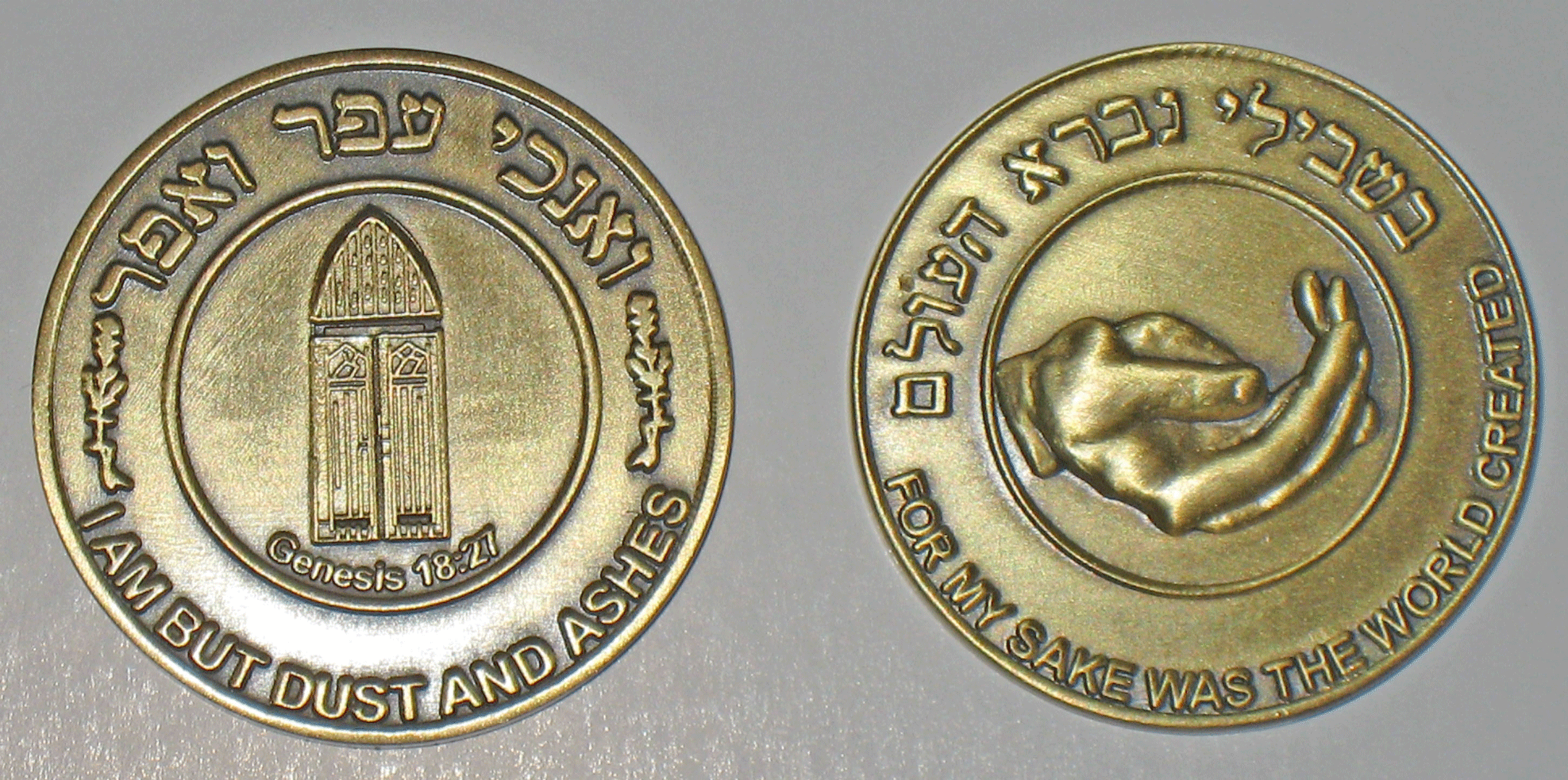
Sometimes we are reminded of a message that is deep and meaningful at the most important of times. Over the past few days, I keep coming across these two phrases, “I am but dust and ashes” and its contrast, “For my sake was the world created.” According to Rabbi Dr. Abraham Twerski, in Growing Each Day, it is said that:

Rabbi Bunim of Psis’cha said that everyone should have two pockets; one to contain, “I am but dust and ashes,” and the other to contain, “The world was created for my sake.” At certain times, we must reach into one pocket; at other times, into the other. The secret of correct living comes from knowing when to reach into which.

p. 62

I realized that this advice/message was crucial to how we all should strive to live. There are times when we feel down, feel lost, feel like we are just going through the motions of life. In those moments we could use the pick me up of recognizing that we each play a role in the role, perhaps even the most fundamental of roles. We should strive in those moments to reflect on how much our actions are of value to existence.

On the other hand, we can all get caught up in taking ourselves too seriously. It is very easy to fall into the trap of seeing ourselves as better than someone else, as the one to judge others, to point a finger and make ourselves out to be the best while others are not. In those moments we are best served remembering that we too are just human, we are imperfect and have our own flaws and challenges that we wouldn’t want others to judge us over.

I believe this is an important lesson when engaging in self-reflection and when working with a coach or a therapist. As we go through self-discovery, we can find ourselves oscillating between our great self and our lowly self, swinging along a pendulum trying to find the balance, static point. It behooves us to take steps to find ways and methods for approaching the highs and lows of life.

May we each find our balance, recognizing our importance and our humility at the same time.

If you are looking to explore and discover new approaches to the difficulties in your life, trying to find the middle path: Contact New Beginnings Spiritual Coaching and Consulting LLC at 732-314-6758 ext. 100 or via email at newbeginningsspiritualcoach@gmail.com.

New Beginnings One Year Anniversary

Whenever we venture into the unknown, we see before us a vast expanse lying ahead, leaving us with fears and doubts as to what we will encounter along the way. For many of us, these fears stop us in our tracks and we never get the opportunity to go forth and explore. In these moments, we find ourselves similar to the biblical Patriarch Abraham when Gd calls him to “Go Forth from your land, from your birthplace and from your father’s home to the land that I will show you (Genesis 12:1).” There is a powerful idea in later Jewish writing that this call was not specific to Abraham but was a call that went out to the world that only Abraham was focused enough to hear. Perhaps this call is always out there, waiting for us when the time is right, when we are in the moment of deciding where to go next. In that moment, if we listen, we will know we aren’t going alone. Rather we must take the initial step and we will be shown what truly lies before us, not what we believe might be out there stopping us from going forward.

This is my story as well. This week marks the one year anniversary of New Beginnings Spiritual Coaching and Consulting LLC, a moment in my life of going forth to a new adventure, a new path in my life. It has been an amazing year for me on this journey of growing a private spiritual life coaching practice. New Beginnings began as a dream to build a business whose mission was to work with others confronting the spiritual and emotional challenges that arise during transitional periods in life. Through a focus on one’s spiritually and faith and the search for meaning, growth and change along the new paths we face, my goal is to foster and harness the tools we have or will need when embarking on a New Beginning. During this first year, I have worked with individuals and groups exploring areas such as:

  1. engaging one’s spiritual self in one’s life decisions
  2. grief and loss
  3. meaning making
  4. finding joy in the next chapter of life
  5. Rediscovery of “Who am I”

Through a combination of active listening, exploration, reflection and reframing, we work together to uncover layers of self-awareness. Through working together, we will often reveal the skills and tools you already possess to affect true positive change. It is my passion to help guiding others through these times of self-discovery, navigating the waves that we experience during the various transitional moments in life.

To get a more in depth sense of what New Beginnings can do for you, please check out the link to the recent interview I did with Jewish Sacred Aging’s Seekers of Meaning Podcast.

If you or someone you know is:

  • Feeling lost, without your anchor?
  • Struggling with the death of a loved one?
  • Looking for the spiritual spark to reignite your life?
  • Searching for a sense of meaning, hope or joy?
  • Trying to grapple with suffering?

Then I invite you to contact New Beginnings Spiritual Coaching and Consulting LLC at 732-314-6758 ext. 100 or via email at newbeginningsspiritualcoach@gmail.com. I look forward to supporting you along your journey and your New Beginning.

Extending a hand to uplift a person

The stories of Genesis contain hints and allusions to how we should live and treat one another. While some of these lessons are complicated by shifting ethics and morality, many others stand the test of time and are important to review and reflect upon. One such lesson relates to how to support someone who has experienced a loss or a failure within life. While we know the dove eventually finds the olive branch, the process was not a simple one.

After the ark came to rest on Mount Ararat, Noah decides to first send out a raven and then a dove to determine if the waters had receded enough to emerge from the ark. In their first flights, neither bird discovered a place to rest, which the Torah makes specifically makes clear in the dove’s first return. Genesis 8:9 states,

וְלֹֽא־מָצְאָה֩ הַיּוֹנָ֨ה מָנ֜וֹחַ לְכַף־רַגְלָ֗הּ וַתָּ֤שב אֵלָיו֙ אֶל־הַתֵּבָ֔ה כִּי־מַ֖יִם עַל־פְּנֵ֣י כל־הָאָ֑רֶץ וַיִּשְׁלַ֤ח יָדוֹ֙ וַיִּקָּחֶ֔הָ וַיָּבֵ֥א אֹתָ֛הּ אֵלָ֖יו אֶל־הַתֵּבָֽה׃

But the dove could not find a resting place for its foot, and returned to him to the ark, for there was water over all the earth. So putting out his hand, he took it into the ark with him.

Genesis 8:9

At first glance, this verse is merely reporting on the fact that the dove returned unsuccessful. However, the verse contains a superfluous comment, that not only did Noah take the dove back into the ark, Noah put out his hand to do so. One of the great biblical commentators of the modern era, R. Naftali Zvi Yehuda of Berlin, the Netziv, wonders as to the importance of telling us both that Noah extended his hand as well as took the dove back into the ark. One phrase should have been enough to convey the point.

In response to this question, Netziv shares a psychological insight, one which I believe we know but often struggle to implement in our lives. He suggests that Noah’s extending his hand was a message of active empathy. The dove failed, not out of any doing of its own, but because the flood waters hadn’t receded yet. Nevertheless, not being able to succeed in the mission, or bring back a “positive report,” which in this case might have been not returning at all because it found a resting place, is also a “failure” of sorts. As such, Noah, not only opens the door for the dove to come back in but actively brings the dove back in, thus showing kindness and empathy to the dove. Noah went the extra step, not just making the space for the dove to re-enter the ark, but also helping to bring the dove in, implicitly saying that I am here to hold you up in this moment of failure.

The question is, can we be like Noah? Can we work to extend the hand out to bring the person with us? Over the past couple of pieces (see here and here), I have focused on the power of not having to go at it alone. This is another aspect of that, but this time focusing on the importance of uplifting the other person by actively supporting them. For example, there is a client I am working with who has a friend who visits regularly to be a companion for him. This friend doesn’t just visit. When he calls to see if he can come over, he will often follow up by asking my client if he wants him to pick up something to eat or drink on the way over.

Part of our journey of spiritual growth is how we interact with others. I would invite you to consider what steps you take to actively help and support others as well how others have helped you in the past in your own times of struggle. Hone those skills! Be like Noah in the moment with the dove.

Don’t go at it alone. If you or someone you know is looking to start along the journey of change and growth: Contact New Beginnings Spiritual Coaching and Consulting LLC at 732-314-6758 ext. 100 or via email at newbeginningsspiritualcoach@gmail.com.

Seeing a Miracle as a Joint Effort

Faith and belief is a funny thing. On the one hand, we know that no matter what we do, no matter how much effort we might put into something, success and failure are more often than not out of our hands. On the other hand, we know that if we just sit and wait, hoping for a miracle, the likelihood of something happening is severely reduced. This message is apparent in Noah’s building of the ark as described at the beginning of this week’s Torah portion.

The ark Noah was to build was to house he, his 3 sons, his wife and their wives as well as 1 or 7 pairs of all land animals and birds, and supplies to survive the flood. In other words, this would need to be a big boat. Commenting on Genesis 6:19, Nachmanides offered the following idea.

…Noah was thus obligated to bring all of them into the ark in order that they may beget their like. If you would gather a full year’s supply of food for all of them, [you would find] that this ark and ten others like it could not hold it! But this was a miracle of a small space containing a great quantity. And in case you suppose that he should have made it [the ark] very small and rely on this miracle, the answer is that the Holy One, blessed be He, saw fit to make it large so that the people of his generation should see it, wonder at it, converse about it, and speak of the subject of the flood and the gathering of the cattle, beast, and fowl into it so that perhaps they would repent. Furthermore, he made it large in order to reduce the miracle for such is the way with all miracles in the Torah or in the Prophets: whatever is humanly possible is done, with the balance left to Heaven…

והנה יצטרך להביא מכלם שיולידו כמותם וכאשר תאסוף לכלם מאכל אשר יאכל לשנה תמימה לא תכיל אותם התיבה הזאת ולא עשר כיוצא בה אבל הוא נס החזיק מועט את המרובה ואם תאמר יעשנה קטנה ויסמך על הנס הזה ראה השם יתברך לעשותה גדולה כדי שיראו אותה בני דורו ויתמהו בה ויספרו עליה וידברו בענין המבול וכנוס הבהמה והחיה והעוף לתוכה אולי יעשו תשובה ועוד עשו אותה גדולה למעט בנס כי כן הדרך בכל הניסים שבתורה או בנביאים לעשות מה שביד אדם לעשות והשאר יהיה בידי שמים

Before overanalyzing Nachmanides’ words, I believe the simplest way to express his idea is from one of the most iconic movie quotes of all time:

Life is a partnership. Nothing can be done alone. I shared one aspect of this idea of not going at it alone in my piece from last week, Humility is recognizing we don’t have to do it alone. Nachmanides now adds another layer. Faith and trust in something greater than ourselves is not just a waiting game. It requires active participation on our part. Nachmanides uses the example of Noah building a reasonably sized ark, yet clearly not an ark big enough to really house all of what would be needed for survival, as evidence for how a miracle is not a one way street.

One of the greatest miracles we experience is the miracle of growth and change. It is extremely difficult to overcome our habits. It is quite challenging to make a lasting change in life, so much so that more often than not, changes don’t always last. Yet, we are always responsible to keep at it, keep trying, keep taking single steps along the path. True faith comes from a sense that if we take the single step, if we open the door to change, we will see the fruits of our labor. Or, in the words of Midrash Shir HaShirim Rabba 5:2 –

“Open for me” – Rabbi Yasa said: The Holy One blessed be He said to Israel: My children, open for Me one opening of repentance like the eye of the needle, and I will open for you openings that wagons and carriages enter through it.”

Today, may each of us find the sense to take that next step, open the door to new opportunity and may we, in partnership, come to find there is more room to change than meets the eye.

Don’t go at it alone. If you or someone you know is looking to start along the journey of change and growth: Contact New Beginnings Spiritual Coaching and Consulting LLC at 732-314-6758 ext. 100 or via email at newbeginningsspiritualcoach@gmail.com.