Overcoming Analysis Paralysis, or remembering that good can be perfect.

How to Push Past Your Analysis Paralysis – Scott Young

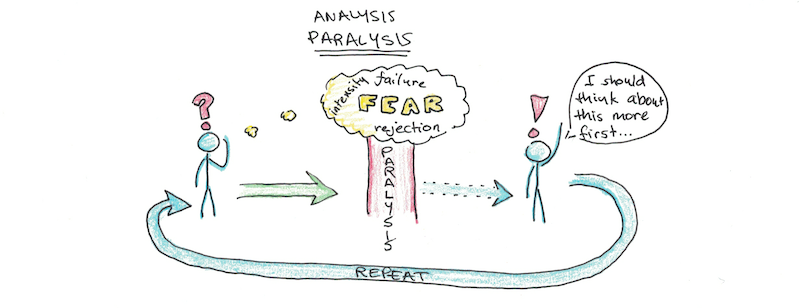
I recently came across the phrase “analysis paralysis,” a term used to describe the process of when we spend so much time thinking and deliberating that we cannot come to a decision. This phrase struck a chord with me. I find I miss out more often than not because of overthinking or outthinking my initial instinctual reaction. It stems from a fear of not having trust in my initial reaction. While it is good to have some measure of caution in life and not respond with one’s first thought, decisions do need to be made or we will never have the chance to experience so much of what life has to offer.

In the same vein, an area that I find myself exploring lately is learning to not allow “the perfect to be the enemy of the good,” the famous quote attributed to Voltaire. (See the previous post Perfection is about process not perfection for another take on this theme.) Each of us can find places in our lives in which we experience this struggle, where we give up on something because it isn’t perfect, even if it is good enough. Of course, there are areas in which anything less than “perfect” is dangerous, but even within those areas, since we know there is always improvement, then perfect is not really perfect after all. When we get caught up in making the perfect, most right decision, we often get caught in the analysis paralysis loop.

When it comes to spirituality and growth, I think the ability to overcome analysis paralysis is the difference between feeling stagnant and true growth. We allow the process to be the guide, steering us towards the goals we wish to attain, even when there are detours along the way.

For more on analysis paralysis and methods for how to break this cycle, see, for example, “Do You Have Analysis Paralysis?: Overthinking everything can make everyday life a challenge.” by Robert Taibbi L.C.S.W. and How to Push Past Your Analysis Paralysis by Scott Young.

Speak Truth in Your Heart

In the piece for today in Growing Each Day, Rabbi Dr. Abraham Twerski offers a comment on Psalm 15:1-4:

מִזְמ֗וֹר לְדָ֫וִ֥ד יְ֭הֹוָה מִי־יָג֣וּר בְּאהֳלֶ֑ךָ מִֽי־יִ֝שְׁכֹּ֗ן בְּהַ֣ר קדְשֶֽׁךָ׃

A psalm of David.

LORD, who may sojourn in Your tent,
who may dwell on Your holy mountain?

הוֹלֵ֣ךְ תָּ֭מִים וּפֹעֵ֥ל צֶ֑דֶק וְדֹבֵ֥ר אֱ֝מֶ֗ת בִּלְבָבֽוֹ׃

He who lives without blame,
who does what is right,
and speaks truth in his heart;

לֹֽא־רָגַ֨ל ׀ עַל־לְשֹׁנ֗וֹ לֹא־עָשָׂ֣ה לְרֵעֵ֣הוּ רָעָ֑ה וְ֝חֶרְפָּ֗ה לֹא־נָשָׂ֥א עַל־קְרֹבֽוֹ׃

whose tongue is not given to evil;-a
who has never done harm to his fellow,
or borne reproach for [his acts toward] his neighbor;

נִבְזֶ֤ה ׀ בְּֽעֵ֘ינָ֤יו נִמְאָ֗ס וְאֶת־יִרְאֵ֣י יְהֹוָ֣ה יְכַבֵּ֑ד נִשְׁבַּ֥ע לְ֝הָרַ֗ע וְלֹ֣א יָמִֽר׃

for whom a contemptible man is abhorrent,
but who honors those who fear the LORD;
who stands by his oath even to his hurt;

Rabbi Twerski suggests the following psycho-spiritual reading for this section of verses.

People often fail to grow because they are reluctant to face the painful truth that they have done wrong. We have an innate tendency to avoid pain, and therefore we are apt to conjure up rationalizations that justify our behavior. These rationalizations are nothing but lies – sometimes clever and convincing, but lies nonetheless. Facing the truth and accepting the pain that comes with it requires courage.

People who “speak truth in their heart” says the Psalmist, do not retract their word even if it is to their own hurt. On the other hand, those who constantly seek to change everything to conform to their maximum comfort are only lying to themselves.

Growing Each Day P. 44

As I was reading this piece this morning, I found myself reflecting on the challenge of combating our innate attempts at self-deception and justification. The first example that came to mind was in the area of goal setting, a fundamental element in working on personal growth. How often do we have a goal in mind and yet find reasons to push it off, to change it for convenience or to just give it up because we missed a deadline along the way? How often do we then find justifications for our actions? Life is never a straight line and plans do often get waylaid for a variety of reasons (“Man plans and God laughs”). Yet, do we allow these curveballs to dictate our lives or do we find ways to incorporate the curveballs into how we choose to live?

Everyday we have affords us a new opportunity, a new beginning. A lost opportunity does not have to be the end of an opportunity. Rather, if we realize it is a bump in the road, we can pick up and continue along the path. If we are true to our perceived mission, our perceived goals in life, the bumps along the way can also guide us forward.

As we work daily on our growth, may we not allow unforeseen to completely derail us from our personal hopes and dreams.

Perfection is about process not perfection

In my continued quest for growth, one area that is constantly standing in the way is perfection. It is a nurtured habit of so many of us to “accept” nothing less than perfection. While we all know that there is no such thing as perfection or perfect people, we still struggle to accept our imperfections. I came across an interesting take on this strive towards perfection in the following analysis of Rabbi Dr. Abraham Twerski o.b.m. in his work Growing Each Day.

It states in Genesis 17:1:

וַיְהִ֣י אַבְרָ֔ם בֶּן־תִּשְׁעִ֥ים שָׁנָ֖ה וְתֵ֣שַׁע שָׁנִ֑ים וַיֵּרָ֨א יְהֹוָ֜ה אֶל־אַבְרָ֗ם וַיֹּ֤אמֶר אֵלָיו֙ אֲנִי־אֵ֣ל שַׁדַּ֔י הִתְהַלֵּ֥ךְ לְפָנַ֖י וֶהְיֵ֥ה תָמִֽים׃

When Abram was ninety-nine years old, the LORD appeared to Abram and said to him, “I am El Shaddai. Walk in My ways and be perfect.”

Rabbi Twerski notes:

If a human being cannot be perfect, why did God demand perfection of Abraham?

The entire context of the verse indicates both the definition of this perfection and the way in which it can be achieved. It is obvious that no human being can aspire to equal God’s degree of perfection. What man can achieve is to live according to God’s teachings and thereby live up to his own human potential; more than man’s personal maximum is not possible of expected. Thus, God did not say simply ‘Be perfect;’ He said, ‘Walk before me – and thereby you will be perfect.’ When a person tries to live according to the Divine teachings, that constitutes human perfection, although one is technically never perfect.

Growing Each Day P. 37

Perfection is a process. Perfection is something we strive towards by living a spiritual, divinely inspired life. Perfection is the ability to walk forward even while remaining imperfect. When we strive to improve, our next action is a first action, a new opportunity and new beginning to get it better. In a way, each opportunity we take in life to live up to our potential is another perfection on a continuum of perfection.

May we strive towards the reframing of perfection as not about the end result but about the process of getting to the end.

Lech lecha – blessing of a new journey

Genesis Chapter 12:1-3 presents the divine call to Abraham to begin a new journey, to a new land, with the hope of a new beginning. The verses state:

וַיֹּ֤אמֶר יְהֹוָה֙ אֶל־אַבְרָ֔ם לֶךְ־לְךָ֛ מֵאַרְצְךָ֥ וּמִמּֽוֹלַדְתְּךָ֖ וּמִבֵּ֣ית אָבִ֑יךָ אֶל־הָאָ֖רֶץ אֲשֶׁ֥ר אַרְאֶֽךָּ׃

The Lord said to Abram, “Go forth (for you) from your native land and from your father’s house to the land that I will show you.

וְאֶֽעֶשְׂךָ֙ לְג֣וֹי גָּד֔וֹל וַאֲבָ֣רֶכְךָ֔ וַאֲגַדְּלָ֖ה שְׁמֶ֑ךָ וֶהְיֵ֖ה בְּרָכָֽה׃

I will make of you a great nation,
And I will bless you;
I will make your name great,
And you shall be a blessing.

וַאֲבָֽרְכָה֙ מְבָ֣רְכֶ֔יךָ וּמְקַלֶּלְךָ֖ אָאֹ֑ר וְנִבְרְכ֣וּ בְךָ֔ כֹּ֖ל מִשְׁפְּחֹ֥ת הָאֲדָמָֽה׃

I will bless those who bless you
And curse him that curses you;
And all the families of the earth
Shall bless themselves by you.”

At first glance, it appears that God’s call to Abraham is to leave everything behind and travel forth to start fresh. Yet, in 12:5 we read that Abraham doesn’t travel alone or empty handed:

וַיִּקַּ֣ח אַבְרָם֩ אֶת־שָׂרַ֨י אִשְׁתּ֜וֹ וְאֶת־ל֣וֹט בֶּן־אָחִ֗יו וְאֶת־כָּל־רְכוּשָׁם֙ אֲשֶׁ֣ר רָכָ֔שׁוּ וְאֶת־הַנֶּ֖פֶשׁ אֲשֶׁר־עָשׂ֣וּ בְחָרָ֑ן וַיֵּצְא֗וּ לָלֶ֙כֶת֙ אַ֣רְצָה כְּנַ֔עַן וַיָּבֹ֖אוּ אַ֥רְצָה כְּנָֽעַן׃

Abram took his wife Sarai and his brother’s son Lot, and all the wealth that they had amassed, and the persons that they had acquired in Haran; and they set out for the land of Canaan. When they arrived in the land of Canaan,

Abraham travels on this pilgrimage with family, an entourage from his homeland and his property. This would seem to contradict the nature of what we imagine as Abraham’s sacred pilgrimage. How do we resolve this potential contradiction between the divine request and the actual fulfillment of the request?

When we consider the overall nature of Abraham’s appointed mission, I believe that this is not in fact a contradiction but a key to the Abraham story and a lesson to learn. Abraham’s journey needed to be a new start, yet one which built off of his past. Abraham needed to leave behind the elements of his past that would have hindered him, that would have weighed him down. At the same time, in order to fulfill the promise of God, that he would be the founder of a great nation and a blessing to all those whom he encounters, the promise had to emerge from that which already existed. His was a journey that was more than just a physical pilgrimage. It was a journey of internal growth and change.

Abraham’s journey is a symbol for how we start anew. For most of us, the desire to change often leads down a road where we wish to leave everything behind and start completely fresh. Yet, for most of us, this is not a realistic way to approach change, growth and establishing a new beginning. Growth and change need us to leave the past in the past, move forward from what was, and yet not neglect all that got us to the moment of change. True growth and change emerges from the discovery of our core and enhancing those things we have cultivated throughout our lives. If we allow our past to be there as a guidepost and only a guidepost, not a chain to keep us trapped, we can experience the blessings of the new and better path we find ourselves on.

Blessings are reminders – “Who provided me all I need”

During these past few months, I have been working on a personal goal of slowing down and paying attention, specifically during the three times a day in which I pray. This process has afforded me the opportunity to more deeply connect to the words I recite on a daily basis. At times, I come across something that I have been saying over and over and find myself stuck on the word or phrase, trying to incorporate its message into my remaining prayers and beyond.

The other day, in the midst of reciting the daily blessings in the Siddur (prayerbook), I found myself “stuck” on one blessing

בָּרוּךְ אַתָּה יְהֹוָה אֱלֹהֵֽינוּ מֶֽלֶךְ הָעוֹלָם שֶׁעָשָׂה לִי כָּל־צָרְכִּי:

Blessed are You, Adonoy our God, King of the Universe, Who provided me with all my needs.

While I have said this blessing thousands of times, on this day the words resonated more acutely. What does it mean to bless Gd “Who provided me with all my needs?” Am I being true to this blessing when I, like most, spend an inordinate amount of time trying to accumulate, to gain, to “guarantee” I have? Am I truly grateful for what I do have? Perhaps I need to allow this blessing to be a guide to help me cultivate gratitude for all I have.

I decided to further investigate this concept and came across a comment in the Koren Ani Tefilla Weekday Siddur.

Almost of the blessings are in the present tense yet this one is expressed in the past tense. Why not say “who gives me all I need?” Oftentimes sadness, hardship, and misfortune may appear to be filling up our lives but it truly is only later, further on down the road, that we can see that it all happened for a reason. Only then can we thank Hashem for what previously seemed to have been bad. A man could have found what seemed to be the perfect job: great pay, great location, and great facilities. He goes in for an interview, thinks he got the job, gets excited, and then finds out that he did not get this position. He is distraught, upset and quite puzzled. Why would he want to thank God for all He does? Only after he gets his new job with better pay, a better location, and better facilities can he thank God for not granting him his originally desired position. Only then can he distinguish the forest for the trees. The Siddur helps give perspective to our lives. (Based on R. A. Twersky).

Koren Ani Tefilla Siddur – Weekday Edition – P. 31

When reciting this blessing, I find it important to take a moment and reflect on how we have arrived at this moment, on this day, to this place in life. By finding that ability to bless, to praise, to be grateful for where we have arrived from, we can find ways to enhance the day ahead, imbuing the day with a renewed sense of purpose. By taking the moment to the see the forest and not just the trees, we can gain an increased sense of gratitude at the more complete, yet always evolving, picture.

May today and everyday be one in which we recognize what was and find ways to enhance the was to further along our new beginnings.

Chaos is the First Blueprint of Creativity

Genesis begins with God creating the world, heaven and earth, with everything being in a state of chaos.

בְּרֵאשִׁ֖ית בָּרָ֣א אֱלֹהִ֑ים אֵ֥ת הַשָּׁמַ֖יִם וְאֵ֥ת הָאָֽרֶץ׃

When God began to create heaven and earth—

וְהָאָ֗רֶץ הָיְתָ֥ה תֹ֙הוּ֙ וָבֹ֔הוּ וְחֹ֖שֶׁךְ עַל־פְּנֵ֣י תְה֑וֹם וְר֣וּחַ אֱלֹהִ֔ים מְרַחֶ֖פֶת עַל־פְּנֵ֥י הַמָּֽיִם׃

the earth being unformed and void, with darkness over the surface of the deep and a wind from God sweeping over the water—

Genesis 1:1-2

Many different ideas have been learned and extrapolated from these first two verses alone. I would like to offer another thought, one which has been sitting in my heart for some days. It was inspired by a quote fromfrom Torah Studies, an adaptation of lessons delivered by Rabbi Menachem Mendel Schneerson o.b.m. presented by Rabbi Lord Jonathan Sacks o.b.m. (from his days before being Chief Rabbi of Great Britain). (I originally received this book as a Bar Mitzvah gift many years ago and have recently begun reading parts of it again).

The essay on Genesis reflects upon:

In the chronicling of creation, one detail strikes us with the force of mystery: Why was light created before everything else, when there was nothing to benefit from it? The Rabbinical explanation only adds to the mystery, for we are told that the light was immediately “hidden for the righteous in the world to come.” The Rebbe explains the difficulty and elucidates the implications of the creation narrative for the individual and the conduct of his life.

https://www.chabad.org/therebbe/article_cdo/aid/110297/jewish/Torah-Studies-Bereishit.htm

As part of this analysis, R. Schneerson presents a piece regarding a rabbinic idea that when Gd created the world, Gd “looked” into the Torah as if the Torah was the blueprint of the world. In R. Schneerson’s words (as presented by R. Sacks):

To resolve these difficulties we must consider a remark made by the Midrash: “Just as a king wishing to build a palace does not do so spontaneously but consults architect’s plans, so G‑d looked into the Torah and created the world.”

In other words, by examining the order in which a man sets about making something which requires planning and forethought, we can learn something of G‑d’s order in bringing the world into being.

https://www.chabad.org/therebbe/article_cdo/aid/110297/jewish/Torah-Studies-Bereishit.htm

Or, more precisely, the Midrash states:

דָּבָר אַחֵר אָמוֹן, אֻמָּן. הַתּוֹרָה אוֹמֶרֶת אֲנִי הָיִיתִי כְּלִי אֻמְנוּתוֹ שֶׁל הַקָּדוֹשׁ בָּרוּךְ הוּא, בְּנֹהַג שֶׁבָּעוֹלָם מֶלֶךְ בָּשָׂר וָדָם בּוֹנֶה פָּלָטִין, אֵינוֹ בּוֹנֶה אוֹתָהּ מִדַּעַת עַצְמוֹ אֶלָּא מִדַּעַת אֻמָּן, וְהָאֻמָּן אֵינוֹ בּוֹנֶה אוֹתָהּ מִדַּעַת עַצְמוֹ אֶלָּא דִּפְתְּרָאוֹת וּפִנְקְסָאוֹת יֵשׁ לוֹ, לָדַעַת הֵיאךְ הוּא עוֹשֶׂה חֲדָרִים, הֵיאךְ הוּא עוֹשֶׂה פִּשְׁפְּשִׁין. כָּךְ הָיָה הַקָּדוֹשׁ בָּרוּךְ הוּא מַבִּיט בַּתּוֹרָה וּבוֹרֵא אֶת הָעוֹלָם, וְהַתּוֹרָה אָמְרָה בְּרֵאשִׁית בָּרָא אֱלֹהִים. וְאֵין רֵאשִׁית אֶלָּא תּוֹרָה, הֵיאַךְ מָה דְּאַתְּ אָמַר (משלי ח, כב): ה’ קָנָנִי רֵאשִׁית דַּרְכּוֹ.

Alternatively, amon means “artisan.” The Torah is saying, “I was the artisan’s tool of Hashem.” In the way of the world, a king of flesh and blood who builds a castle does not do so from his own knowledge, but rather from the knowledge of an architect, and the architect does not build it from his own knowledge, but rather he has scrolls and books in order to know how to make rooms and doorways. So too Hashem gazed into the Torah and created the world. Similarly the Torah says, “Through the reishis Hashem created [the heavens and the earth],” and reishis means Torah, as in “Hashem made me [the Torah] the beginning (reishis) of His way” (Mishlei 8:22).

Genesis Rabbah 1:1

In reading this piece, I was struck with an alternative question to the one that drives the essay. I was wondering, if Gd had used the Torah as a blueprint, how does that jive with the notion of chaos, unformed and void, that we read about in the second verse of the Torah? When a person has a blueprint, while the outcomes might not be known, the picture presented should be clear enough to have some form and substance.

In reflecting on this, I realized that the answer was sitting in from of me. Any creative act we have has multiple blueprints throughout the process. As someone who enjoys writing and tries to present ideas in the word form, this resonated for me in the following manner.

The initial idea for something is a jumble of thoughts in my head with some fundamental connector between the ideas. Often this chaos is so distorted that the words don’t even begin to flow. As I continue to write and reflect, the idea becomes clearer in my conscious. It then begins to take shape into a new blueprint, but even that blueprint is not the complete product. Rather it is a more orderly picture of what message to convey and how to convey it. This continues on and on until the product is “complete.”

The story of Genesis reflects this same creative process to us. Gd has a blueprint. Gd “creates” heaven and earth. The picture becomes clearer but is still chaos. Then Gd begins to place things in a certain order, starting with “light” and concluding with rest (the Sabbath. Rest, the cessation from creation, is the real last created thing described, not the human being, a topic unto itself).

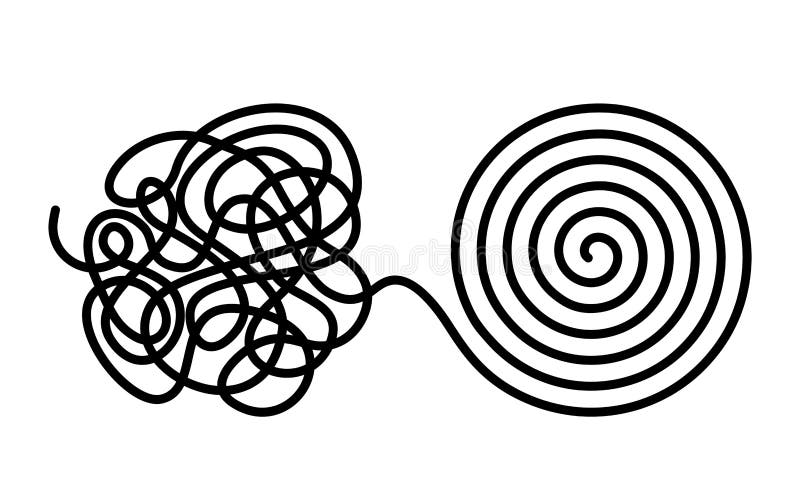
All new beginnings start from an idea, a blueprint, but often a blueprint that is chaos by its nature. In order to achieve, we have to work and work to improve and hone the blueprint to something that is orderly and clear.

Blessings and Curses: reflection on last week’s Torah portion.

Last week, I was struck by a word choice in the book of Job, chapter 1. It states in Job 1:11

וְאוּלָם֙ שְֽׁלַֽח־נָ֣א יָֽדְךָ֔ וְגַ֖ע בְּכל־אֲשֶׁר־ל֑וֹ אִם־לֹ֥א עַל־פָּנֶ֖יךָ יְבָרְכֶֽךָּ׃ 

But lay Your hand upon all that he has and he will surely blaspheme You to Your face.”

In the Hebrew verse, the word used for blaspheme is the word for blessing. In reflecting on the use of the word for blessing as a substitute for the word for cursing, I began wondering if there is a message in using a positive word to denote a negative word when it comes to blessings and curses. This thought led me to Deuteronomy 11:26-28, the first three verses in this past week’s Torah portion. 

רְאֵ֗ה אָנֹכִ֛י נֹתֵ֥ן לִפְנֵיכֶ֖ם הַיּ֑וֹם בְּרָכָ֖ה וּקְלָלָֽה׃

 See, this day I set before you blessing and curse:

אֶֽת־הַבְּרָכָ֑ה אֲשֶׁ֣ר תִּשְׁמְע֗וּ אֶל־מִצות֙ יְהֹוָ֣ה אֱלֹֽהֵיכֶ֔ם אֲשֶׁ֧ר אָנֹכִ֛י מְצַוֶּ֥ה אֶתְכֶ֖ם הַיּֽוֹם׃

blessing, if you obey the commandments of the LORD your God that I enjoin upon you this day;

וְהַקְּלָלָ֗ה אִם־לֹ֤א תִשְׁמְעוּ֙ אֶל־מִצְות֙ יְהֹוָ֣ה אֱלֹֽהֵיכֶ֔ם וְסַרְתֶּ֣ם מִן־הַדֶּ֔רֶךְ אֲשֶׁ֧ר אָנֹכִ֛י מְצַוֶּ֥ה אֶתְכֶ֖ם הַיּ֑וֹם לָלֶ֗כֶת אַחֲרֵ֛י אֱלֹהִ֥ים אֲחֵרִ֖ים אֲשֶׁ֥ר לֹֽא־יְדַעְתֶּֽם׃ {ס}

and curse, if you do not obey the commandments of the LORD your God, but turn away from the path that I enjoin upon you this day and follow other gods, whom you have not experienced.

Moses presents the Israelites with a simple, yet profound choice. One either chooses a blessing or a curse, which are both contingent on one action, following or not following the commandments. In other words, the difference in the positive or negative outcome seems to boil down to a simple equation of listening or not listening. The imagery this closely resembles is describes by Maimonides in the Mishneh Torah, Laws of Repentance 3:1: 

כָּל אֶחָד וְאֶחָד מִבְּנֵי הָאָדָם יֵשׁ לוֹ זְכֻיּוֹת וַעֲוֹנוֹת. מִי שֶׁזְּכֻיּוֹתָיו יְתֵרוֹת עַל עֲוֹנוֹתָיו צַדִּיק. וּמִי שֶׁעֲוֹנוֹתָיו יְתֵרוֹת עַל זְכֻיּוֹתָיו רָשָׁע. מֶחֱצָה לְמֶחֱצָה בֵּינוֹנִי. וְכֵן הַמְּדִינָה אִם הָיוּ זְכֻיּוֹת כָּל יוֹשְׁבֶיהָ מְרֻבּוֹת עַל עֲוֹנוֹתֵיהֶן הֲרֵי זוֹ צַדֶּקֶת. וְאִם הָיוּ עֲוֹנוֹתֵיהֶם מְרֻבִּין הֲרֵי זוֹ רְשָׁעָה. וְכֵן כָּל הָעוֹלָם כֻּלּוֹ: 

Each and every one of the sons of man has virtues and vices. He whose virtues exceed his vices is a just man, and he whose vices exceed his virtues is an evildoer; if both are evenly balanced, he is mediocre. Even so is a state. If the virtues of all of its inhabitants exceeded their vices, it is, indeed, a just state; but if their vices exceeded, it is, indeed, a wicked state. Even such is a standard for the whole world.

Maimonides has us imagining a balanced scale and how one positive action will tip it towards blessing, and one negative action will tip it towards a curse.  This tipping of the scales represents the constant human struggle. In essence, life can always be seen in balance and each choice leads us down one of two paths until our next point of choice, when another path opens up. 

Yet, for most of us, choosing one path over another doesn’t seem like a simple, easy, two sides of a coin decision. Rather, it seems like a huge leap. I think this is symbolized in the immediate aftermath of Moses’ words of choice to the people. Immediately following Deuteronomy 11:26-28, Moses commands the people that upon entering Canaan, they are to stop and offer blessings and curses to each other, standing on the opposite mountains of Mount Gerizim and Mount Eival.  In picturing this communal event, we are left with another image of blessings and curses, namely the chasm between the two, as symbolized by the valley that stands between the two mountains. It is symbolic of huge differences between blessing and cursing.  How do we experience a blessing vs a curse?  What does it mean in life to feel blessed vs cursed?  

To summarize, in examining the images of blessings and curses as being a choice before oneself and something separated by a valley, we get a sense of the dialectic nature of these two terms. They exist simultaneously as both a mirror image of one another and as total opposites with completely different characteristics. 

One potential approach in reflecting on these dual images from a similar duality described in BT Sukkah 52a about the evil inclination:

כִּדְדָרֵשׁ רַבִּי יְהוּדָה לֶעָתִיד לָבֹא מְבִיאוֹ הַקָּדוֹשׁ בָּרוּךְ הוּא לְיֵצֶר הָרָע וְשׁוֹחֲטוֹ בִּפְנֵי הַצַּדִּיקִים וּבִפְנֵי הָרְשָׁעִים צַדִּיקִים נִדְמֶה לָהֶם כְּהַר גָּבוֹהַּ וּרְשָׁעִים נִדְמֶה לָהֶם כְּחוּט הַשַּׂעֲרָה הַלָּלוּ בּוֹכִין וְהַלָּלוּ בּוֹכִין צַדִּיקִים בּוֹכִין וְאוֹמְרִים הֵיאַךְ יָכוֹלְנוּ לִכְבּוֹשׁ הַר גָּבוֹהַּ כָּזֶה וּרְשָׁעִים בּוֹכִין וְאוֹמְרִים הֵיאַךְ לֹא יָכוֹלְנוּ לִכְבּוֹשׁ אֶת חוּט הַשַּׂעֲרָה הַזֶּה וְאַף הַקָּדוֹשׁ בָּרוּךְ הוּא תָּמֵהַּ עִמָּהֶם שֶׁנֶּאֱמַר כֹּה אָמַר ה׳ צְבָאוֹת כִּי יִפָּלֵא בְּעֵינֵי שְׁאֵרִית הָעָם הַזֶּה בַּיָּמִים הָהֵם גַּם בְּעֵינַי יִפָּלֵא

The Gemara answers: This can be understood as Rabbi Yehuda taught: In the future, at the end of days, God will bring the evil inclination and slaughter it in the presence of the righteous and in the presence of the wicked. For the righteous the evil inclination appears to them as a high mountain, and for the wicked it appears to them as a mere strand of hair. These weep and those weep. The righteous weep and say: How were we able to overcome so high a mountain? And the wicked weep and say: How were we unable to overcome this strand of hair? And even the Holy One, Blessed be He, will wonder with them, as it is stated with regard to the eulogy: “So says the Lord of hosts: If it be wondrous in the eyes of the remnant of this people in those days, it should also be wondrous in My eyes” (Zechariah 8:6).

In the above scenario, the imagery of choice making is contingent on the chooser. For some, the choice of not choosing an “evil path” should have been simple, easy, like pushing aside a strand of hair. The choice of blessing and curse was just to flip the coin to the other side. For others, there is a sense that each choice is not simple, but in fact massive, like traversing a valley. 

The choice between blessing and curse is a similar metaphor in that for those who fall into the trap of the curse, there will come a point in which one will sense of how easy it could have been to choose differently, like the strand of hair, like the tightrope.  For those blessed, the grandeur of the blessing will be such that it will be experienced as if one overcame so much to be able to receive this blessing.  

I believe this duality also explains the linguistic question from the book of Job. The text uses the language of blessing to speak of curse so as to cause us all to pause and reflect on the “test.” The goal was to push Job to see life through a darker pair of glasses via taking away all the good he had. Yet, in a backhanded way, I think the word usage, blessing, is implying how small the difference really is between that and a curse (there is another way to explain this with regard to how the Bible at times will avoid using “negative” language – BT Pesachim 3a). 

Today is the first day of Elul, which in the Jewish calendar signifies we are now one month from Rosh Hashanah. The tradition is that this month is a month of soul-searching and introspection, in preparation for the judgment of the world on Rosh Hashanah. Growth and change are hard work like climbing a mountain. For many, this sense of feeling one is fighting an uphill battle is so strong there is a tendency to just give up. Yet if we don’t climb the mountain, we might very well look back and wonder why we didn’t realize how easy it was to actually climb the mountain because the mountain was really not a mountain but rather it was a straight and smooth path.

Let the broken pieces fall

Scrolling through Facebook yesterday morning, I came across a powerful dialogue created by John Roedel. The post was shared by a chaplain colleague. The dialogue is between Gd and a person in which the person asks Gd to put back the broken pieces of the person’s life. Gd’s response is to not repair, to not fix, but let the pieces fall away so as to allow the person to shed those things which are hindrances in the person’s life.

Here is the dialogue in full:

1EF2926F-7B93-421E-94D9-575C5CDAC537

Me: Hey God.
God: Hello…..
Me: I’m falling apart. Can you put me back together?
God: I would rather not.
Me: Why?
God: Because you aren’t a puzzle.
Me: What about all of the pieces of my life that are falling down onto the ground?
God: Let them stay there for a while. They fell off for a reason. Take some time and decide if you need any of those pieces back.
Me: You don’t understand! I’m breaking down!
God: No – you don’t understand. You are breaking through. What you are feeling are just growing pains. You are shedding the things and the people in your life that are holding you back. You aren’t falling apart. You are falling into place. Relax. Take some deep breaths and allow those things you don’t need anymore to fall off of you. Quit holding onto the pieces that don’t fit you anymore. Let them fall off. Let them go.
Me: Once I start doing that, what will be left of me?
God: Only the very best pieces of you.
Me: I’m scared of changing.
God: I keep telling you – YOU AREN’T CHANGING!! YOU ARE BECOMING!
Me: Becoming who?
God: Becoming who I created you to be! A person of light and love and charity and hope and courage and joy and mercy and grace and compassion. I made you for more than the shallow pieces you have decided to adorn yourself with that you cling to with such greed and fear. Let those things fall off of you. I love you! Don’t change! … Become! Become! Become who I made you to be. I’m going to keep telling you this until you remember it.
Me: There goes another piece.
God: Yep. Let it be.
Me: So … I’m not broken?
God: Of course Not! – but you are breaking like the dawn. It’s a new day. Become!!!
~John Roedel~

I find the imagery of the broken pieces powerful. We are not denying those pieces are a part of who we were. Rather, we are acknowledging them, maybe even storing them somewhere, but not trying to fit them back into the person we are becoming.

In a way, it is metaphor for this blog. In the journey of beginning anew, moving forward, I cannot forget what was but cannot allow the past to merely be the barometer of who I am. I am the person who I have become because of the past yet as I continue to be, I am also not the same person as yesterday. Each day, we have a chance to renew. We do that by allowing ourselves to evolve and to grow. By allowing the pieces to fall as they do, we can also find hope for the future, no matter what the past has wrought.

I am also imagining that we gather the pieces that have fallen and keep them somewhere safe, pulling them out for reflection as we continue on our journeys. How often do we find ourselves reflecting on events of years past, wondering why all of a sudden the memory returns? The pieces that have fallen off can be teachers for us, but can never be fitted back onto who we are becoming.

New beginnings

Why a new blog? Why a new page and a new start? Over the years, I have started and stopped a few blogs. I am proud of the work I have done. I am grateful to have written and reflected on many topics. Yet, I realize that it was time to leave the past behind. This is not to say I won’t rehash some of my old ideas and thoughts. Rather, I want a fresh place to begin again.

Too often, we presume that we are merely on a single lane highway, just moving forward in time, accumulating more and more stories and events in life. While this is partially true, in reality our highway curves and has detours. The trouble is we sometimes lose sight of those changes on our journey. I attribute this to finding ourselves living too much in the past. Living in the past can hinder our ability to live in the present and hope for a better future. I have seen this idea written about countless times in spiritual memoirs and self-help books. To truly grow, one must build off of but not remain tied to the past. We must constantly work to evolve.

This same point is true for me and my journey. I want to build on all that I have been and also untie myself from being stuck in my ways because it’s always the way it has been. This is not a repudiation of my life’s journey. Rather it is an attitude adjustment to how I want to go forward day by day.

Please join me on this journey. I look forward to learning and growing together.