Humility is recognizing we don’t have to do it alone

It can be quite a challenge to be willing to work together with others. For many of us, it can seem less cumbersome and less stressful to just take on another task instead of seeking help from others. I believe this is particularly true when it comes to fostering our spiritual and emotional growth. Yet, if we allow ourselves to find the person or persons who can hold our hand and lift us up in the process, we will find greater success in all of what we venture out to do.

With the fall Jewish holidays over, the Torah reading cycle starts afresh with Bereishit, Genesis. Chapter one tells the story of creation, in which Gd, and Gd alone, for the most part, brings the world into existence. Yet, there is a single exception, for a mere 26 verses into the Torah, we come across a moment of collaboration in the midst of the story. Verse 1:26 states, in describing the creation of humanity:

וַיֹּ֣אמֶר אֱלֹהִ֔ים נַֽעֲשֶׂ֥ה אָדָ֛ם בְּצַלְמֵ֖נוּ כִּדְמוּתֵ֑נוּ וְיִרְדּוּ֩ בִדְגַ֨ת הַיָּ֜ם וּבְע֣וֹף הַשָּׁמַ֗יִם וּבַבְּהֵמָה֙ וּבְכׇל־הָאָ֔רֶץ וּבְכׇל־הָרֶ֖מֶשׂ הָֽרֹמֵ֥שׂ עַל־הָאָֽרֶץ׃

And God said, “Let us make humankind in our image, after our likeness. They shall rule the fish of the sea, the birds of the sky, the cattle, the whole earth, and all the creeping things that creep on earth.”

In a departure from the majority of the verses in chapter one, this verse states that Gd seemingly has consulted with other “beings” in the decision to create the human being. In response to this anomaly, Rashi, the great medieval Jewish biblical commentator, suggests a non-literal, ethical read of the text. He states:

נעשה אדם WE WILL MAKE MAN — Although they did not assist Him in forming him (the man) and although this use of the plural may give the heretics an occasion to rebel (i. e. to argue in favour of their own views), yet the verse does not refrain from teaching proper conduct and the virtue of humbleness, namely, that the greater should consult, and take permission from the smaller; for had it been written, “I shall make man”, we could not, then, have learned that He spoke to His judicial council but to Himself. And as a refutation of the heretics it is written immediately after this verse “And God created the man”, and it is not written “and they created” (Genesis Rabbah 8:9)

Quoting midrashic literature, Rashi suggests that the verse is written in plural form to teach that true humility includes not believing one has to do things by oneself. In looking at this comment, it is a reminder of the adage from Ethics of our Fathers,

יְהוֹשֻׁעַ בֶּן פְּרַחְיָה וְנִתַּאי הָאַרְבֵּלִי קִבְּלוּ מֵהֶם. יְהוֹשֻׁעַ בֶּן פְּרַחְיָה אוֹמֵר, עֲשֵׂה לְךָ רַב, וּקְנֵה לְךָ חָבֵר, וֶהֱוֵי דָן אֶת כָּל הָאָדָם לְכַף זְכוּת:

Joshua ben Perahiah and Nittai the Arbelite received [the oral tradition] from them. Joshua ben Perahiah used to say: appoint for yourself a teacher, and acquire for yourself a companion and judge all favorably.

Pirkei Avot 1:6

Life is about making connections and looking to one another for support and help. If Gd could be presumed to have asked for advice, then for sure each of us needs to find people in our lives who will help lift us up. In fact, like the above picture, one of the underlying premises of New Beginnings Spiritual Coaching and Consulting is to give someone a hand to help lift them up. Being willing to reach out a hand for another to help them up, an act of humility, an act of accepting one’s need for help, is the first step in spiritual growth.
I believe Rashi makes the choice of offering a non-literal read of the use of the plural instead of suggesting the more literal suggestion that the verse is merely using the “royal we” in this particular circumstance. Rashi is tasking the reader to see early on how the Torah can be a moral guide if we pay attention to the subtle nuances and gaps in the text. In this case, we learn this valuable lesson about humility. Of course, western religious literature is full of texts and commentaries that offer us multiple readings of the text to teach us lessons about life. If we pay attention, study the words carefully, and expand our reading to include different and varied approaches to these sacred texts, we are metaphorically putting out our hand to be lifted up spiritually.

As we begin the new Torah reading cycle, may each of us find a true sense of humility in realizing that there are always new opportunities to reach out our hands to be raised higher.

If you are ready to reach out your hand, I am here to help lift you along your journey of spiritual growth: Contact New Beginnings Spiritual Coaching and Consulting LLC at 732-314-6758 ext. 100 or via email at newbeginningsspiritualcoach@gmail.com.


The Gates are Closed/ The Gates are Open

Yom Kippur has come and gone. We have prayed, fasted and spent the day in the most spiritual way possible. The gates are closed. We emerge with the hope that this year will continue to be a year of good and of life.

And yet, with one gate closed, another is open:

Today begins a New Beginning. We have achieved our yearly moment of closure, the books of the past are sealed and now we have the chance to write the book of the present.

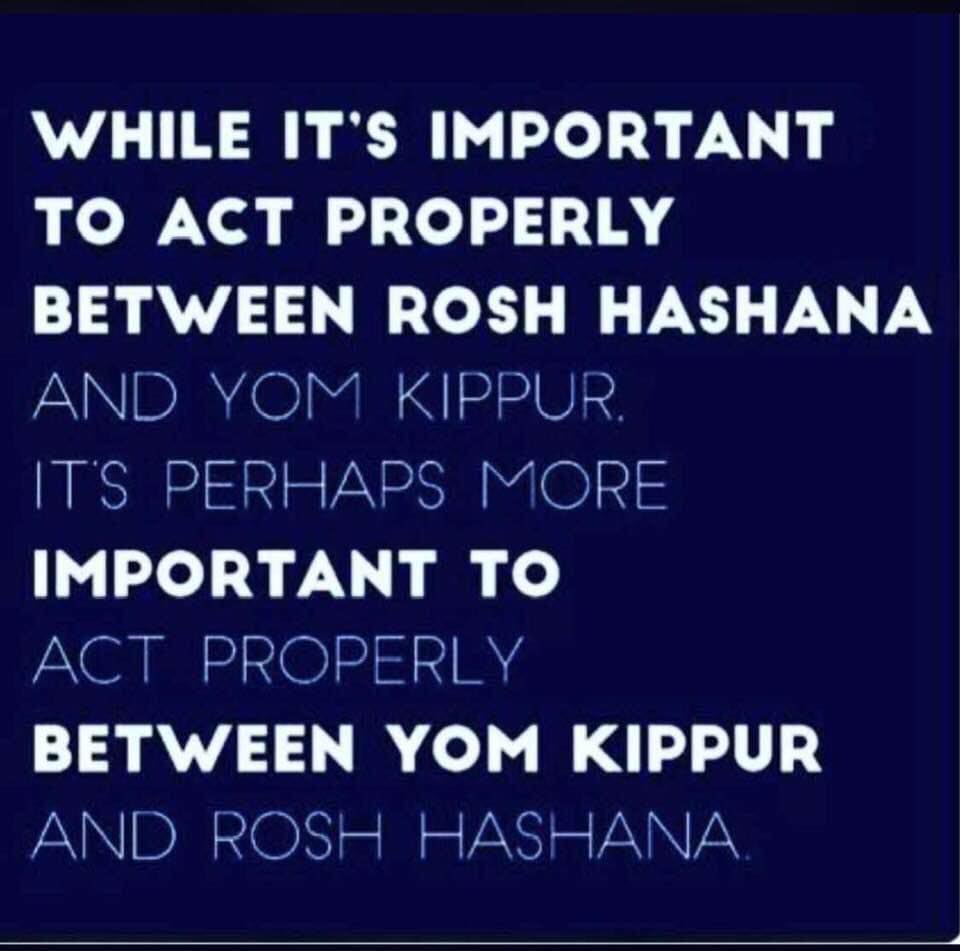
How do we take the spiritual high from yesterday forward? Perhaps the answer is best expressed in this popular meme:

As I have been reflecting on the prayers from the high holidays, specifically the viddui prayers we recited yesterday, it is clear that the confessionary nature of these words is a combination of raising for us a sense of what we have done wrong in the past and a road map of how to better ourselves. The areas of confession range from how we speak, how we interact with others and our need for mindfulness in all of our actions. If we have truly taken the day to heart, we will have hopefully walked away taking the first steps towards how we approach the next 12 months until the next Yom Kippur.

We are now in the 4 days leading up to Sukkot, Zman Simchateinu, the time of Joy. As we prepare for the celebratory days of Sukkot, may each of us take the power of Yom Kippur forward and celebrate the new opportunity placed before us.

Are you looking to take the next steps in the process of establishing your new journey: Contact New Beginnings Spiritual Coaching and Consulting LLC at 732-314-6758 ext. 100 or via email at newbeginningsspiritualcoach@gmail.com.
We can still Light the Candle

The hour is late. In mere hours we will be entering Yom Kippur. We have had ample opportunity for reflection and introspection. And while we might think it is too late, we would do well to remember it is never too late. We can still open our hearts to the desire to change and offer that deep desire as our first step to real, true teshuvah, true returning to the person we strive to be. I came across the following idea from Rav Moshe Weinberger that illustrates this concept (found here [p.19]):

One year on Yom Kippur, the Sar Shalom of Belz quoted the mishna in Shabbos (34a),


”ג’ דברים צריך אדם לומר בתוך ביתו ערב שבת עם חשכה עשרתם ערבתם הדליקו את הנר,““a person must say three things erev Shabbos as it gets dark, ‘Have you tithed?’, ‘Have you prepared the eruvim?’, and ‘Light the candle!’”

He explained that because Yom Kippur is called the ultimate Shabbos (Vayikra 16:31), this mishna also alludes to our feelings as we enter into Yom Kippur. “עשרתם “means “Have you tithed,” but because the root word is “עשר “,meaning ten, it alludes to the ten days of teshuva, as if to ask, “Have you used the ten days of teshuva properly?” Indeed, the ten days of teshuva have passed and what did we accomplish?! “ערבתם “ means “have you prepared the eruvim?”, like the eruv techumim and the eruv chatzeiros. But “ערב “also means “eve,” as if to ask “Have you used the eve of Yom Kippur properly to prepare? Erev Yom Kippur has passed and how did we use it?!

And the last question relates to kindling the Yom Kippur candles. The Sar Shalom continued “The candles are already lit and look what a state we are in!” He was quiet for a moment and then he concluded, “But ‘הדליקו את הנר ‘,does not mean ‘the candle
is already lit.’ It means ‘Light the candles!’ Therefore it is not too late! Each and everyone of us still has time to light the candle, which refers to (Mishlei 20:27) ‘ נר אדם נשמת’ ה’ ‘,the soul of man is G-d’s candle.’”

Much of my suggested work in coaching others begins by showing them that the first step is to take the first step. If we just light the candle, do this one small task, we are already along the way to change. Once we recognize that the hardest thing is such a simple thing, we will then be able to begin along a new path towards growth.

Yom Kippur is both a culmination and a beginning. If we have been working on how to change this whole time, Yom Kippur allows us to have a sense of the slate wiped clean so we can make the fresh start we desire. And if we haven’t used this time as well as we could, don’t despair. Yom Kippur is a roadmap towards areas we can and always should be working to better ourselves in.

May each of us find this Day of Atonement to be the guide forward we are in need of as we all continue to foster the desire for New Beginnings in our lives.

If you are exploring ways to deepen your ability to recognize within yourself areas of desired spiritual growth: Contact New Beginnings Spiritual Coaching and Consulting LLC at 732-314-6758 ext. 100 or via email at newbeginningsspiritualcoach@gmail.com.

Listening to the whole story

How many of us only pay superficial attention when someone talks to us? Are we only conscious of hearing just what is being said? Maybe we are among the fortunate who pay just enough attention to get the gist of the message? Or perhaps, when someone is commenting about a situation or offering constructive criticism, even with the best of intentions, all we hear is the criticism without listening to the underlying suggestions of ways to improve? Are we too stuck in who we are, too stubborn to receive feedback, to recognize how the criticism is hopefully coming from a good place? (And yes, I am and have been guilty of this way too many times to count).

Sometimes the rebuke is really a blessing in disguise!

I came across a thought from the end of last week’s Torah portion that I found to be spot on as a reflection of hearing/not hearing as it pertains to growth and change. Deuteronomy 31:30 states:

וַיְדַבֵּ֣ר מֹשֶׁ֗ה בְּאזְנֵי֙ כל־קְהַ֣ל יִשְׂרָאֵ֔ל אֶת־דִּבְרֵ֥י הַשִּׁירָ֖ה הַזֹּ֑את עַ֖ד תֻּמָּֽם׃ {פ}
Then Moses recited the words of this poem to the very end, in the hearing of the whole congregation of Israel:

When the Torah uses the word אזני (in the hearing (related to the word for ear)) or any of its derivative words, it implies a different kind of listening, perhaps as in emphasizing paying attention. The people were to be paying attention to some form of poetic rendering of Moses’ final speech. This is either a reference to Deuteronomy 32 or it is a reference to the series of verses that precede 31:30 starting from 31:22, which also uses the word שירה as a reference to the words of Moses. Regardless, the word שירה has a positive connotation, the words preceding or upcoming are more of a rebuke. As such, what did they hear?

The Israelites, while hearing the harsh words from Moses, also heard hope in his words. They didn’t just hear the rebuke and the consequences of their fall. They also heard that even when falling so far, there is a point of being able to rise back up, that the relationship promised would remain. They heard the song because they were listening with their ear, listening intently to the entire speech, not just sitting with the negativity of rebuke.

Every year, I am amazed at the extent of the formal confessionary forms of prayer we engage in throughout the period between Rosh Hashanah and Yom Kippur, culminating in the Viddui/confessions of our various “sins,” which are recited time and again on Yom Kippur. It is easy to get overwhelmed by the categories of our errors and how far we must come. Yet, I am also amazed that within this hard reality check, we can emerge with a renewed feeling of “success” and belief that we will be sealed for a good year. In many synagogues, it has become the practice to sing and dance immediately post Yom Kippur as a show of our seeing beyond the words. Through our confronting our humanity in a serious fashion, we come out the otherside having taken the heaviness and made it into something to celebrate, not dread.

May each of us “hear” the prayers of Yom Kippur as the road map forward for us to grow each day. May our “ears” be open to both the voice inside ourselves looking to improve and to the feedback we hear from others.

If you are exploring ways to deepen your ability to recognize within yourself areas of desired spiritual growth: Contact New Beginnings Spiritual Coaching and Consulting LLC at 732-314-6758 ext. 100 or via email at newbeginningsspiritualcoach@gmail.com.

Self compassion as a door to compassion for others

Rosh Hashanah, the Jewish New Year, is a meaningful holiday for me. It is one of a series of opportunities in the year to take stock and to start anew. Unlike other times, such as my birthday and my wedding anniversary, part of the power of Rosh Hashanah is how together, communally, we are all together in this process of establishing a New Beginning, a new hope for the upcoming year. Through the sound of the Shofar, we are called to wake up and listen to the sounds and to the silences around us so as to better figure out what it is we hope for in the coming year.

I had the fortune to do a lot of reading and reflecting on the past two days (the beauty of being shut off from the constant barrage that comes from our connected world). And yes, while Shabbat and the holidays are about so much more than unplugging, the unplugging is a powerful byproduct.

In my reading over the holiday, I came across a piece that relates back to a book I read through this summer, Self-Compassion: The Proven Power of Being Kind to Yourself, by Dr. Kristin Neff. In a piece from Rabbi Dr. Abraham Twerski’s Growing Each Day, he suggests the following spiritual approach to understanding judgment during this period between Rosh Hashanah and Yom Kippur which I would extend to how we should see self-reflection in our daily lives:

God knows that personal interest makes us oblivious to the significance of our own misdeeds, so He contrives to make us observes in others actions and behavior similar to our own. How we react to our own acts as we see them in others determines how God will judge us. If we are considerate and lenient in our judgment, and give others the benefit of the doubt, allowing them the broadest latitude of circumstances that might have caused them to behave improperly, then God will judge us with equal leniency. But if we are self-righteous and quick to condemn others, we will be judged with equal severity.

p. 3

When we consider the work of self-compassion, one of the premises is that we tend to be quicker to forgive others mistakes than our own when the same mistake is made. We tend to be our own harshest critic. And lest you think that our self-criticism doesn’t ultimately harm our compassion for others, the more we lack in self-compassion, the harder it will be to continue to be compassionate and forgiving of others for their foibles. If we consider the above quote, we can see how our sense of personal, self-acceptance and compassion for our imperfections will open us up to increase our ability to be compassionate to others. If we are reacting to what we are witnessing, we would do well to spend a moment or two reflecting on what we see and what is being mirrored to us so we can react better to them and to ourselves.

As we continue on this journey together exploring how to foster new beginnings for ourselves, may we find ways to bring more compassion into the world for ourselves and for all those around us.

If you are looking to deepen your ability to recognize within yourself areas of desired spiritual growth: Contact New Beginnings Spiritual Coaching and Consulting LLC at 732-314-6758 ext. 100 or via email at newbeginningsspiritualcoach@gmail.com.

Planting seeds for the New Year – Rosh Hashanah 5783

We are standing on the precipice of another year in the Jewish calendar. As always, it is a time of introspection (it’s never too late to think back over the year). What do we want different? What are our hopes for the upcoming year? Where do we even begin?

One of the customs many have on Rosh Hashanah is to eat certain foods that symbolize our prayers and hopes for the new year. The source for this custom is mentioned in a couple of places in the Babylonian Talmud:

Horayot 12a and Keritut 6a

אמר אביי השתא דאמרת סימנא מילתא היא [לעולם] יהא רגיל למיחזי בריש שתא קרא ורוביא כרתי וסילקא ותמרי

Abaye said: Now that you said that an omen is a significant matter, a person should always be accustomed to seeing these on Rosh HaShana: Squash, and fenugreek, leeks, and chard, and dates, as each of these grows quickly and serves as a positive omen for one’s actions during the coming year.

In addition to the above mentioned foods, see the chart below for what many do today, which adds to the Talmudic list.

In my pre-Rosh Hashanah reading yesterday, I came across a discussion of this custom. At first glance, many of us would think this is a bit like magic, that somehow my consumption of one food or another has the power to invoke change in our lives. How can it be that by eating an apple dipped in honey I should be able to ask Gd to grant us a sweet new year? Is it merely magical thinking? Is it really that simple?

In response, perhaps we are looking at the custom all wrong. According to the essay I was reading, we need to rethink the word siman(symbol). If we see the notion of symbol in the sense of planting a seed, as in a famous idea about how to read the stories of Genesis as “The actions of our forefathers are symbols for the children,” we can begin to appreciate the practice of these symbolic foods. If our actions become lessons for our children, then in a way, what we do is the equivalent of our planting the seeds for our children to learn from the good and bad in our lives. Hence, we can say symbols are seeds being planted.

On Rosh Hashanah, when we eat these symbolic foods, we are also planting seeds. We are praying, we want the upcoming year to be better, sweeter, with our successes at the forefront and our enemies vanquished. We want a year of positivity, a year in which the naysaying voice in our head is quieted down so we can see and feel the growth we are all experiencing, even when we don’t realize it. Through these foods, we aren’t performing magic tricks. We are taking the first step to real growth, naming what we want and hoping that this first step is a seed that germinates and sprouts for us along our journey of this upcoming year.

Many of my posts have been about the planting of seeds and taking first steps. This is the essential philosophy of New Beginnings. We are always presented an opportunity for a new beginning and while things might seem to be on a continuum, they are also a series of beginnings if we choose for them to be. I truly believe that each day we are doing is a day of growth and change even when we ourselves don’t see it as such. Each pitfall along the way, for there will be setbacks and challenges, are also growth points if and when we are ready to see them as such.

May this year, 5783, be a year in which we see the growth we are all doing, a year of peace in our lives and in the world, a year of less worry over the things we can’t control and most of all, a sweet, good and healthy year to all.

Want to take your hopes and wishes for a new year and really concretize them? Looking to solidify and continue your spiritual growth: Contact New Beginnings Spiritual Coaching and Consulting LLC at 732-314-6758 ext. 100 or via email at newbeginningsspiritualcoach@gmail.com.

First Day of…

Today is the start of the school year for my two boys, as they enter 7th and 6th grade. It’s a very exciting day, full of hope and anticipation for a good year. It’s also a day full of nerves and worries about what will come during the year.

The notion of firsts has been a primary focus of mine lately, as you can tell from a few of my most recent posts. I have been trying to grapple with how we begin something and how we prepare to begin something new. Yet, another element of firsts is the calendrical milestone moments we encounter throughout the year. As I continue to reflect on and prepare for Rosh Hashanah (now only 25 days away), I find myself focused on how we mark the new start, the first day, the first step along a new aspect of our journeys.

Isn’t it interesting, that for new beginnings, we often take the smiling, before picture, highlighting the hope and excitement that comes from the starting new. And we all know that underlying the smiles is fear and nerves, yet we show our brave, happy faces to hide away the muck that is most often found inside us during these moments of the unknown. The before picture is like the on-ramp to this next journey. We are standing, carrying the tools we will need for this part of the path, trying to figure out how much of who we were and who we wish to be will help guide in this new section of our story.

And of course, if we are talking about the beginning, we cannot forget that there will be an end as well. What fascinates me is that we often forget to also take the “after” picture, either because the ending doesn’t happen or we merely don’t get as excited by the ending as the beginning. Or perhaps because we could say all “before” pictures are really the “after” pictures from the previous period of time, we never truly do miss out because in a grander sense each new leg of the journey is another beginning from a previous ending.

How do you capture your firsts? It doesn’t just have to be firsts like a new school year that we ritualize. Each of us should take the time to celebrate a new start, a new job, a new research project, taking the initial step into the new time frame we are about to enter. If we think about Rosh Hashanah, the anticipation and hope for a sweet new year, symbolized by dipping apple into honey and offering a wish for this action to manifest itself in our lives, is a beautiful example of setting a positive tone to whatever we hope to accomplish in the upcoming year.

Starting new things is difficult. Celebrate and embrace that you began something. By starting, you have already accomplished tremendous amounts.

Are you working on starting something new and finding ways to take that first step: Contact New Beginnings Spiritual Coaching and Consulting LLC at 732-314-6758 ext. 100 or via email at newbeginningsspiritualcoach@gmail.com.

Focus on the Process

As we continue to travel along this seven week path towards Rosh Hashanah, I found the following quote to be a good point of reflection for daily growth:

No matter what the tangible outcome is, you cannot help but become a better person when you follow a creative call. If you focus on the product, you get fleeting satisfaction from an end result. If you focus on the process you get a life because life is a process.

The Muse Is In: An Owner’s Manual to Your Creativity p. 20

We establish a goal or multiple goals. We desire reach our intended goal/s. Yet, to get their requires not the the goal but the steps along the way towards the goal. By being able to focus on the steps along the path, we gain the ability to see progress, celebrate progress and pivot from the main path much easier if the approach to the goal is not leading us there. By recognizing this last point, we don’t get stuck in frustration presuming that there is only a single path that can lead us to where we want to be.

As we continue on towards Rosh Hashanah, may we find inspiration from the day to day process towards the goal of establishing new opportunities all along the path.

Looking for help along your journey as you go onward and upward? Contact New Beginnings Spiritual Coaching and Consulting LLC at 732-314-6758 ext. 100 or via email at newbeginningsspiritualcoach@gmail.com.

Onward and Upward

The title of this post was inspired by my wife’s comment to yesterday’s piece, From Despair to Hope: Seven Weeks until Rosh Hashanah. Each day, we have the opportunity to do something that helps foster a feeling of onward and upward. Too often we remain in the despair, the stagnant place of not doing. There could be many reasons for the paralysis. We are afraid, we hate making a mistake or mistakes, we don’t want to fail. Or perhaps we are really in a place where progress is almost impossible to foster (and we need the support of professionals to help and support us in these darker moments.)

How do we foster the ability to go onward and upward?

Forward momentum begins from a place of taking stock. If we spend the time in introspection, in reflecting on our journeys, we will begin to see how far we have come. We have taken the step/s forward we intended on the way to attaining our goals. Yet, too often, as I have been writing about lately, we don’t recognize how we got this moment, but will only look at how far we still want or need to go. My personal growth and journey continuously includes the work of seeing what I have accomplished along the way, not as a means of resting on my past but as a way of drawing strength from what was to continue to take one step at a time. Every step is an achievement unto itself. By celebrating the results, regardless of “success” or “failure,” we can learn to find real success, which is the striving forward we all look for in our lives.

A primary element of the period leading into Rosh Hashanah is the preparation for the aspect of Rosh Hashanah that is Gd judging the world for the upcoming year. This preparation is usually described as Teshuva, normally translated as repentance but better translated as a type of returning. In the words of Rabbi Menachem Mendel Schneerson o.b.m. as presented by Rabbi Lord Jonathan Sacks o.b.m:

2. Teshuvah and Repentance

“Repentance” in Hebrew is not teshuvah, but charatah. Not only are these two terms not synonymous, they are opposites.

Charatah implies remorse, or a feeling of guilt about the past and an intention to behave in a completely new way in the future. The person decides to become “a new man.” But teshuvah means “returning” to the old, to one’s original nature. Underlying the concept of teshuvah is the fact that the Jew is, in essence, good. Desires or temptations may deflect him temporarily from being himself, being true to his essence. But the bad that he does is not part of, nor does it affect, his real nature. Teshuvah is a return to the self. While “repentance” involves dismissing the past and starting anew, teshuvah means going back to one’s roots in G‑d and exposing them as one’s true character.

For this reason, while the righteous have no need to repent, and the wicked may be unable to, both may do teshuvah. The righteous, though they have never sinned, have to constantly strive to return to their innermost. And the wicked, however distant they are from G‑d, can always return, for teshuvah does not involve creating anything new, only rediscovering the good that was always within them.

Torah Studies: The Ten Days of Teshuvah

What resonates most for me is that by seeing Teshuva as a focus on the idea of returning to one’s spiritual roots instead of seeing the time as one we spend reflecting on all we haven’t accomplished, we can find the strength to truly go onward and upward.

Today is the second day along the seven week path towards Rosh Hashanah. What will your “return to self” look like? How will you work on taking the steps you are taking in your lives and further fostering growth and change to better oneself in this life?

Looking for help along your journey as you go onward and upward? Contact New Beginnings Spiritual Coaching and Consulting LLC at 732-314-6758 ext. 100 or via email at newbeginningsspiritualcoach@gmail.com.

From Despair to Hope: Seven Weeks until Rosh Hashanah

What can we do to change our mindset from feeling the sense of divine distance to divine nearness? What is the path to be ready to “greet the King in the field” which is a theme of the month of Elul, the month preceding Rosh Hashanah?

Yesterday was the commemoration known as Tisha B’Av (usually falling out on the 9th day of the Hebrew calendar month Av but due to the 9th being Shabbat, the fast day was pushed off until Sunday, the 10th of Av). Tisha B’Av is a day of collective mourning in the Jewish community, focused first and foremost on the destruction of the First and Second Temples in Jerusalem (586 BCE and 70 CE respectively) and then tying in all other tragedies that we have experienced throughout Jewish History. It is a day we lament and try to grapple with “why” and with “how.” After expressing many prayers and reflections that focus on these pain questions, we begin to search and look for some form of collective hope.

Coming out of Tisha B’Av, while having touched on this sense of hope, there remains the sense of Gd being distant, far away. It is hard to find how the tiny amount of hope will help lead us forward from feeling Gd is hiding to the sense of Gd’s presence we look to feel in seven weeks, when we change our tune and acknowledge Gd as the ruler of all humanity, coronating Gd as we do yearly on Rosh Hashanah.

What can we do to change our mindset from feeling the sense of divine distance to divine nearness? What is the path to be ready to “greet the King in the field” which is a theme of the month of Elul, the month preceding Rosh Hashanah?

It isn’t a coincidence that just like how the time period of Passover to Shavuot seven weeks period which is supposed to be a time of getting ready to receive the Torah anew, this 7 week period between Tisha B’Av and Rosh Hashanah is also a preparation period. The preparation begins by rising up from the depths of pain by taking one single step at a time. By taking the first step, we begin the journey and process.

Breaking it down further, there are two main periods we have in front of us as we get ready for Rosh Hashanah. The first three weeks from today until the beginning of Elul are about opening up our hearts and souls to the notion of reconnecting. We do this through study, through readings that offer comfort (nechama) and that awaken us to the notion we are never abandoned.

We then enter Elul. Starting from the first day of the month, we sound the shofar daily as a wake up call to work on ourselves (teshuva). The work we do is to take steps in our desire for self-improvement and growth, with the specific purpose of preparing for the new beginning Rosh Hashanah sets before us. We cannot just enter this period, waiting for the alarm call. We have the opportunity over the next three weeks to set the alarm so that when it goes off, one’s heart and soul is ready to hear the sounds emanating from the shofar. We shouldn’t just wait for the alarm but need to set it and prepare for it in the first three weeks leading up to Elul.

May these next 7 weeks be a time of growth and introspection and a time of finding hope out of the depths of despair.

Looking for help along your journey from despair to hope? Contact New Beginnings Spiritual Coaching and Consulting LLC at 732-314-6758 ext. 100 or via email at newbeginningsspiritualcoach@gmail.com.